
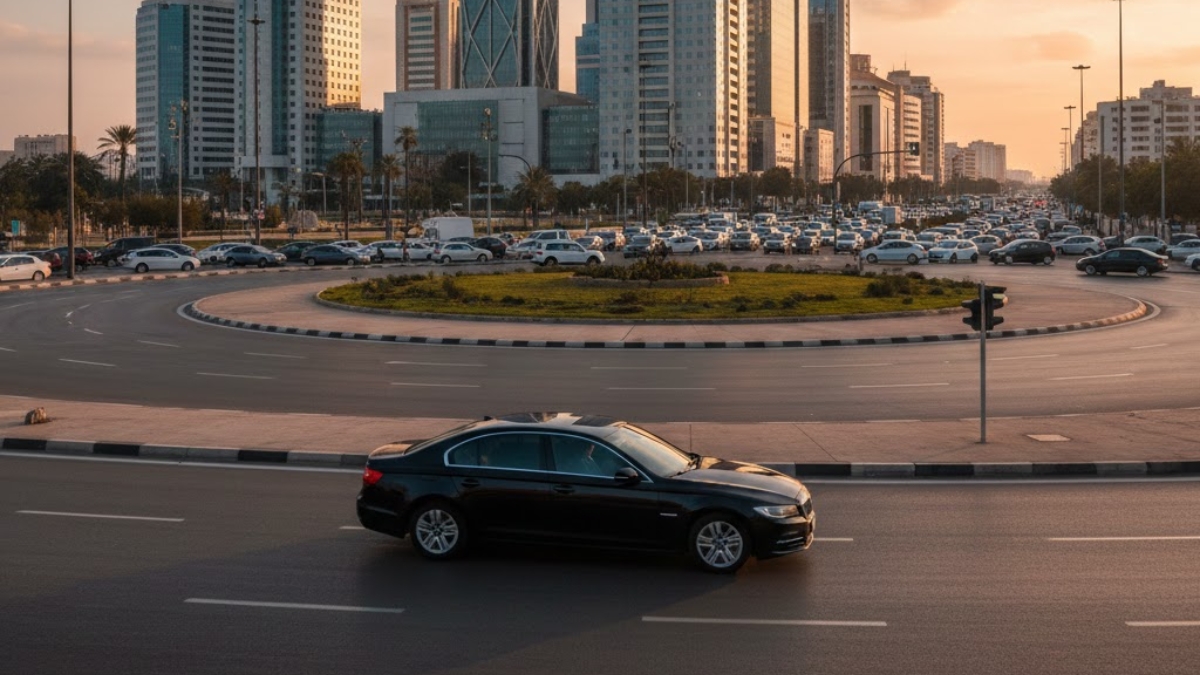
Casablanca moves fast, until it doesn’t. One minute you’re cruising on a wide boulevard, the next you’re crawling behind taxis, buses, and last-second lane changes near a roundabout. For tourists and business visitors, the biggest mistake isn’t choosing the wrong route… it’s choosing the wrong time.
This guide gives you realistic, Casablanca-specific timing tips so you can decide when to drive yourself and when it’s smarter to use a driver, especially if you’re juggling meetings, hotel check-ins, Casa Port connections, or a flight at CMN.
Table of contents
Casablanca traffic in one sentence
Peak hours you should plan around
The “safe windows” when driving feels easy
Area-by-area timing traps (Maarif, Gauthier, Ain Diab, Sidi Maârouf, Casa Port)
When to drive yourself vs when to use a driver
Airport timing: CMN to city without stress
Real timing strategies (the 10-minute rules)
FAQs
Casablanca traffic in one sentence
Casablanca traffic isn’t hard because roads are bad, it’s hard because volume and behavior spike at specific hours, and those spikes hit the same zones every day (business districts, schools, Corniche evenings, and port/station corridors).
If you only remember one tactic: drive off-peak, and outsource peak hours when timing matters.
Peak hours you should plan around
These are the patterns most visitors feel immediately. Exact minutes change by weather and school calendars, but the “shape” stays consistent:
Weekday morning peak (most intense)
07:30–10:00
This is school + office + deliveries overlapping. Expect slower movement on main arteries into business areas and near major roundabouts.
Weekday evening peak (long and unpredictable)
16:30–19:30
This is often the worst window for cross-city driving. You can lose 20–40 minutes just exiting certain districts or reaching the Corniche.
“Soft peaks” (still annoying)
12:30–14:30 in some zones (errands + lunch movement)
Friday mid-day can have a different rhythm because of prayer/lunch timing in many neighborhoods
Weekend pattern
Saturday late afternoon/evening: busy leisure traffic (especially Corniche/Ain Diab, malls, restaurants)
Sunday morning: often calmer for city driving and airport runs (still depends on events)
For live reality checks before you leave, use the traffic layer in Google Maps to see congestion colors and “arrive by” suggestions: https://www.google.com/maps
The “safe windows” when driving feels easy
If you want the lowest-stress Casablanca drive, plan around these windows:
Early morning “fast lane”
06:30–07:20
Great for: airport runs, business arrivals, cross-city transfers, leaving Casa for Rabat/El Jadida.
Not great for: tourists who aren’t fully awake, because Casa still moves quickly even when roads are empty.
Late morning “workable city”
10:15–12:15
Best for: moving between districts, shopping, quick meetings, hotel swaps.
Mid-afternoon “hidden calm”
14:45–16:15
Often a good time to relocate before the evening wave starts.
Night “smooth but parking matters”
20:30 onward
Driving gets easier, but finding parking near restaurants can still be competitive.
Area-by-area timing traps
Maarif (shopping + errands)
Worst times: 12:00–14:00 and 17:00–19:30
Best times: 10:30–12:00 or 15:00–16:30
Tip: If you must go at peak time, park once (garage/organized lot) and walk instead of circling.
Gauthier (restaurants, cafés, evening energy)
Worst times: 19:00–22:00 (finding parking can take longer than the drive)
Best times: before 18:30 for an easy arrival
Tip: If dinner is the goal, arriving early and walking is usually faster than hunting the closest spot.
Ain Diab / Corniche (sunset + nightlife)
Worst times: sunset until late (especially Thu–Sun)
Best times: late morning or before 16:30 if you want calm access
Tip: Corniche is where “just one quick stop” turns into “30 minutes of parking and U-turns.”
Sidi Maârouf / Casablanca Finance City corridors (work zones)
Worst times: 08:00–10:00 and 17:00–19:30
Best times: 10:30–12:00 or 14:30–16:00
Tip: If you have back-to-back meetings across zones, a driver can be a real productivity upgrade.
Casa Port / station and central corridors
Worst times: weekday mornings and late afternoons, plus any time trains/events create crowd surges
Best times: midday (but still plan a buffer)
Tip: It’s not just traffic, it’s curb activity, luggage movement, and short stops blocking lanes.
When to drive yourself vs when to use a driver
Think of it like a decision filter. If two or more of these apply, use a driver:
Use a driver when…
Timing is non-negotiable
Flight check-in, port boarding, or a meeting you absolutely can’t be late for.You’re crossing the city during peak windows
Cross-city at 08:30 or 18:00 can turn into a “why did we do this?” moment.You’ll need parking in a busy leisure zone
Corniche sunset, Gauthier dinner, or weekend mall rush, drivers reduce parking stress (drop-off, then pickup later).You’re unfamiliar with Casablanca lane behavior
Roundabouts, merges, and assertive honking can be tiring if you’re new to Morocco driving.You want to work or rest while moving
Directors, executives, and teams often prefer a driver so the car becomes a moving office.
Drive yourself when…
You can travel outside peak windows
10:30–12:00 and 14:45–16:15 are your friends.You have a simple route and a clear parking plan
“Drive + park once + walk” beats “drive + circle + stress.”You’re doing a coastal or intercity run early
Leaving Casa early can feel surprisingly smooth.
If you want a second live traffic check option (especially helpful for “is it really bad right now?”), the Waze Live Map can show jams and incident reports in real time: https://www.waze.com/live-map
Airport timing: CMN to city without stress
Airport runs are where timing matters most, because one small delay can cascade.
Smart rules for CMN
If your flight is in the morning, avoid “last minute” departures during 07:30–10:00.
For late afternoon flights, assume you’ll be driving in the 16:30–19:30 wave, plan an early departure or use a driver.
Add buffer for: hotel check-out, loading luggage, and last-minute road incidents.
A simple habit: check traffic before you leave the hotel, and again 10 minutes after you start driving. If it’s worsening, pivot quickly (alternate route, earlier drop-off zone, or driver pickup plan).
Real timing strategies (the “10-minute rules”)
These small tactics save big time in Casablanca:
1) The “arrive 30, not 10” rule
If something matters (meeting, train, airport), plan to arrive 30 minutes early, not 10. Casablanca delays are often chunky, not gradual.
2) The “move before the wave” rule
If you need to be in Ain Diab at night, relocate your car before 16:30 and stay parked. Later, use a short ride/driver pickup if needed.
3) The “one parking decision” rule
Choose your parking plan before you enter the district. If you “figure it out on arrival,” you’ll circle.
4) The “rain doubles friction” rule
Light rain in Casablanca can slow everything visibility, braking, and lane confidence. On rainy days, lean toward a driver during peaks
FAQs
What are Casablanca’s worst traffic hours for tourists?
Usually weekday 07:30–10:00 and 16:30–19:30, plus Corniche/leisure areas around sunset and evenings.
Is it worth using a driver in Casablanca?
Yes when timing matters, when crossing the city at peak hours, or when your destination has difficult parking (Corniche, Gauthier evenings).
What’s the best time to move between Maarif and Ain Diab?
Often 10:30–12:00 or 14:45–16:15. Avoid 17:00–19:30 if you can.
How do I avoid losing time on my first day?
Pick one base area, park once, walk more, and drive during the calm windows.
