
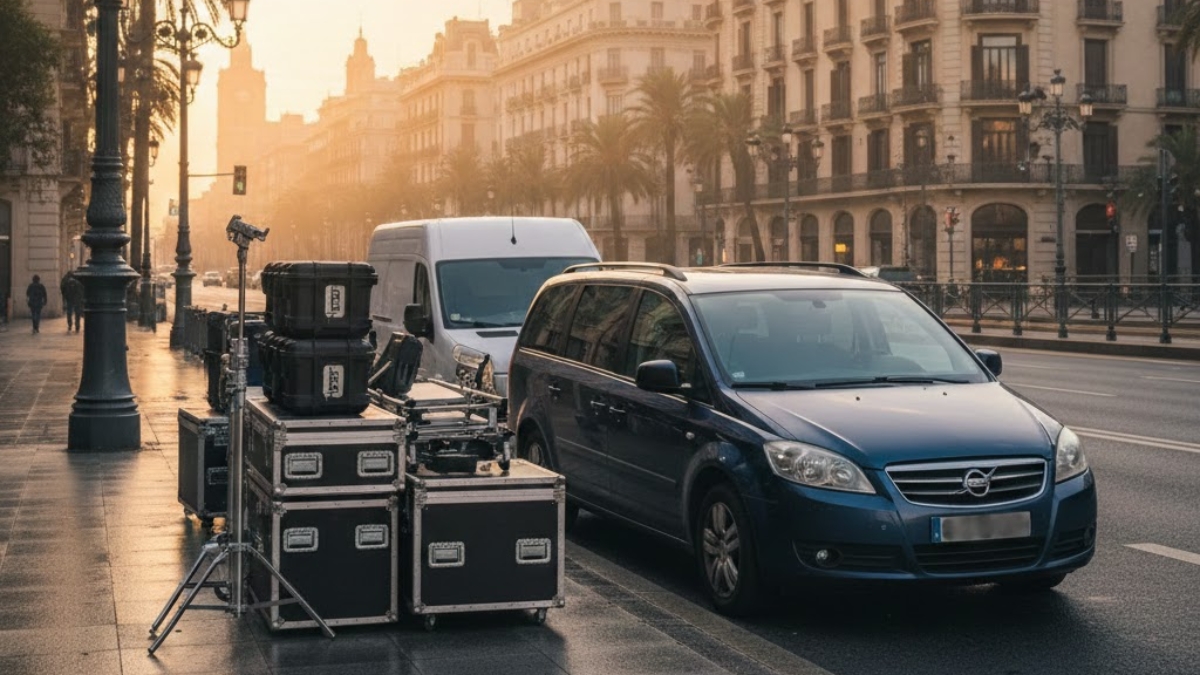
Casablanca is efficient for production days when your transport plan is built like a call sheet: clear roles per vehicle, predictable load space, and realistic city timing buffers. The most common failure mode is treating a crew minivan like a passenger shuttle, then discovering too late that cases, stands, and batteries do not “fit politely,” especially when you have multiple pickups (airport, hotel, wardrobe, location) on the same day.
This guide lays out a practical system for minivan fleet planning, equipment space management, and multi-point deliveries across Casablanca.
Table of Contents
Quick Answer
The Casablanca Reality: Timing Beats Distance
Minivan Types and What They Actually Carry
Equipment Space Planning (Without Guessing)
Multi-Point Deliveries: The “Hub-and-Spoke” Method
Airport, Hotels, and City Access: Practical Flow
Driver Briefing Checklist for Production Days
Parking, Loading, and Security in Casablanca
Common Mistakes and How to Avoid Them
FAQ
Conclusion
Quick Answer
For film and media crews in Casablanca, plan two vehicles minimum for smooth operations: one crew minivan (people + light bags) and one gear vehicle (cases, stands, batteries). Use a hub-and-spoke routing plan (one staging point, then timed drops), and never schedule tight transfers between the airport, hotel, and first location without buffers for traffic and loading time.
The Casablanca Reality: Timing Beats Distance
Casablanca’s challenge is not long distances—it is variable travel time:
Small route changes can add significant delays during peak movement.
Loading/unloading time at curbside locations (hotels, offices, busy streets) often takes longer than the drive itself.
The day runs smoother when you build time buffers around the three friction points: airport handover, hotel pickups, and first location load-in.
Operational rule: if your call time is fixed, treat arrivals as “windowed,” not exact.
Minivan Types and What They Actually Carry
In Casablanca, “minivan” is often used loosely. For production, think in three categories:
1) Crew minivan (people-first moves)
Best use: director/producer unit, HMU shuttle, talent support (without heavy cases)
Limitation: once you add 4–6 medium cases, passenger comfort and safety degrade quickly
2) Equipment-friendly minivan (fold/removed rear seats)
Best use: camera/DIT support, audio cart pieces, soft cases, wardrobe racks (smaller)
Advantage: flexible cabin volume
Limitation: not a true cargo vehicle; hard cases and stands consume space fast
3) Dedicated gear vehicle (the “quiet hero”)
Best use: cases, stands, lighting, batteries, sandbags, expendables
Advantage: protects schedule by preventing “Tetris loading” at every stop
Equipment Space Planning Without Guessing
A production day gets delayed when equipment volume is not quantified.
Use a simple packing standard
Before pickup day, estimate in “case units”:
1 case unit = one standard rolling hard case or two soft bags
Count the expected case units per department (camera, sound, grip, HMU)
Then assign:
Crew minivan: max 2–4 case units
Equipment-friendly minivan: max 6–10 case units (seats folded)
Gear vehicle: 10–25+ case units depending on size and stacking discipline
Protect the non-negotiables
Batteries upright and secured
Media/cards in a personal carry bag (never loose)
Heat-sensitive items away from direct sun
Multi-Point Deliveries: The Hub-and-Spoke Method
If you are doing multiple pickups/drops (airport → hotel → wardrobe → location → rental house), a straight “A to B to C to D” chain fails easily.
Instead:
Choose a staging hub (hotel parking, a secure garage, or a production office lot)
All arrivals land at the hub first (airport bags, early call crew, deliveries)
Dispatch timed shuttles from the hub to set/location
Why it works:
Complex loading happens once, in a controlled place
One late pickup does not stall the entire chain
You keep one “floating” vehicle for urgent runs (props, extra batteries, talent)
Airport, Hotels, and City Access: Practical Flow
CMN airport pickups
Airport pickups are predictable when you lock the meeting point and vehicle access:
Confirm terminal/zone and who is carrying the signage or WhatsApp pin
Separate passengers from baggage: one person manages crew check-in, one manages cases
For official airport context (terminals, operational info), reference Aéroport Mohammed V.
Hotels and tight curbside loading
Hotels are time traps when you don’t control the curb:
Pre-assign one loader to manage cases
Pre-assign one person to handle reception/parking questions
Keep engines off during long waits; heat + idling increases fatigue and equipment risk
Autoroute moves for split locations
If you have unit moves outside Casablanca, toll planning matters for both budget and timing. Use the official ADM toll table: Grille tarifaire sur le réseau autoroutier.
Driver Briefing Checklist for Production Days
A 2-minute driver brief prevents most problems:
Today’s route and stop order (including “no-go” shortcuts)
The hub location and who authorizes deviations
Parking and waiting rules (where to idle, where not to block)
Handling instructions: fragile cases, batteries, camera bodies
Contact chain: production coordinator first, then 2nd AD, then PM
Parking, Loading, and Security in Casablanca
The risk profile in Casablanca is mainly opportunistic theft and minor vehicle damage during tight parking.
Best practices:
Park in visible, controlled areas whenever possible
Never leave cases visible through windows during stops
Use a quick “door check” routine before departure
Assign one person to count cases at each stop
Common Mistakes and How to Avoid Them
One vehicle for everything: split crew vs gear transport
No buffers: add load-in/load-out as explicit schedule blocks
No hub: stage at a secure midpoint for multi-point days
Unclear authority: name one person who approves route changes
Late packing decisions: use case-unit estimates the day before
FAQ
Q: Do we need a separate gear vehicle if we only have “a few cases”?
A: If you have more than 4 rolling cases plus stands or lighting, a dedicated gear vehicle usually saves time and reduces damage risk.
Q: What’s the best way to handle multiple hotel pickups?
A: Consolidate at a hub, then dispatch timed pickup waves.
Q: How do we prevent equipment getting mixed between vehicles?
A: Assign one loader, label cases by department, and take a quick load photo before each departure.
Q: What is the biggest schedule killer in Casablanca logistics?
A: Curbside load-in/out without a plan.
Q: Should we plan airport pickup right before a location call time?
A: No. Always buffer for baggage delay, meeting-point friction, and loading time.
Conclusion
Film and media crews in Casablanca stay on schedule when transport is treated as a production system: the right vehicle mix, a case-based load plan, a hub-and-spoke routing method, and disciplined curbside operations. If you split crew and gear properly and control multi-point deliveries through a staging hub, Casablanca becomes predictable, even on dense call days.
