
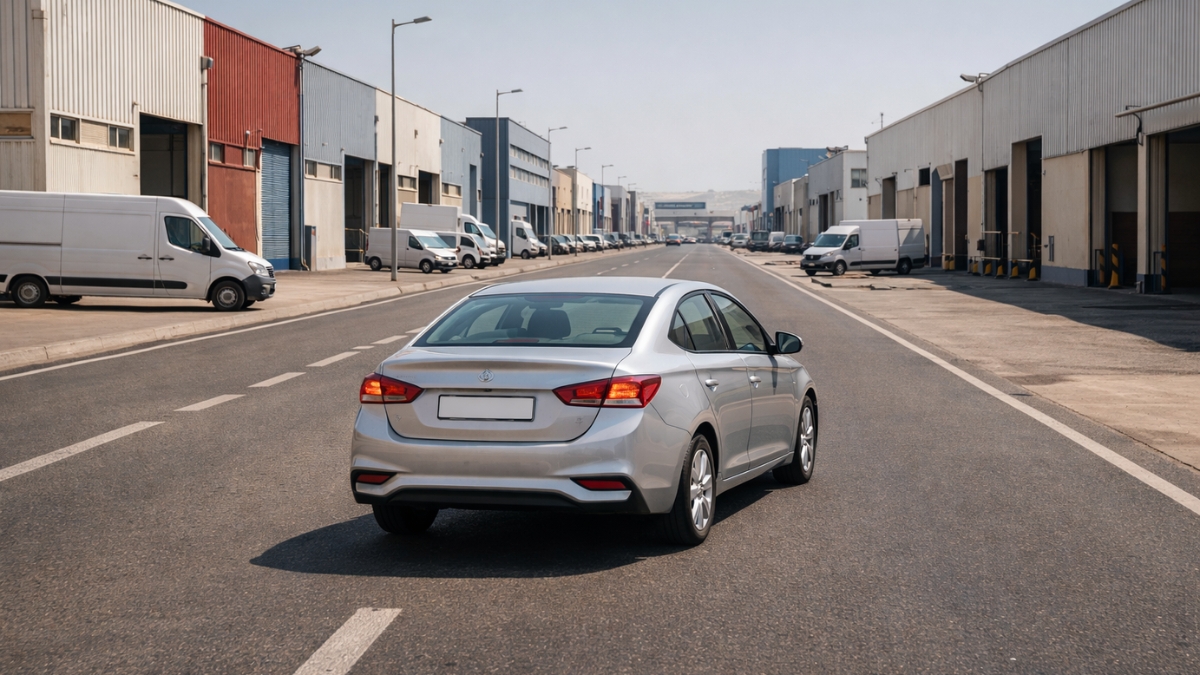
Casablanca is Morocco’s economic engine, and that shows on the road, especially when you’re heading to industrial districts for a pickup, delivery, warehouse visit, or site meeting. The difference between a smooth run and a stressful one usually comes down to three things: timing, approach route, and how prepared you are at the gate.
This guide breaks down the two biggest industrial areas, Casablanca’s north/east belt including Aïn Sebaâ and Sidi Bernoussi, plus the logistics corridors connected to the port and airport. It’s written for people driving rentals, company cars, or light commercial vehicles who need practical, “what do I do next?” guidance.
Table of Contents
Quick map of the industrial “belts” around Casablanca
When to drive: the time windows that save you 30–60 minutes
Aïn Sebaâ: best approaches, parking reality, and what slows you down
Sidi Bernoussi: where congestion builds and how to stay efficient
Port-side logistics: deliveries near Port of Casablanca
Airport-side logistics: Nouaceur/Mediouna corridors near Mohammed V International Airport
A driver’s checklist for industrial visits (documents + vehicle prep)
Safety + vehicle tips (especially in tight loading zones)
1) Quick map of the industrial “belts” around Casablanca
Think of Casablanca’s work/industrial geography as three practical belts:
North/East industrial belt: Aïn Sebaâ → Sidi Bernoussi (factories, workshops, mixed warehouses)
Port-side belt: roads feeding container yards, warehouses, and city freight corridors around the port
South logistics belt: warehouse parks and distribution corridors closer to the airport side (often easier for long-distance trucks and national distribution)
If you plan your day like “north/east in the morning, port midday, south later,” you’ll usually fight traffic less than if you zig-zag.
2) When to drive: the time windows that save you 30–60 minutes
Casablanca traffic is predictable, until you ignore the clock.
Best windows (most days):
Early start: 07:00–08:15 (you get ahead of peak compression)
Late morning: 10:00–12:00 (often the smoothest for industrial runs)
Mid-afternoon: 14:30–16:30 (can be okay depending on school/commute patterns)
Most congested (plan buffer):
08:15–10:00 and 16:30–19:30 (commute wave + deliveries + city movement)
If you’re doing multiple stops, stack them so you’re entering industrial areas late morning and exiting before the evening rush.
3) Aïn Sebaâ: best approaches, parking reality, and what slows you down
Aïn Sebaâ is one of the best-known industrial zones in Casablanca’s northeast, with a long-established base of manufacturers and suppliers.
What to expect on arrival
Mixed road conditions: some streets are wide and truck-friendly; others are narrow with curbside parking.
Busy gate areas: delivery vans, small trucks, and forklifts moving across entrances.
Short-notice stops: security may ask you to park outside while they call a contact.
Practical driving tips
Arrive with a pin, not a street name. Industrial addresses can be inconsistent between signage and invoices.
Don’t block an entrance, ever. If you need to call your contact, pull forward and find a wide shoulder or a proper lay-by.
Photograph the gate sign + your parked position (useful if a site has multiple entrances or if you need to prove arrival time).
Navigation shortcut: If you want real-time routing specifically to the industrial area, this Waze destination is the fastest starting point: Waze
4) Sidi Bernoussi: where congestion builds and how to stay efficient
Sidi Bernoussi is another major industrial concentration in the north of Casablanca, linked to key corridors and improved infrastructure planning over time.
Where delays usually happen
Main connector roads where industrial traffic merges with fast urban axes
Roundabouts/intersections near clusters of warehouses
Shift-change moments when staff arrivals overlap with delivery activity
Practical tips that help immediately
Plan “first stop” parking. If your first stop has no space, you lose momentum fast.
Group stops by proximity. Even 1–2 km can cost 15 minutes if you cross an overloaded junction at the wrong time.
Use a two-step approach: route to the area first, then route to the exact warehouse gate once you’re close (prevents last-minute U-turns).
5) Port-side logistics: deliveries near the Port of Casablanca
If your day includes port-related warehouses, expect more control points and more stop-and-go than a normal industrial run. The port ecosystem is managed with formal services and traffic monitoring, so build extra time for access and paperwork steps.
What makes port runs feel slower
More security checks (ID, visitor logs, vehicle entry rules)
Higher truck density (especially mornings and late afternoons)
Tight turning zones (container traffic + forklifts + yard equipment)
Best practice
Confirm your entry point before leaving. “Port warehouse” can mean very different gates or roads.
Keep documents reachable (not buried in luggage): ID, delivery note, company contact, vehicle papers.
Avoid the temptation to “squeeze in.” Port-side minor bumps happen when drivers rush tiny gaps.
6) Airport-side logistics: Nouaceur/Mediouna corridors near CMN
The south/southeast side around Mohammed V International Airport often feels more “logistics planned”: wider roads, larger compounds, and facilities built for distribution. It can still jam at peak times, but it’s generally easier for scheduled pickups if you time it well.
Pro move for drivers: Download offline maps for your destination zone before you head out (especially if you’re switching SIMs or have weak data in industrial pockets). Official Google Maps offline steps are here: support google map
7) A driver’s checklist for industrial visits
This is the “don’t get stuck at the gate” list:
Documents to keep in the front cabin
National ID/passport copy (as required by site security)
Delivery note / purchase order reference
Contact name + phone number (not just WhatsApp)
Vehicle registration / rental paperwork (if asked)
Vehicle prep (5 minutes that prevent problems)
Fuel level enough for idling + reroutes
Phone mount + charging cable
Clear trunk space (many sites want to see cargo area quickly)
A pen (you’ll sign something, always)
8) Safety + vehicle tips in tight loading zones
Go slow near gates. People step out between parked vans.
Watch your rear corners. Many scrapes happen from turning too early around a parked truck.
If you’re in a rental, do a quick photo set before entering a crowded compound (bumpers, wheels, mirrors). It protects you if something happens in a tight yard.
