
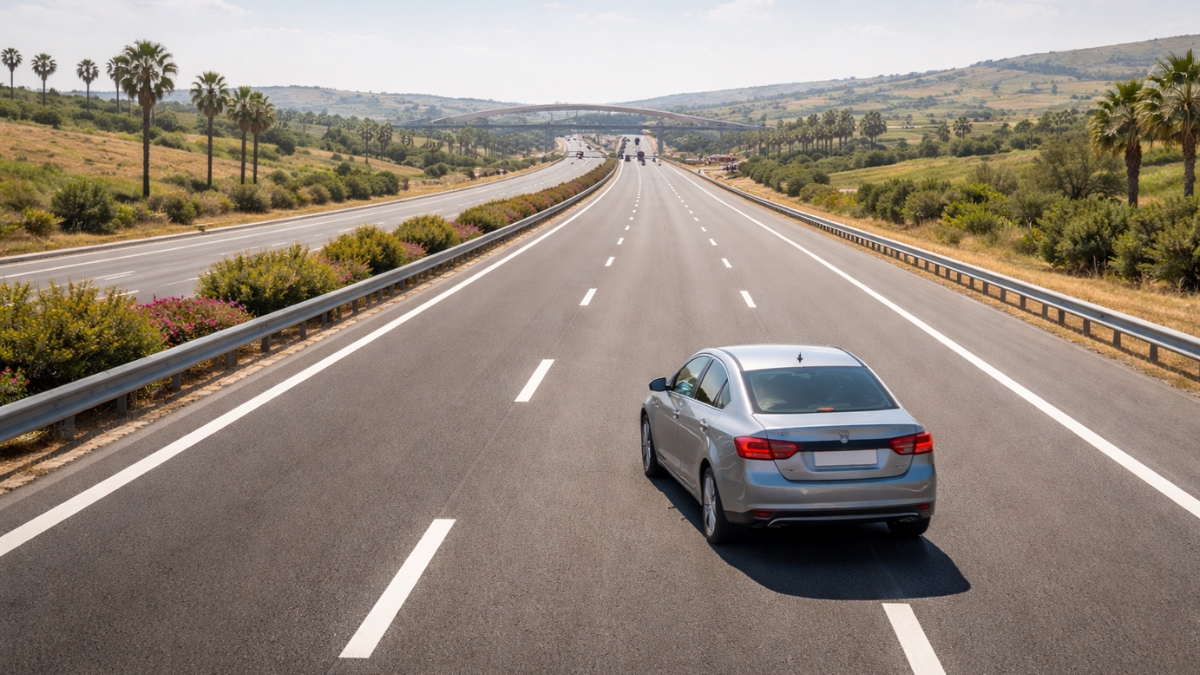
A Casablanca ↔ Rabat commute sounds simple on paper: two major cities, a direct motorway, and predictable distance. In real life, the comfort of your car choice matters a lot more than people expect, because you’ll deal with stop-and-go leaving Casablanca, steady cruising on the autoroute, then slower urban driving and parking once you arrive.
This guide breaks down the best car types (and why) for this specific commute, focusing on comfort, fuel, and “toll-friendly” practicality (meaning: easy motorway driving, easy lane changes at toll plazas, and low stress in city traffic).
Table of Contents
What this commute is really like (driving conditions)
What “toll-friendly” actually means
The best all-round choice for most drivers
Best for fuel savings (diesel vs petrol vs hybrid)
Best for comfort (seats, noise, stability)
Best for traffic + parking (easy city handling)
Best if you carry colleagues or equipment
Quick pick: recommendations by driver profile
Toll + payment tips that reduce stress
1) What this commute is really like (driving conditions)
A Casablanca–Rabat commute usually has three phases:
Urban exit: traffic density, lane merges, roundabouts, short accelerations
Autoroute cruise: steady speed, wind noise, long minutes in one posture
Urban arrival: slower streets, parking, tighter maneuvering (especially in central areas)
So your ideal commuter car is not “the cheapest daily rate.” It’s the one that feels easy in all three phases.
2) What “toll-friendly” actually means
“Toll-friendly” doesn’t mean a special vehicle. It means:
Stable lane control approaching toll plazas (less wobble, less stress)
Good visibility and mirrors for merges after toll booths
Predictable acceleration (so you merge smoothly without punching the throttle)
Easy payment routine (cash/card or a toll pass like Jawaz, more on that later)
If you commute often, a toll pass can reduce stop-and-go fatigue. The official Autoroutes du Maroc pages explain toll payment options and Jawaz usage:
https://www.adm.co.ma/fr/regler-votre-passage
https://www.adm.co.ma/fr/le-pass-jawaz
(These are not travel agencies and they’re the most relevant official references for toll use.)
3) The best all-round choice for most drivers
Compact sedan or compact hatchback (automatic if possible)
For most commuters, the sweet spot is a compact or small sedan/hatch with:
comfortable seats (not thin “city-only” seats)
good cabin insulation (less road noise)
automatic transmission if you’re doing daily traffic waves
Why it wins: It balances motorway stability with easy parking in Rabat and Casablanca.
What to avoid: very small “micro” cars if you’re sensitive to motorway noise or crosswinds. They can feel tiring over repeated trips.
4) Best for fuel savings (diesel vs petrol vs hybrid)
Diesel: often strong on motorway runs
If your commute is mostly motorway and you do it frequently, diesel can be efficient, especially in steady cruising.
Petrol: simple, common, and fine for mixed use
Petrol is usually smoother and quieter in some models, and can be a good match if you also do lots of short city driving.
Hybrid: best for mixed traffic days
If your commute includes heavy stop-and-go (especially leaving Casablanca), a hybrid can feel like the “cheat code”: smoother in traffic and often lower fuel use in urban portions.
If you want a clear, non-car-rental explanation of hybrid benefits and how regenerative braking helps in city traffic, Toyota’s official hybrid explainer is straightforward:
https://www.toyota-europe.com/hybrid
5) Best for comfort (seats, noise, stability)
If your priority is arriving less tired, prioritize these features over “bigger engine”:
Supportive seats (lumbar support is underrated)
Lower cabin noise (better insulation makes the commute feel shorter)
Stable highway feel (long wheelbase or heavier car usually helps)
Good AC performance (important in summer traffic)
Best comfort picks (category-level)
Compact sedan (often the most “calm” per cost)
Mid-size sedan (if you value extra stability and quieter cabin)
If you’re prone to fatigue, a slightly more comfortable class can be worth more than any “sporty” upgrade.
6) Best for traffic + parking (easy city handling)
If you’ll park in busier areas often, your friend is:
smaller footprint
light steering
tighter turning circle
good visibility (or parking sensors/camera if available)
Best city-handling picks
Compact hatchback
Small automatic (if available)
Avoid: large SUVs if you’re frequently parking in tight urban spots. They can be “comfortable,” but the daily parking friction adds up fast.
7) Best if you carry colleagues or equipment
If you commute with 3–5 people, or you regularly carry samples, gear, or bags:
Compact wagon/estate (if available): excellent balance of space + stability
Small SUV: higher seating position and easy loading
Minivan (for teams): best space and comfort, but more fuel and more parking friction
Real-world tip: If your trunk is always full, it changes your day. Choose a vehicle where luggage/equipment fits without blocking rear visibility.
8) Quick pick: recommendations by driver profile
“I want the easiest daily drive”
Compact automatic sedan/hatch
Prioritize: automatic, good AC, comfortable seat
“I want lowest fuel spend”
Efficient diesel compact (motorway-heavy)
Hybrid (traffic-heavy)
“I care about comfort and quiet”
Mid-size sedan
Prioritize: cabin insulation, seat support, stable ride
“I’m in and out of parking all day”
Compact hatchback
Prioritize: visibility, turning radius, sensors if possible
“I carry people or gear”
Small SUV or wagon
Prioritize: trunk space, rear seat comfort
9) Toll + payment tips that reduce stress
Keep a small cash backup even if you plan card (it saves time when lanes are busy).
Choose your lane early and avoid last-second lane cuts near the booths.
If you commute often, consider a toll pass (Jawaz) to reduce stopping and merging stress. Official guidance is on Autoroutes du Maroc:
https://www.adm.co.ma/fr/le-pass-jawaz
Also, for commute-day planning, traffic prediction matters as much as the car. Google Maps’ official feature guide on commute/time estimates is helpful if you rely on it daily:
https://support.google.com/maps/answer/144339
(Again: not a travel agency, and it’s a practical tool for commuters.)
