
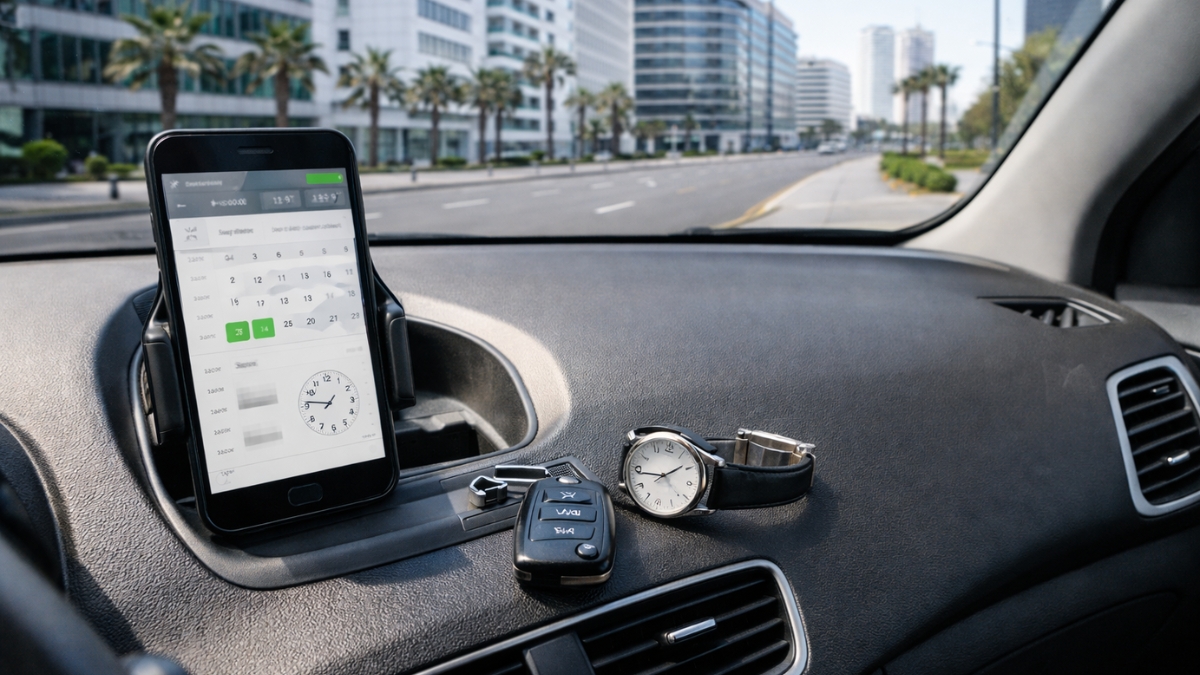
If you’re renting a car in Casablanca for a quick trip, one day meetings, a Rabat run, or a 1–2 night stay, the biggest cost mistake isn’t the daily rate. It’s how the rental clock is counted. Many travelers assume “one day” means “today until tonight.” In rental terms, it usually means 24 hours, and small timing errors can turn a short rental into a paid extra day.
This guide explains the real 24h vs 48h pricing logic, how to exploit short-stay discounts safely, and how to avoid “oops, that’s another day.”
Table of Contents
The short-stay reality: rentals sell time blocks, not calendar days
24 hours vs 1 calendar day (why this matters)
The 48-hour trick: why 2 days can be cheaper per day
Pickup time strategy (the “sweet spot” hours)
Grace periods: what they are and how to confirm them
24h vs 48h: which is best for common Casablanca itineraries
Deposit/hold timing: why it matters for short rentals
Fuel strategy for short stays (full-to-full without disputes)
Add-ons and delivery zones: avoid paying for convenience twice
Copy/paste booking message
1) The short-stay reality: rentals sell time blocks, not calendar days
A rental company isn’t thinking “Monday.” They’re thinking:
Start timestamp
End timestamp
vehicle scheduling for the next customer
So the price is built around exact hours, with rules that trigger extra charges if you miss the window.
2) 24 hours vs 1 calendar day (why this matters)
A 24-hour rental usually means:
Pick up: Tuesday 10:00
Return: Wednesday 10:00
If you pick up Tuesday morning and return Tuesday night, you’re still within 24 hours, so it can price like 1 day. But if you pick up at 10:00 and return at 13:00 the next day, many systems treat that as extra time that can trigger:
an hourly fee
or a full extra day charge (depends on policy)
The key: Your price is connected to the return time you select at booking, not your hotel checkout time.
3) The 48-hour trick: why 2 days can be cheaper per day
Many agencies price 48 hours more efficiently than two separate “one-day” rentals because:
it reduces handover time and staffing cost
it lowers “gap risk” (they don’t need to sell the car again the next day)
weekly and multi-day pricing tables are often designed to encourage longer rentals
So you’ll often see:
24h rate = higher per day
48h rate = lower per day (and sometimes only slightly more total)
When this becomes a “trick” you can use:
If your real plan is “about 30–40 hours,” a 48-hour booking can be cheaper than a 24-hour booking + late fees.
4) Pickup time strategy (the “sweet spot” hours)
For short stays in Casablanca, the best pickup times are the ones that align with your natural schedule so you don’t “accidentally” go late.
A common sweet spot
Late morning pickup (after breakfast, before midday)
Return at the same time 1 or 2 days later
It reduces:
rushed arrival pickups
late-night returns
traffic delays during the evening commute window
If you know Casablanca traffic gets heavy in late afternoon/evening, schedule returns before that rush, not during it.
5) Grace periods: what they are and how to confirm them
Some rentals have a grace period (example: 30–60 minutes). Some don’t. Some only apply if you call ahead. You cannot assume.
What to do: ask this exact question before booking:
“Do you have a grace period? After how many minutes does it become an extra day?”
If the answer is unclear, assume no grace and plan to arrive early.
If you want a clear non-rental explanation of why “pending” or “holds” don’t release instantly when time changes, Visa explains authorization behavior broadly here:
https://www.visa.co.uk/support/consumer/payments.html
6) 24h vs 48h: which is best for common Casablanca itineraries
Itinerary A: One day meetings + evening return
Best: 24h (same-day return)
Tip: Book a return time that matches reality, not hope. If you might run late, don’t book the tightest window.
Itinerary B: Land day 1, drive day 2, leave day 3
Best: 48h
Why: avoids paying a premium 24h rate twice and gives buffer for delays.
Itinerary C: Casablanca ↔ Rabat commute day + one extra evening
Often best: 48h
Because the drive day can run long, and toll/traffic makes “tight returns” risky.
Itinerary D: Airport pickup + next-day airport return
Best: 24h only if your flight schedule is stable
If your return timing is tight, 48h can be cheaper than a missed return window.
7) Deposit/hold timing: why it matters for short rentals
Even on a 24-hour rental, the deposit/hold can be significant. Two key points:
A hold reduces your available spending balance immediately.
If you extend time, some systems re-authorize or adjust the hold.
So for short stays, keep enough buffer on your card so a deposit hold doesn’t choke your trip budget.
If you’re paying by card and you want to understand authorization timing and why holds can remain “pending,” Mastercard’s support pages are a reliable reference:
https://www.mastercard.us/en-us/personal/get-support.html
8) Fuel strategy for short stays (full-to-full without disputes)
Fuel issues are common on short rentals because people refuel too early, then get stuck in traffic and the gauge drops slightly.
Best short-stay fuel routine in Casablanca
Refuel close enough to return that you won’t burn a noticeable amount
Keep the receipt (photo is enough)
Photograph the dashboard fuel gauge at return
If the car was not full at pickup, photograph the fuel level immediately so “same-to-same” is provable.
9) Add-ons and delivery zones: avoid paying for convenience twice
Short rentals are sensitive to extra fees.
Common short-stay money leaks:
out-of-hours pickup/return fees
hotel delivery fees (especially if the street is hard to stop at)
paid parking at hotels (hidden daily cost)
Trick that works: meet at an easy, car-legal pickup point and you can sometimes reduce delivery charges and waiting time.
10) Copy/paste booking message
Use this to lock a clean short-stay quote:
“Hello, I need a short rental in Casablanca. Please confirm:
Total price for 24h and total price for 48h (all fees included)
Grace period (if any) and late return rule
Deposit amount + method (hold/cash/charge) + release timing
Fuel policy (full-to-full?) and receipt requirement
Any airport/hotel delivery or out-of-hours fees
Thank you.”
This forces the provider to show the real logic that controls your total.
