
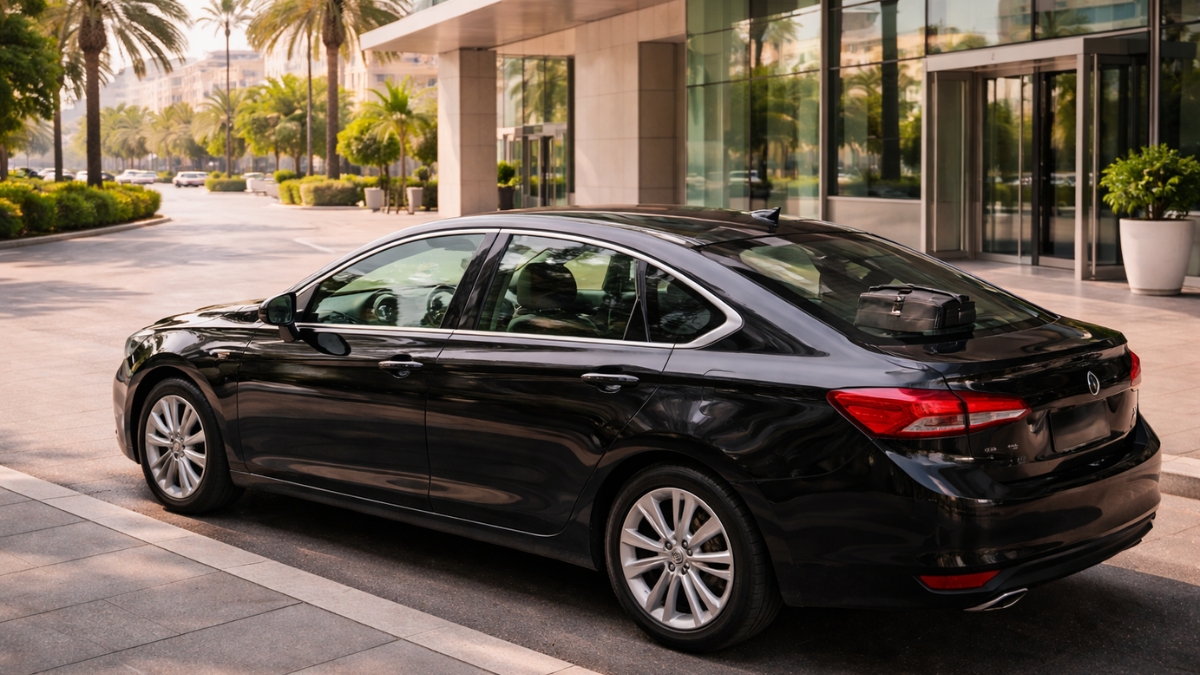
A chauffeur in Casablanca isn’t just “a driver.” In practice, they’re part logistics coordinator, part local navigator, and part timekeeper, especially when you’re landing, meeting clients, moving between offices, or coordinating a tight day of stops.
Good etiquette isn’t about being formal. It’s about being clear, predictable, and respectful of time, yours and the chauffeur’s. When that happens, everything runs smoother: pickups are faster, routes are calmer, and waiting time doesn’t turn into awkward negotiations.
Table of Contents
What “chauffeur etiquette” means in Casablanca
The best meeting protocol (message template included)
Airport pickups: how to meet without confusion
Hotel and office pickups: the “two-point” method
Waiting time: what’s normal and what to agree upfront
Luggage, seating, and in-car rules that keep it professional
Route planning: how to save time without micromanaging
Multi-stop days: how to avoid delays stacking up
Tips and gratitude: what’s appropriate
1) What “chauffeur etiquette” means in Casablanca
Casablanca runs on real schedules, meetings, port time windows, airport timing, and heavy traffic waves. Chauffeur etiquette is mainly:
being on time (or updating early)
using simple, unambiguous pickup instructions
agreeing on waiting time and stops before you start
sharing location when the area is crowded
If you do those four things, you’ll avoid the most common friction points.
2) The best meeting protocol (with a copy/paste template)
The smoothest pickup happens when the chauffeur has three things:
exact pickup point
exact time window
a way to identify you quickly (without shouting names in public)
Here’s a simple message you can send (WhatsApp/SMS):
Pickup message template
Date + time: “Today, 15:30”
Pickup point: “Hotel entrance / Gate A / Lobby side”
Pin: “Google pin link attached”
Name + description: “I’m [First name], wearing [color], with [bag type]”
Destination + stops: “Destination: [place]. Stops: [none / 1 stop at…]”
Luggage: “2 medium suitcases”
Payment note (if needed): “Invoice needed / cash ready / card ok?”
This prevents 90% of “I’m here, where are you?” calls.
3) Airport pickups: how to meet without confusion
At Mohammed V International Airport, the biggest issue is not finding the airport, it’s finding the correct meeting spot among exits, lanes, and crowds.
Airport etiquette that works:
Don’t assume roaming data will be perfect. Have your phone ready and charged before you exit arrivals.
Send one update when you land (“Landed now”) and one when you exit baggage (“Exiting now”).
Use one clear identifier: “Arrivals Door 2” (or whatever you see) + a live location.
If you’re delayed at baggage: message early. Silence creates confusion and extra waiting.
Best practice: share live location for 10–15 minutes so the chauffeur can position correctly without circling. Use an official guide so everyone in your group can do it quickly:
https://faq.whatsapp.com/1317564962315842 (WhatsApp Help Center – live location)
(That’s often faster than trying to explain “I’m near the café… no, the other café.”)
4) Hotel and office pickups: the “two-point” method
Hotels and offices often have two usable pickup points:
the main entrance (easy for you)
the vehicle-access side (easy for the chauffeur)
The best etiquette is to confirm which one you want. A simple message like:
“Pick me up at main lobby entrance, not the service gate.”
If the main entrance is congested, let the chauffeur choose a safer spot:
“If the entrance is blocked, park at the nearest safe pull-in and I’ll walk 1 minute.”
That one sentence saves time and avoids unsafe stops.
5) Waiting time: what’s normal and what to agree upfront
Waiting time is where misunderstandings happen. In Casablanca, traffic and security checks can turn a “quick stop” into 20 minutes.
A clean way to handle it
Agree on waiting in two layers:
Included waiting (common for pickups): often 10–15 minutes
Extra waiting: charged per block of time or per hour (varies by service)
Even if you don’t discuss pricing, you should discuss the rule:
“If I’m not out in 10 minutes, I’ll message you. If it becomes 30+ minutes, tell me what you prefer.”
Practical etiquette
If you’re running late, update early (5–10 minutes before pickup time, if possible).
If your plan changes (extra stop), say it before you enter the car.
Don’t “disappear” into a meeting without telling the chauffeur you’ll be 45–60 minutes.
Clear updates = no tension.
6) Luggage, seating, and in-car rules that keep it professional
These are small habits that feel respectful and keep the ride comfortable:
Luggage: tell them the count/size in advance (especially if you have equipment cases).
Trunk etiquette: let the chauffeur place luggage if they offer, don’t rush and slam the trunk.
Seating: if it’s business, rear seat is standard; if it’s casual, ask what’s easiest.
Calls: if you’ll be on calls, mention it (“I’ll take a call for 10 minutes”).
Food/drinks: ask before eating; avoid messy snacks in the back seat.
AC/music: ask politely once, then leave it, chauffeurs appreciate low drama.
7) Route planning: how to save time without micromanaging
The best etiquette is to share your priority, not your ego.
Instead of:
“Take this road. No, not that road.”
Say:
“Priority is fastest arrival.”
or“Priority is smooth ride (less stop-and-go).”
or“Priority is avoiding tight streets; I get car-sick.”
Also: if you have a must-arrive time, say it:
“I need to be there by 16:15, please plan for buffer.”
One simple tool that helps both sides
Share the destination pin and (if you have multiple stops) a list in order. If you’re coordinating with someone else, you can share your trip progress so they know your ETA without calling you repeatedly:
(Google Maps Help – share trip progress)
(Sharing trip progress reduces “Where are you?” calls, especially for meetings.)
8) Multi-stop days: how to avoid delays stacking up
Casablanca multi-stop days fail when stops are added randomly. A little structure keeps it smooth.
Etiquette for multi-stop scheduling:
Group stops by area (don’t zig-zag across the city)
Put the “hard deadline” stop first (airport, meeting, ticketed appointment)
Keep “uncertain duration” stops last (shopping, browsing, flexible visits)
A smart way to communicate:
“We have 5 stops. Stop 1 and 2 are fixed times. Stops 3–5 are flexible.”
That lets the chauffeur plan realistic buffers and reduces stress.
9) Tips and gratitude: what’s appropriate
Tipping culture varies by context. If the service is professional and smooth, it’s normal to show appreciation, especially for help with luggage, waiting patiently, or handling complex routes.
A simple rule that stays respectful:
Tip based on effort and smoothness, not pressure.
If you don’t tip, a warm “thank you” and clear feedback still matters.
If you need invoices/receipts for business, mention that upfront so it’s handled calmly, not at the last minute curbside.
