
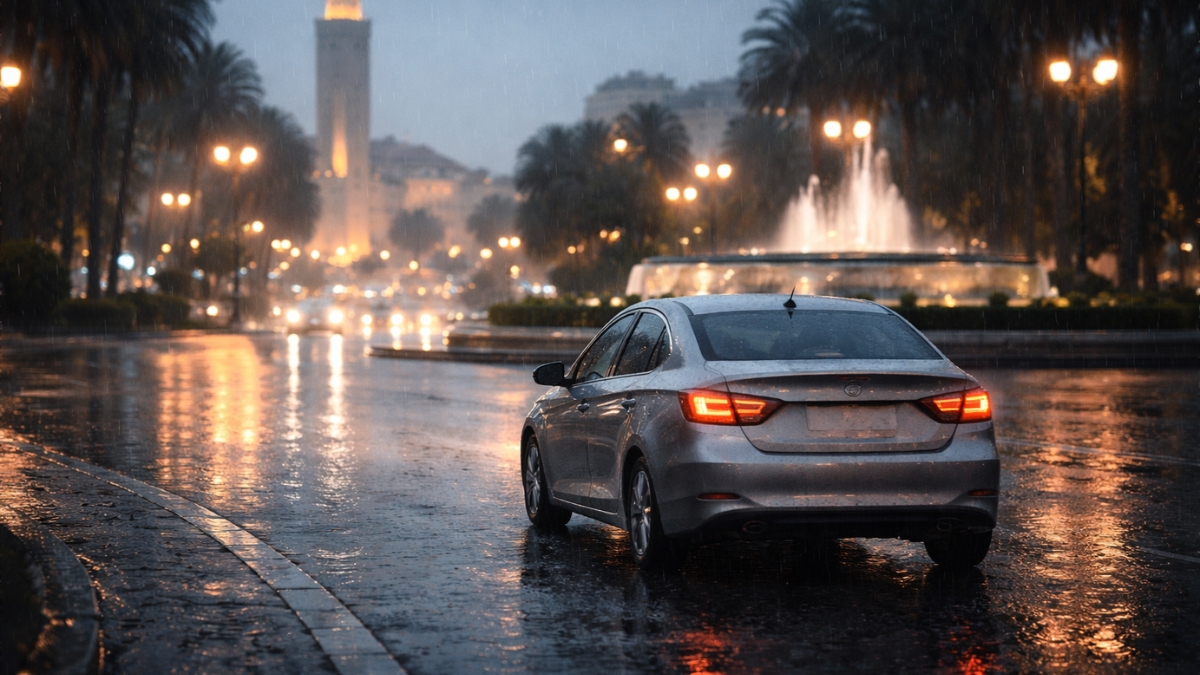
Rain in Casablanca changes the rules fast. Roads that feel predictable in dry weather can turn slick within minutes, especially at roundabouts, lane markings, and polished intersections. Add spray from taxis and buses, reflective glare at night, and sudden braking near merges, and you get the classic tourist trap: driving “normally” but losing grip at the exact wrong moment.
This guide focuses on what actually prevents problems in Casablanca rain: how to approach slippery roundabouts, when to use headlights, how to choose a safe speed (even on roads that look fine), and the habits that keep you in control.
Table of contents
Why Casablanca roads feel extra slippery in rain
Roundabouts: the #1 place tourists get caught out
Headlights and visibility: what to do and when
Safe speed habits that actually work in wet conditions
Braking, distance, and lane choices in heavy spray
Puddles, hydroplaning, and what not to do
Parking and restarting safely after rain
FAQ
1) Why Casablanca roads feel extra slippery in rain
Casablanca’s first rain after dry weather often feels the worst because dust, rubber residue, and leaked fluids mix with water and create a slick film. The danger isn’t only “standing water”—it’s low-grip surfaces you can’t easily see.
What becomes slippery first:
Roundabout entries and exits (constant tire polishing)
Painted lines and arrows (lower traction when wet)
Smooth intersections and tight turns near busy boulevards
Areas where traffic stops often (oil + water mix)
Your mindset should be: assume less grip than you think you have, especially in the first 20–30 minutes of rain.
2) Roundabouts: the #1 place tourists get caught out
Roundabouts in Casablanca move quickly, and in rain they become a traction test. Tourists usually get caught out in three moments: braking too late, turning too sharply, or accelerating mid-turn to “merge confidently.”
The safer roundabout routine (rain version)
Slow down early, while the car is straight. Do your main braking before you turn.
Enter gently. You want a smooth roll-in, not a stop-then-launch.
Hold a steady throttle through the curve. No sudden acceleration while steering.
Exit with patience. Wait until the steering wheel begins to unwind before you add speed.
The biggest mistake
Trying to “save time” by entering fast and braking inside the roundabout. In wet conditions, braking + turning is where grip disappears.
3) Headlights and visibility: what to do and when
In Casablanca rain, headlights aren’t just for you to see, they’re for others to see you through spray and gray light. Even daytime rain can cut contrast, especially with wet asphalt reflecting the sky.
A simple rule from wet-weather safety guidance is: turn your headlights on so you can see and be seen in rain, and slow down / increase following distance. This is consistent with AAA’s wet-weather driving tips: https://exchange.aaa.com/safety/driving-advice/wet-weather-driving-tips/
Practical headlight habits in Casablanca rain
Use low beams in rain (better for visibility than “no lights”).
Avoid high beams in heavy rain or spray (they can bounce glare back).
At dusk/night, expect glare from wet roads, slow down a little earlier than usual.
4) Safe speed habits that actually work in wet conditions
“Safe speed” in rain is not about the number on the sign. It’s about whether you can stop smoothly without drama and steer without sliding.
A wet-road speed check you can do in real life
Ask yourself:
Can I stop smoothly without ABS pulsing?
Can I steer gently without feeling the car “float”?
Do I have space if the car ahead brakes suddenly?
If any answer is “no,” you’re too fast for the conditions, even if everyone else is rushing.
AAA’s advice also emphasizes slowing down, avoiding hard braking/turning, and increasing following distance to reduce hydroplaning risk. https://exchange.aaa.com/safety/driving-advice/wet-weather-driving-tips/
The smartest speed habit in Casablanca rain
Drive like you’re carrying a full cup of tea on the dashboard: every input (brake, steering, throttle) should be smooth and gradual.
5) Braking, distance, and lane choices in heavy spray
Rain + city traffic means you’ll see sudden stops, especially near roundabouts, taxi pull-ins, and intersections.
Do this:
Increase your following distance (double it if spray is heavy).
Start slowing earlier than you normally would.
Keep braking progressive, not “on/off.”
Lane tips:
Avoid driving right behind large vehicles where spray destroys visibility.
If lane markings are hard to see, reduce speed slightly and follow the path of traffic, not the paint.
A useful rule of thumb from rainy driving guidance is: if it’s time for your wipers, it’s time to slow down, and use dipped headlights when visibility is reduced. https://nationalhighways.co.uk/road-safety/travelling-in-severe-weather/travelling-when-its-raining/
6) Puddles, hydroplaning, and what not to do
Standing water is common after heavy showers, especially near drains, roadside dips, and older asphalt patches.
What not to do
Don’t accelerate through puddles.
Don’t brake hard in standing water.
Don’t yank the steering wheel if the car feels light.
If you feel hydroplaning
Ease off the throttle
Hold the wheel steady
Avoid braking sharply
Once traction returns, slow down and create more space
Also avoid cruise control in wet conditions (not relevant in the city, but important on faster roads).
7) Parking and restarting safely after rain
Tourists often get caught out after parking in rain:
Wet shoes slip on pedals
Fogged windows reduce visibility
Mirrors are smeared with water/dirt
Before you move:
Clear fog with ventilation/defogger
Wipe side mirrors if visibility is poor
Do a slow “first 30 seconds” until you feel grip and response
If you parked near a curb and there’s runoff water, pull away gently, curbside puddles can hide deeper water than you expect.
FAQ
1) Are Casablanca roundabouts more dangerous in the rain?
They can be, because grip drops where tires constantly polish the surface. Slow down early, brake before turning, and keep inputs smooth.
2) Should I turn headlights on during daytime rain?
Yes, low beams help others see you through spray and low-contrast light.
3) What’s the safest way to brake in rain?
Brake earlier and more gradually. Avoid braking hard while turning, especially in roundabouts.
4) How do I avoid hydroplaning in city rain?
Slow down, avoid deep puddles, don’t accelerate through standing water, and keep extra following distance.
5) What speed should I drive in Casablanca rain?
There isn’t one number. Drive at a speed where you can stop smoothly and steer gently without the car feeling “light.”
6) What’s the biggest tourist mistake in rainy Casablanca driving?
Entering roundabouts too fast, then braking mid-turn. In wet conditions, that combination is where control is lost.
