
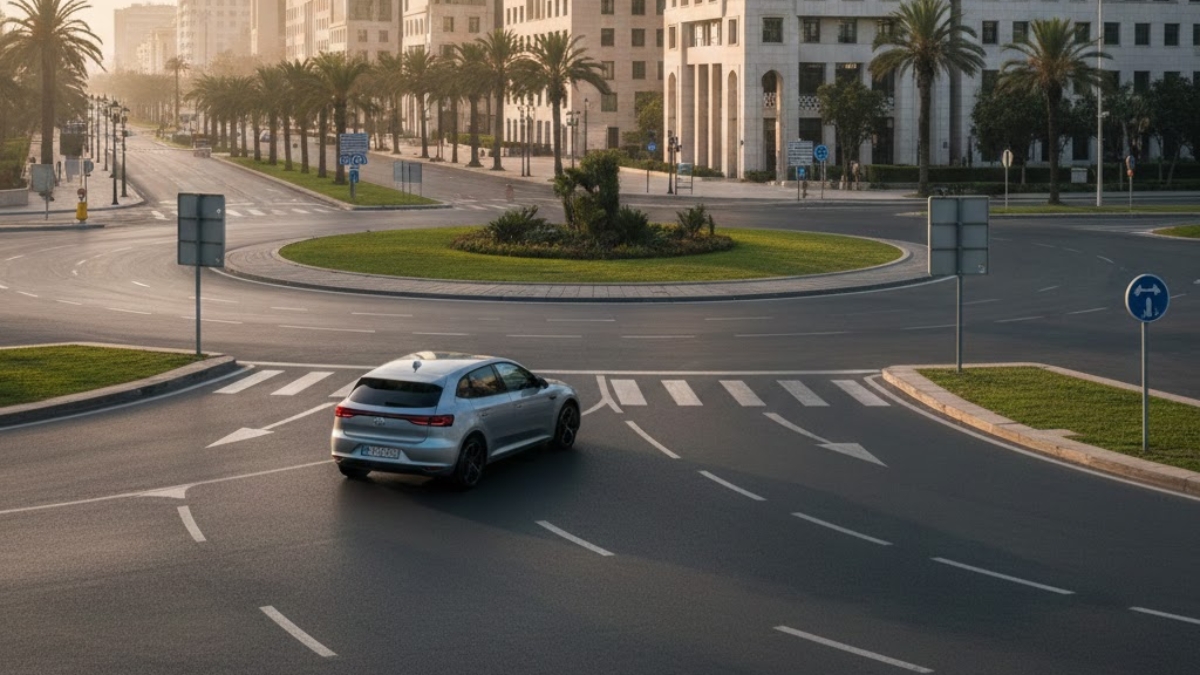
Driving in Casablanca can feel intense on day one then surprisingly manageable once you understand the “local logic.” Casa is Morocco’s biggest business city, with fast boulevards, layered roundabouts, scooters that appear from nowhere, and drivers who communicate with position + horn more than with turn signals. If you’re renting a car for city stays, Corniche evenings, or day trips, this guide will help you drive more confidently and avoid the common tourist mistakes.
Table of contents
Casablanca driving mindset in one minute
Roundabouts: who goes first and how to choose a lane
Lane discipline: what you’ll see vs what you should do
Honking: what it usually means (and when to ignore it)
Police stops and checkpoints: what to carry and how to act
Parking and “micro-scratches”: the Casablanca reality
Quick tourist checklist before you start the engine
FAQs
Casablanca driving mindset in one minute
Casablanca isn’t about “perfect rules.” It’s about predictable behavior. The safest tourist driver is the one who:
stays calm and steady (no sudden moves)
leaves extra space for scooters and taxis
signals early and clearly
avoids last-second lane changes
accepts that you might miss a turn and simply reroute
Use Google Maps or Waze-like navigation, but don’t blindly follow it into tight side streets Casa has quick one-way turns and busy merges that can be stressful if you try to “force” the suggested route.
Roundabouts in Casablanca: how they really work
Roundabouts are where most tourists get nervous. Here’s how to handle them safely.
1) Assume vehicles already in the roundabout may not stay in their lane
In Casablanca, some drivers drift across lanes inside a roundabout, especially large ones. Your safety move is simple:
choose a lane early
hold your lane
don’t cut across at the last second
If you miss your exit, keep going around and take the next one. It’s normal.
2) Who has priority?
In many places, the basic expectation is that traffic already inside the roundabout has priority, but signage and lane markings matter, and some junctions are more “negotiated” than strictly ruled. Your best tourist strategy:
slow down early
look for yield/priority signs
enter only when you see a clear gap you can take without forcing brakes behind you
3) Lane choice: make it simple
A practical way to think about lanes (when there are two):
Right/outside lane: good for the next exit or short movements
Left/inside lane: good for later exits or turning “deeper” around
Then signal as you prepare to exit. Even if not everyone signals perfectly, you signaling clearly reduces surprises.
4) Watch for scooters at the edges
Scooters may pass between lanes or hug the outside edge. Keep your speed smooth, avoid sudden steering, and check mirrors twice.
Lane discipline: what you’ll see vs what you should do
Casablanca has modern avenues, but lane discipline can feel “flexible.” Tourists get into trouble when they copy the most aggressive behavior. Instead, drive like a calm professional.
What you’ll commonly see
taxis stopping suddenly at the curb
cars changing lanes late to catch an exit
scooters filtering between cars
drivers using the shoulder briefly to pass slow traffic
What you should do (tourist-safe style)
1) Hold a steady lane and speed.
Even if others weave, your predictability makes you safer.
2) Keep a larger following gap than you would at home.
This gives you time to react to taxis and sudden braking.
3) Avoid “threading the needle.”
If the gap is questionable, don’t take it. There’s always another opening.
4) Be extra careful near buses and grand taxis.
They often stop, merge, and re-merge quickly.
5) Plan lane changes early.
If your exit is coming, move over gradually, don’t wait for the last 50 meters.
Honking in Casablanca: what it usually means
In Casablanca, honking is often communication, not anger. Think of it like “audio body language.”
Common meanings
“I’m here / I’m passing” (especially scooters)
“Your light is green” (short beep)
“Careful—don’t move yet” (warning honk)
“I want to go first” (assertive honk)
How to respond
Don’t honk back emotionally.
Don’t panic-brake.
Keep your line, check mirrors, and make a clean decision.
If someone honks because they want you to move faster into a tight gap, ignore the pressure. As a tourist, your goal is not to “win the merge.” Your goal is to arrive without stress or damage.
Police stops and checkpoints: what to carry and how to act
Tourists often worry about police stops. In most cases, if you’re calm and prepared, it’s routine.
What to keep with you (always)
driver’s license (and IDP if your license isn’t in Latin characters)
passport or a copy (some travelers prefer keeping originals secure and carrying copies)
rental agreement/contract
insurance/coverage proof if provided
a reachable phone number (WhatsApp) in case the rental company needs to confirm anything
Official travel advice also emphasizes carrying your licence, registration and insurance evidence when driving in Morocco. You can see this guidance on the UK government’s Morocco travel advice page here: https://www.gov.uk/foreign-travel-advice/morocco/safety-and-security
How to behave at a stop
pull over safely and stay respectful
keep hands visible and remain calm
answer simply (where you’re going, where you’re staying)
don’t argue on the roadside if there’s confusion, call your rental provider
Speed checks
Speed enforcement exists, and some stretches invite speeding because they feel “highway-like.” As a tourist, drive a little under what feels normal, especially when entering/exiting major roads.
For another official reminder that Morocco has a poor road safety record and drivers should be extremely careful and stay within speed limits, Ireland’s travel advice for Morocco is a useful reference: https://www.ireland.ie/en/dfa/overseas-travel/advice/morocco/
Parking and “micro-scratches”: the Casablanca reality
Casablanca parking is often the biggest risk—not high-speed driving.
What to expect
tight curb spaces
quick parallel parking
scooters passing close as you maneuver
busy hotel drop-off zones at Ain Diab/Corniche
Tourist-smart parking habits
Choose a slightly longer walk instead of squeezing into the tightest spot.
Park slowly and use your mirrors.
Avoid parking right on corners and roundabout exits.
If you’re staying near the Corniche, consider parking once and walking for restaurants.
Before you leave the car: take a quick look at wheels and bumpers. Wheel scuffs and bumper taps are the most common “Casablanca souvenirs.”
Quick tourist checklist before you start the engine
✅ Mirrors set + phone mounted (don’t hold it)
✅ Decide your first two stops (hotel → parking → destination) before you move
✅ Keep a calm lane, don’t chase every gap
✅ Roundabouts: lane early, exit safely, don’t cut last-second
✅ Expect scooters and taxis to do unexpected things
✅ Keep documents accessible for checkpoints
✅ If stressed: pull into a safe spot, breathe, reroute
FAQs
Is driving in Casablanca safe for tourists?
It can be safe if you drive defensively: steady lane, larger gaps, slow parking, and no rushing in roundabouts.
Do people follow lane rules in Casablanca?
Some do, some don’t. Your safest move is to be predictable and avoid aggressive lane changes.
What does honking mean in Casablanca?
Often it’s communication (“I’m here,” “careful,” “go ahead”), not anger. Don’t react emotionally, check mirrors and stay calm.
Will police stop tourists in Casablanca?
Sometimes checkpoints happen. Carry your license, rental papers, and ID, and keep your answers simple and respectful.
