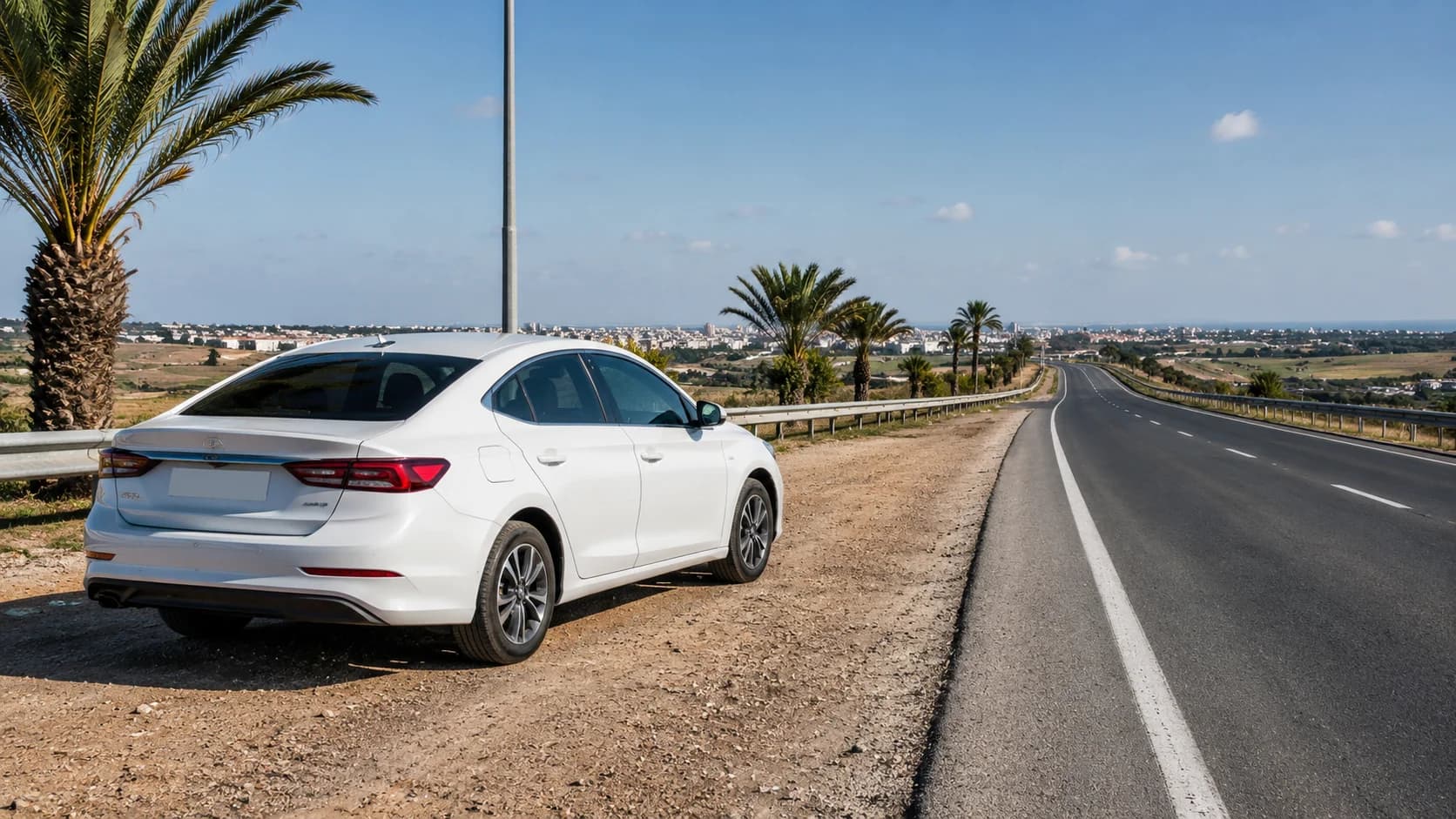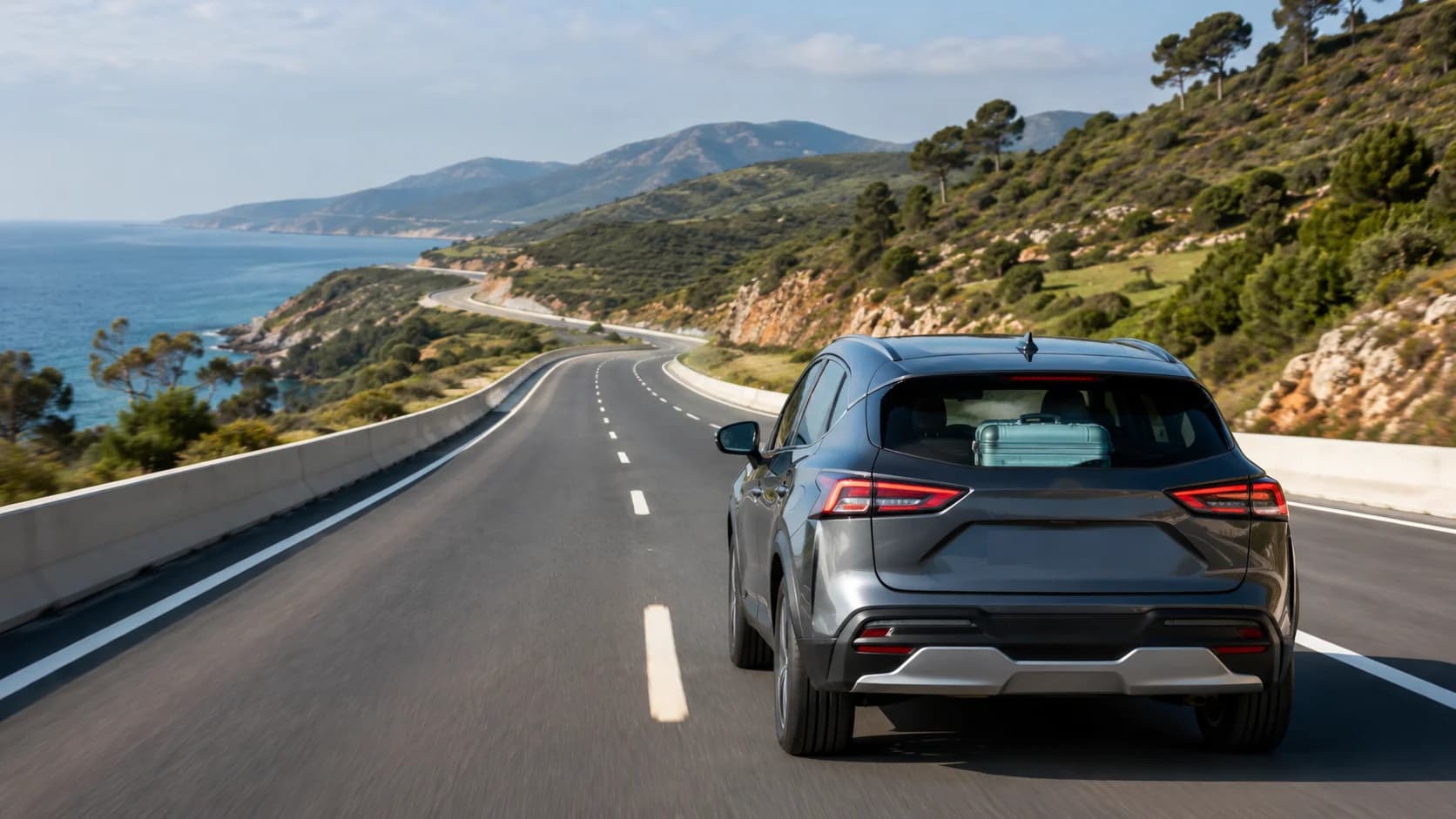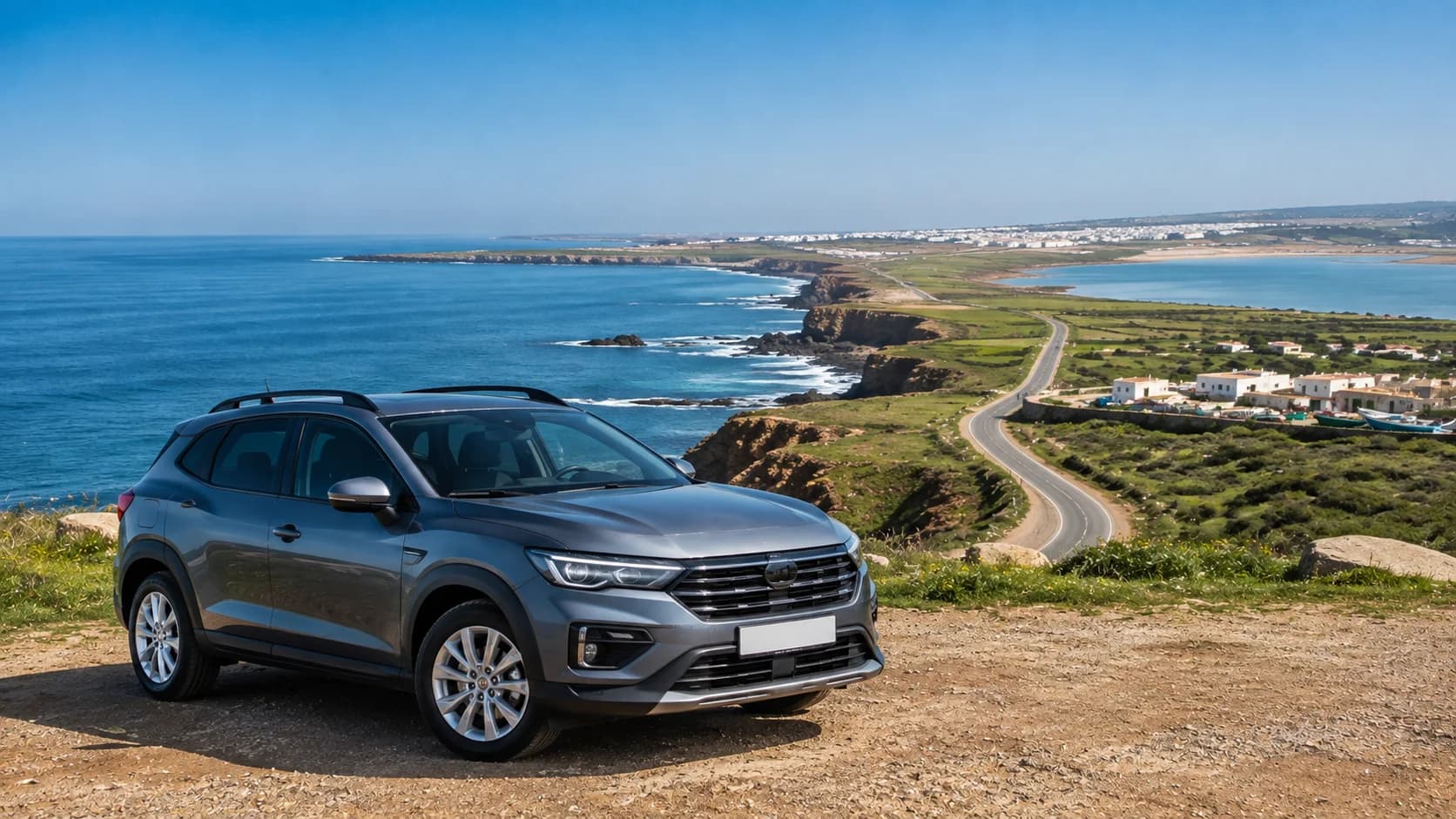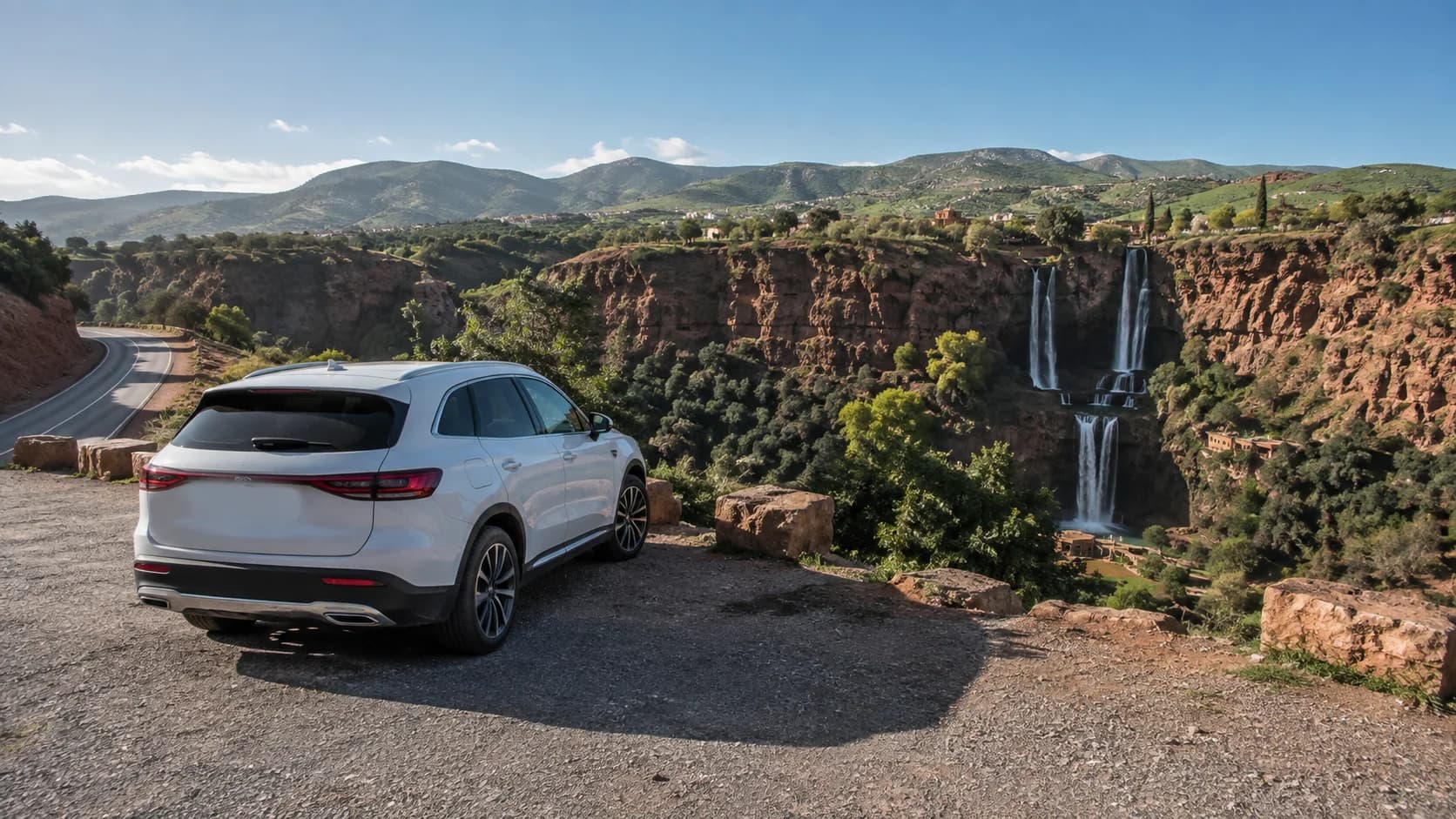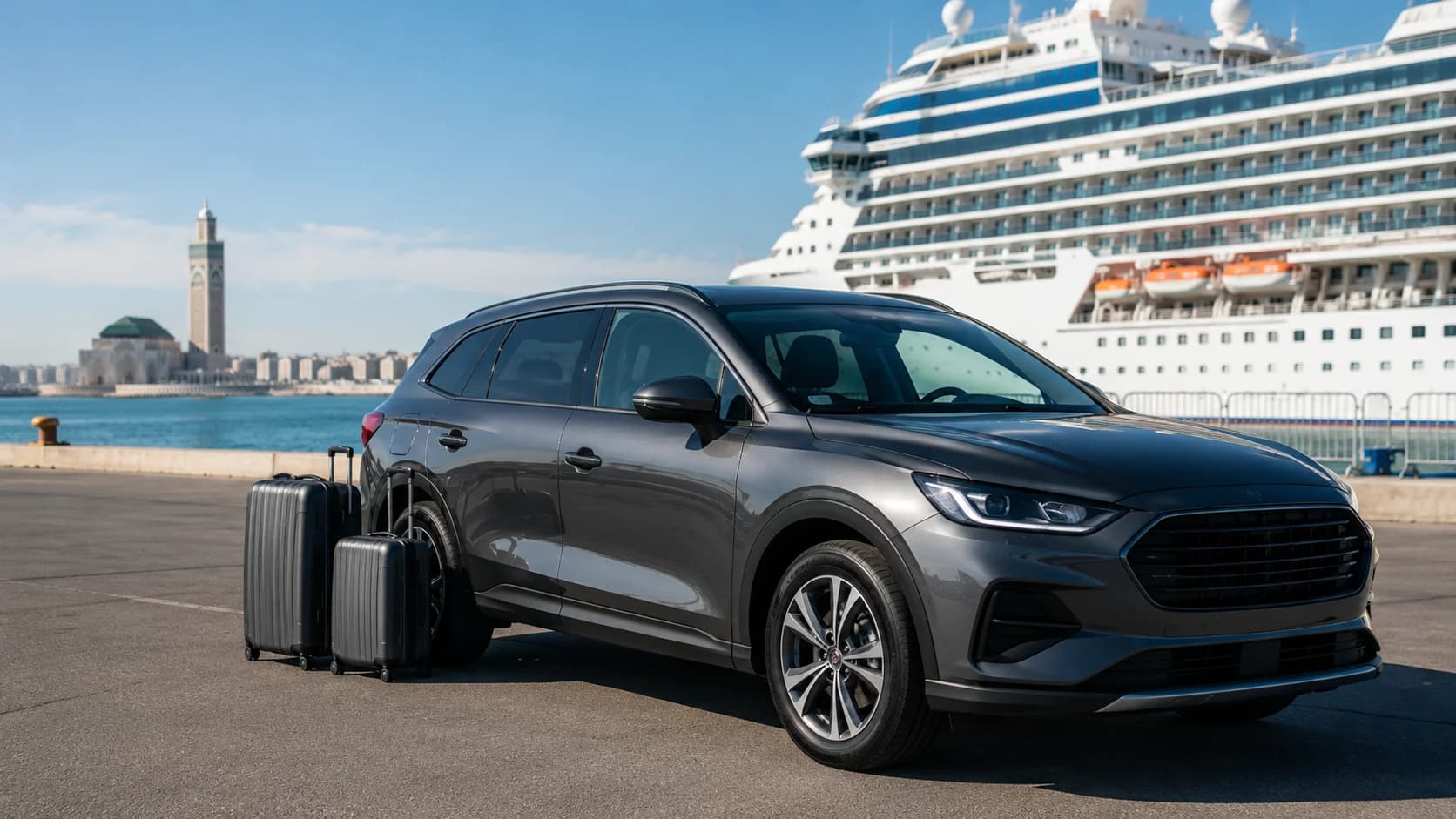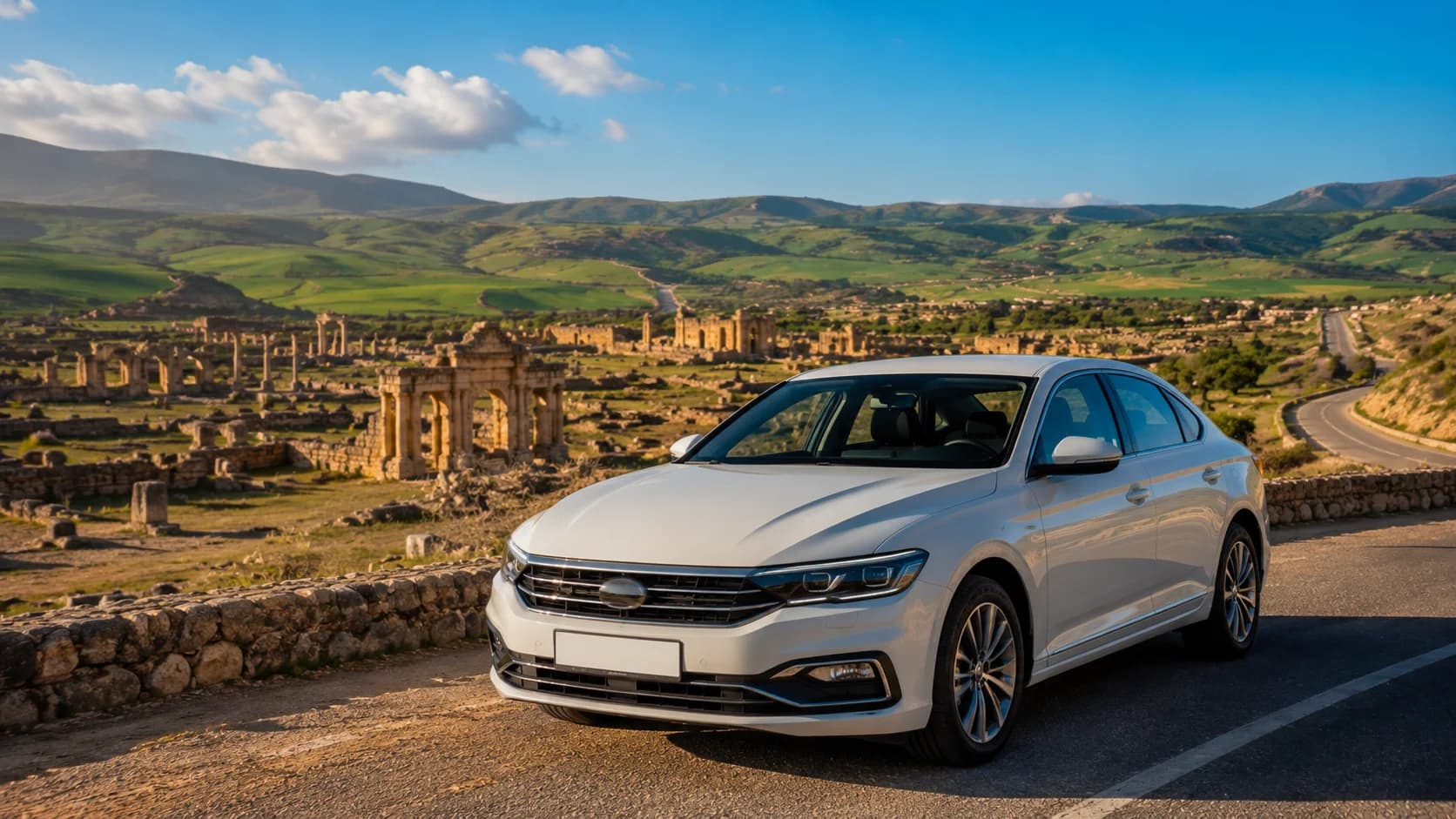


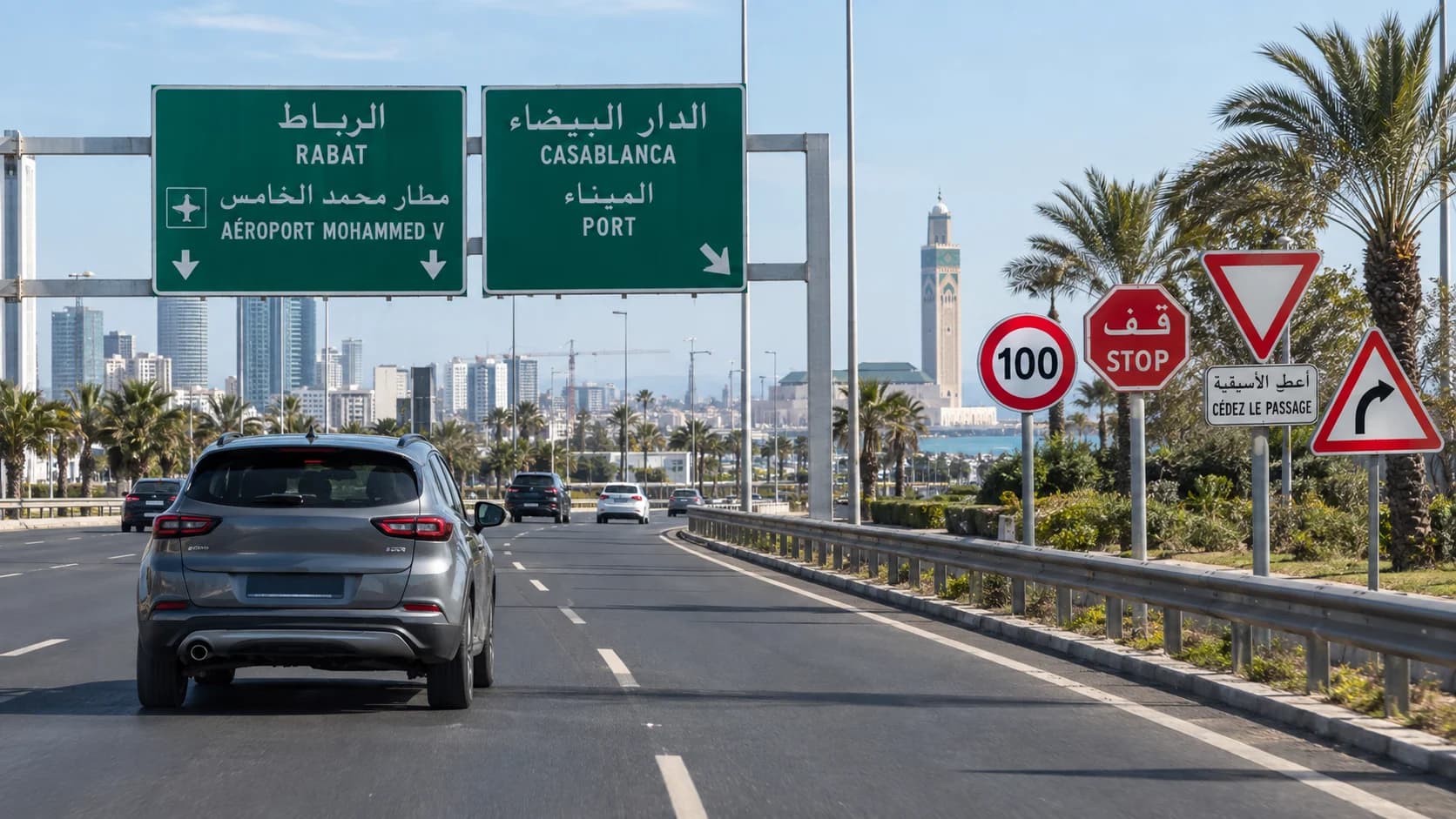
Driving out of Casablanca for the first time can feel unfamiliar, especially when you are concentrating on traffic, navigation and a rental car at the same time. Fortunately, Morocco road signs for tourists are generally based on familiar international shapes, colors and symbols. Once you understand a few important groups—speed limits, warnings, priority signs, parking restrictions and motorway directions—the road becomes much easier to read.
For visitors collecting a rental vehicle in Casablanca, learning the most common Moroccan traffic signs before leaving the airport, hotel or city center can make the first journey noticeably less stressful.
What Morocco Road Signs Should Tourists Know?
The most useful signs for tourists to recognize are:
-
Red-bordered circular signs: usually restrictions or prohibitions.
-
Triangular signs with red borders: warnings about hazards ahead.
-
Blue circular signs: mandatory instructions.
-
STOP sign: requires a complete stop.
-
Upside-down triangle: give way.
-
Red-bordered speed signs: show the maximum permitted speed at that location.
-
Parking signs: indicate permitted, restricted or prohibited parking.
-
Motorway direction signs: help identify motorway entrances, exits and destinations.
-
Roundabout signs: warn or instruct drivers about approaching circular junctions.
Morocco's official road-sign system includes warning, priority, prescription, indication and directional signage, while the country's motorway network uses dedicated motorway and interchange signs.
If Casablanca is the starting point of your trip, choosing an easy-to-drive vehicle can also help. Explore car rental Casablanca before deciding which vehicle best suits your itinerary.
What Road Signs Should Tourists Know First?
You do not need to memorize every Moroccan traffic sign before renting a car.
Instead, learn the visual language.
Triangle = Warning
A triangular sign with a red border normally warns you about something ahead. Depending on the symbol inside, that could mean:
-
a bend;
-
a steep descent;
-
a narrowing road;
-
pedestrians;
-
children;
-
animals;
-
slippery pavement;
-
falling rocks;
-
roadworks;
-
a railway crossing;
-
another hazard.
When you see a warning triangle, reduce speed enough to understand what is coming next.
Red Circle = Restriction
Circular signs with a red border generally communicate a restriction.
The symbol or number inside tells you what is restricted. A speed-limit sign is one of the most common examples.
Blue Circle = Mandatory Action
A circular blue sign usually tells drivers what they must do rather than what they cannot do.
That might include following a particular direction or using a designated path.
Square or Rectangle = Information
Rectangular and square signs are commonly used for information, services, parking and directions.
For tourists, these are particularly useful when looking for:
-
parking;
-
fuel;
-
motorway access;
-
city destinations;
-
hotels or services;
-
route numbers.
The official Moroccan sign nomenclature includes dedicated symbols for parking, motorway entrances, petrol stations and numerous other road services.
Speed-Limit Signs in Morocco
A Moroccan speed-limit sign is easy for most international visitors to recognize.
Look for a number inside a circular sign with a red border.
For example, if the sign shows 80, the maximum permitted speed from that point is 80 km/h unless another sign changes the restriction.
The most important rule for tourists is simple:
Follow the posted number, not what surrounding traffic appears to be doing.
A road can change from a faster section to a much slower zone because of an intersection, settlement, roadworks or another hazard.
On Moroccan motorways, NARSA states that the maximum motorway speed is 120 km/h. That does not mean drivers should automatically travel at 120 km/h: a lower posted limit, traffic, weather or road conditions can require a lower speed.
Tourist Tip
Do not rely entirely on your navigation app for speed limits.
GPS apps are useful for route guidance, but the physical road sign in front of you should be treated as the current instruction.
If you see a lower limit ahead, slow down before entering the restricted section rather than after passing the sign.
Motorway Entry, Exit and Direction Signs
Motorway signage becomes especially important when leaving Casablanca because several major routes connect around the metropolitan area.
Casablanca connects directly into Morocco's motorway system toward Rabat and northern Morocco, Marrakech and Agadir, Mohammed V International Airport, El Jadida and other destinations.
ADM currently identifies:
-
A1 as the Rabat–Safi motorway corridor, including Casablanca;
-
A3 as the Casablanca–Agadir motorway;
-
A31 as the newer Tit Mellil–Berrechid motorway connection.
The A31 connection entered service on November 27, 2025 and links the Casablanca bypass around Tit Mellil with the A3 and A4 motorway network around Berrechid.
How to Recognize Motorway Directions
When approaching a major motorway junction, do not focus only on the road number.
Look for three things:
Destination + arrow + lane position.
If you are driving toward Marrakech, for example, begin following signs mentioning Marrakech well before the final split.
Likewise, visitors heading toward Rabat should follow Rabat rather than simply assuming that the straightest lane continues north.
Read Signs Early
Casablanca has multi-lane approaches and major interchanges where the correct lane can separate before the actual junction.
When you see your destination:
-
check the arrow;
-
identify the correct lane;
-
signal;
-
change lanes only when safe;
-
remain in that lane through the junction.
Avoid crossing several lanes at the last second because your navigation app announces an exit.
Official ADM information on the modernized Aïn Harrouda interchange, for example, specifically distinguishes lanes toward Marrakech/Mohammed V Airport and lanes toward Rabat or Mohammedia.
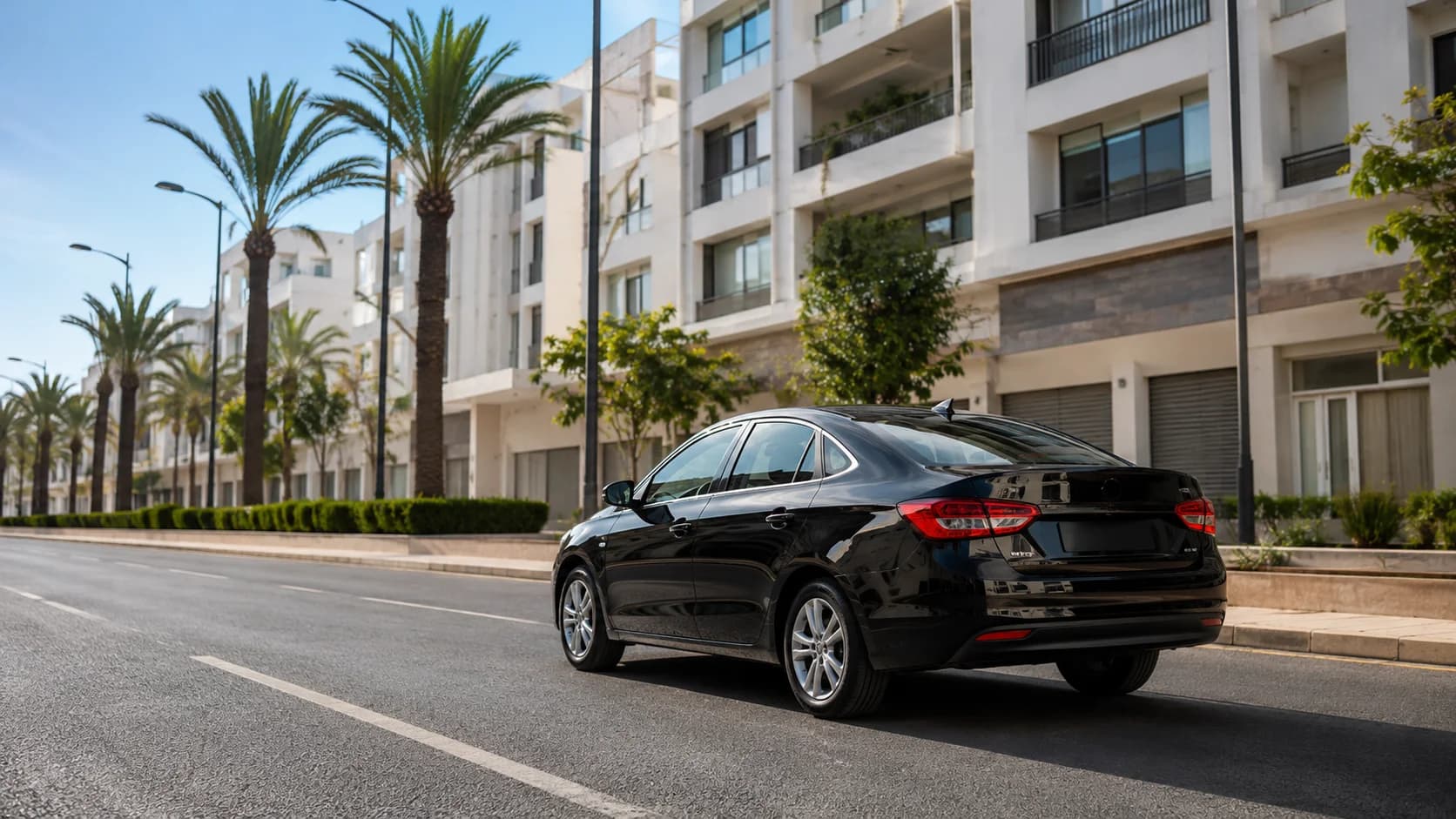
For longer motorway trips, a comfortable sedan rental Casablanca can be practical for luggage and extended intercity driving.
Priority, Stop and Give-Way Signs
Priority signs deserve special attention in Casablanca because busy junctions can combine cars, buses, motorcycles, pedestrians and, in some areas, tram infrastructure.
STOP
The Moroccan STOP sign uses the familiar red octagonal shape.
Treat it exactly as you would elsewhere:
come to a complete stop and check that the road is clear before continuing.
Do not assume that slowing down is sufficient.
Give Way
The inverted triangular give-way sign means you must allow traffic with priority to pass before entering the junction.
Priority Roads and Intersections
You may also see signs indicating:
-
a priority road;
-
the end of priority;
-
an upcoming intersection;
-
a roundabout;
-
a side road joining a priority road.
When the junction feels unclear, slow down and read both the vertical signs and the road markings instead of copying the vehicle in front.
NARSA emphasizes that drivers must respect priority rules, including priority involving pedestrians and public transport where applicable.
Parking and Restriction Signs
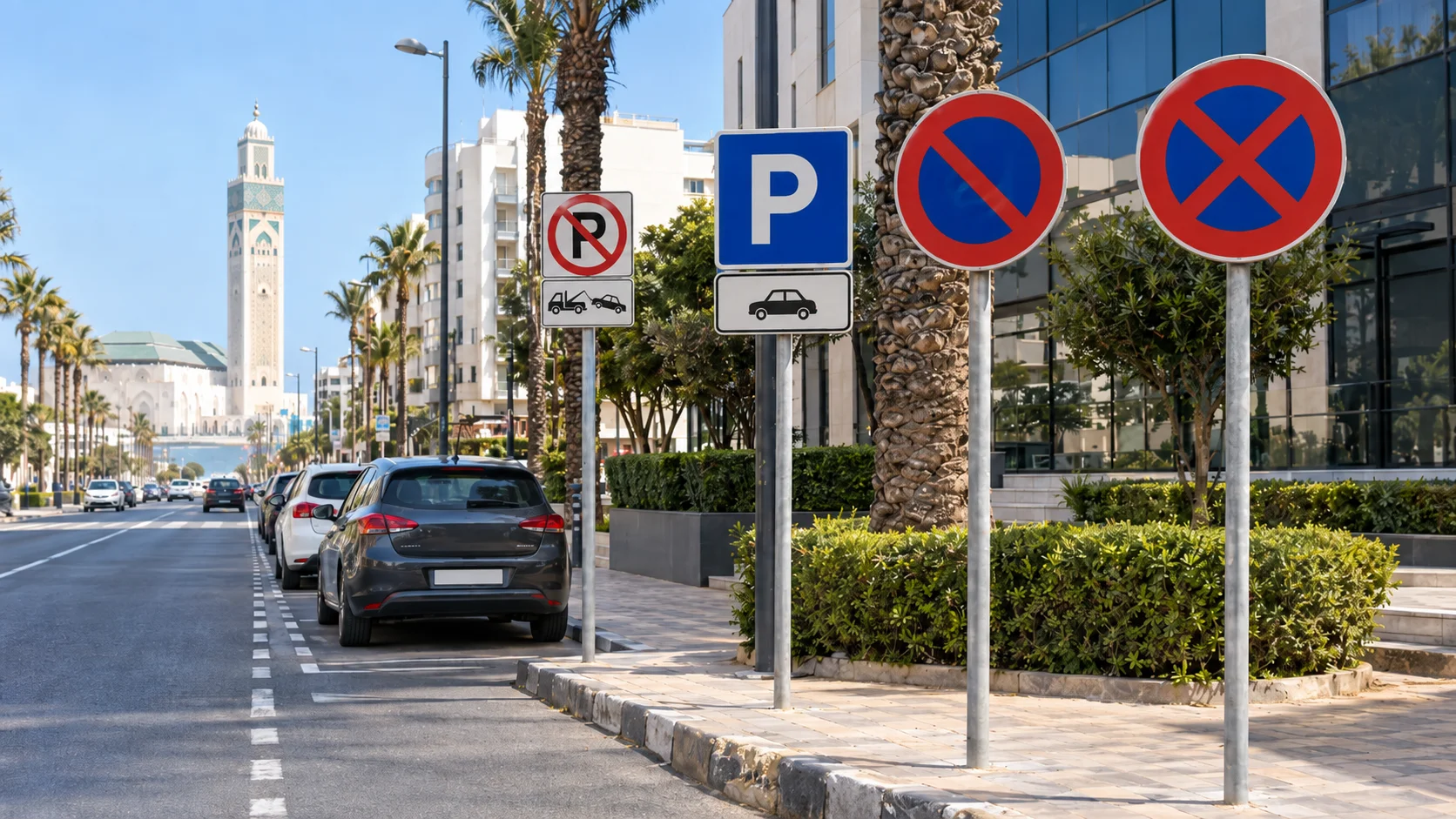
Parking is one of the situations where tourists should pay particular attention to local signage.
A road may look physically suitable for parking while still being restricted.
Before leaving your rental car, check for:
-
no-parking signs;
-
no-stopping signs;
-
reserved spaces;
-
nearby supplementary signs;
-
painted road markings;
-
bus or tram stops;
-
pedestrian crossings;
-
garage entrances.
NARSA advises drivers to use authorized parking places and pay attention to both signs and road markings. It also identifies locations such as pedestrian crossings, intersections, pavements, cycle lanes and bus or tram stops as places where inappropriate parking can obstruct traffic or create danger.
Casablanca Parking Tip
If the restriction is unclear, choose another legal parking area rather than assuming that a row of parked vehicles means parking is permitted.
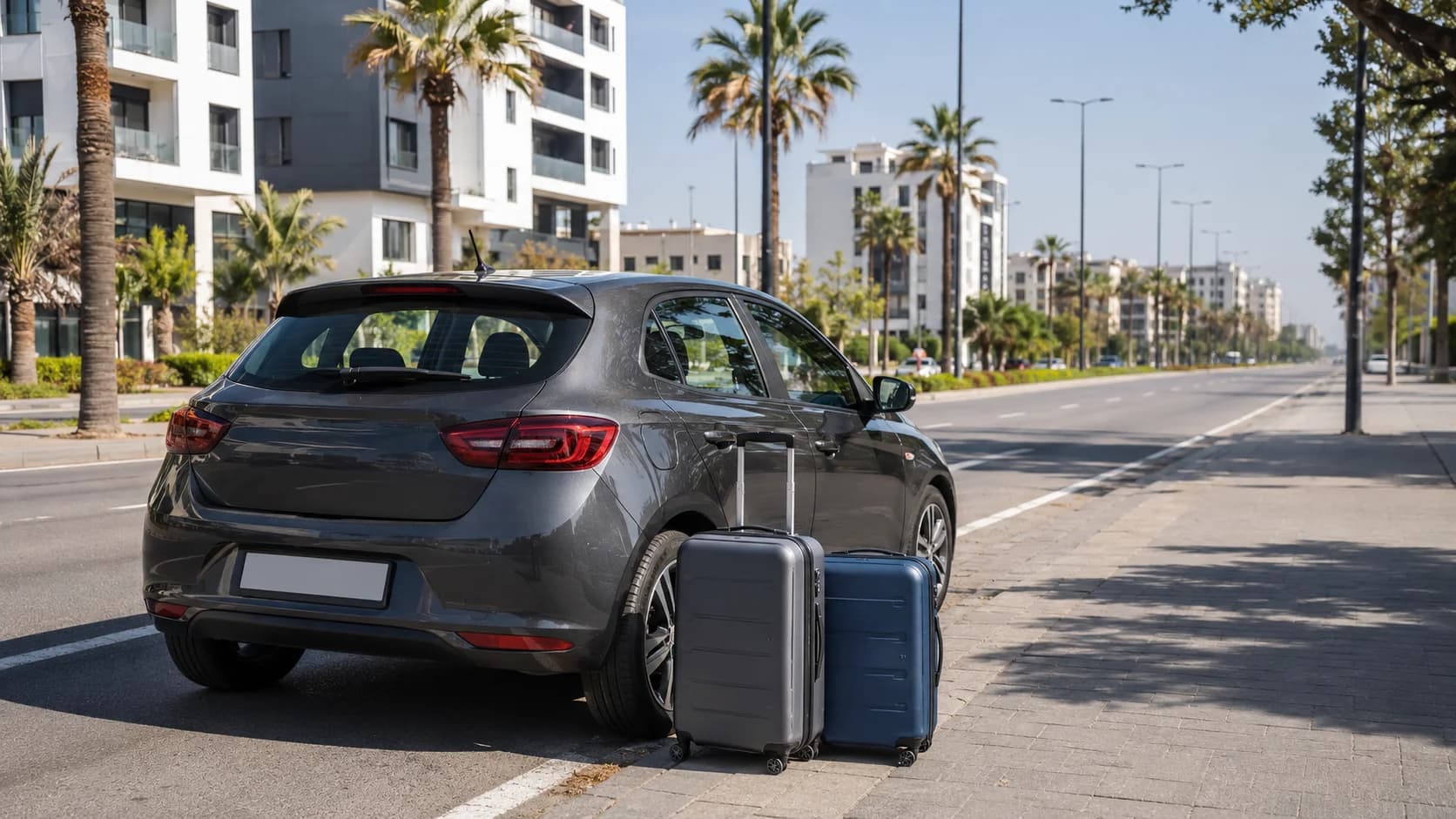
For short city journeys, a smaller hatchback rental Casablanca can also make urban parking and narrow spaces easier to manage.
Warning Signs on Intercity Roads
Once you leave Casablanca, the driving environment can change considerably.
An urban boulevard can turn into a motorway, national road or smaller regional road, so warning signs become increasingly important.
Common hazards tourists should recognize include:
Sharp or Repeated Bends
A curved arrow inside a warning triangle indicates a bend ahead.
Multiple-bend symbols mean you should expect several curves rather than one isolated turn.
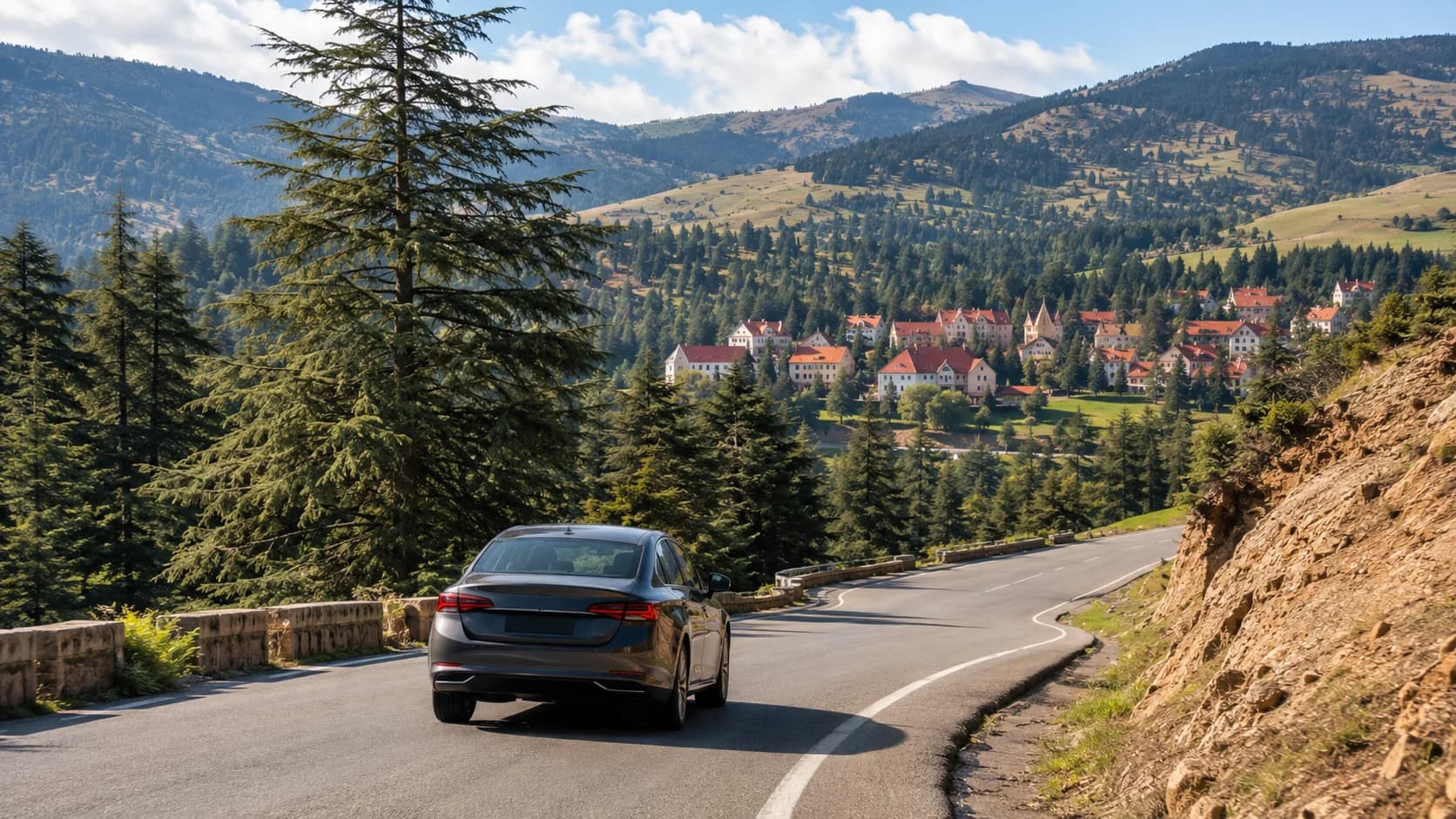
Steep Descent or Climb
These signs become particularly relevant on mountainous routes.
Use an appropriate gear, control your speed and leave additional space from the vehicle ahead.
Narrow Road
A narrowing-road symbol warns that the available road width decreases.
Be particularly cautious around larger vehicles.
Pedestrians or Children
Reduce speed and expect people to enter or cross the roadway.
Animals
Moroccan road-sign nomenclature includes warnings for livestock and other animals, including signs associated with cattle, sheep and camels.
These can be more relevant on rural road trips than visitors expect.
Falling Rocks
On mountain roads, a triangular falling-rock warning means you should watch both the road surface and the area ahead.
It is a warning to increase attention—not an invitation to stop beside the cliff.
How to Read Directions When Leaving Casablanca
One of the easiest ways to reduce first-drive stress is to decide on your first major destination before starting the engine.
Do not begin with only a hotel name or small street.
Think in terms of the major destination you need to follow first.
Casablanca to Rabat
Follow motorway guidance toward Rabat.
The A1 corridor connects Casablanca with Rabat and continues into Morocco's wider motorway network.
Casablanca to Marrakech or Agadir
Follow signs toward Marrakech and the A3 corridor.
ADM's current network identifies A3 as the Casablanca–Agadir motorway, passing through the Marrakech direction.
Casablanca to Mohammed V Airport
Watch specifically for signs referring to Aéroport Mohammed V / Airport rather than relying only on Casablanca street directions.
ADM lists a Mohammed V Airport interchange on the Casablanca–Berrechid section of the A3 network.
Arabic and French on Direction Signs
Visitors will often encounter destination information written using Arabic and Latin-script/French naming.
Even if you do not speak Arabic or French, major destination names such as Casablanca, Rabat, Marrakech and Agadir are normally recognizable enough to follow visually.
The safest technique is to memorize the spelling of your next major city and compare it with the signs as you approach each junction.
Morocco Road-Sign Quick-Reference Checklist
Before your first rental-car drive, remember this sequence:
Triangle: danger ahead.
Red circle: restriction.
Number in red circle: maximum posted speed.
Blue circle: mandatory direction or instruction.
Red octagon: STOP completely.
Upside-down triangle: give way.
P sign: parking information.
Motorway symbol: motorway access or motorway-related guidance.
Large direction board: check destination, arrow and lane early.
Temporary roadwork sign: slow down and follow temporary instructions.
The goal is not to identify the official number assigned to every sign. The goal is to recognize what action the sign requires quickly enough to drive safely.
FAQs About Morocco Road Signs for Tourists
Are Morocco road signs easy for tourists to understand?
Generally, yes. Many Moroccan traffic signs use internationally familiar shapes and symbols, including red warning borders, triangular hazard signs, circular restrictions, STOP signs and standard direction arrows. Tourists should still review the most common signs before driving.
What do speed-limit signs look like in Morocco?
They normally display a number inside a white circular sign surrounded by a red border. The number indicates the posted maximum speed in kilometres per hour for that section.
How are motorways marked in Morocco?
Motorways use dedicated motorway signs along with directional boards identifying destinations, junctions and exits. Morocco's motorway system is operated by Autoroutes du Maroc, which publishes the current motorway network and interchange information.
What signs should I know before driving in Casablanca?
Prioritize speed limits, STOP, give way, roundabouts, lane-direction signs, parking restrictions, pedestrian warnings and motorway direction boards.
How are parking restrictions shown?
Look for restriction signs together with supplementary plates and road markings. Never decide that parking is legal solely because other vehicles are parked there.
Are road signs in Arabic or French?
Destination and local-information signage commonly uses Arabic together with Latin-script/French naming. For tourists, major city names and international road symbols are usually the most useful visual references.
What does a STOP sign look like in Morocco?
It has the internationally recognizable red octagonal STOP-sign shape. When you reach it, stop completely before proceeding when safe.
How do I recognize motorway exits?
Watch for advance destination signs and directional arrows. Begin checking your required lane well before the junction and avoid making a last-second lane change.
Are speed cameras always signposted?
Do not base your driving speed on whether you have seen a camera-warning sign. Treat every posted speed limit as applicable and maintain the legal limit throughout the route.
What road signs matter most on a Morocco road trip?
For most visitors, the priorities are speed limits, STOP and give-way signs, warning triangles, overtaking or access restrictions, motorway directions, parking rules and temporary roadwork signs.
Final Advice Before Driving from Casablanca
Learning Morocco road signs for tourists does not require memorizing an entire driving manual.
Start with the visual patterns.
Know what a warning triangle means. Recognize a red-bordered restriction. Stop completely at STOP signs. Read motorway destinations early. Check parking signs before leaving the car. Most importantly, slow down whenever a sign or junction is unfamiliar enough that you need additional time to interpret it.
For official road-safety information, drivers can consult NARSA road-safety guidance. For motorway routes, interchanges and network information, consult Autoroutes du Maroc (ADM).
Start Your Casablanca Drive with the Right Car
Learn the signs before the first drive, then choose a vehicle that suits the journey.
MarHire Car Casablanca can arrange airport or hotel delivery with direct local support, whether you need an easy-to-manage hatchback for Casablanca, a comfortable sedan for motorway travel or another rental option suited to your Morocco itinerary.