








If you are comparing car rental insurance excess in Casablanca, the terminology can be more confusing than the actual concept. You may see phrases such as “full insurance,” “excess,” “deductible,” “deposit,” “no deposit,” or “zero excess,” sometimes on the same rental offer.
The most important point is that these terms do not all mean the same thing. An insurance excess is about how much financial responsibility may remain with the renter after covered damage. A security deposit is money or a card authorization held as security during the rental. You can therefore have a rental with no deposit but still have an insurance excess.
Before collecting a vehicle in Casablanca, check the exact excess, the protection plan, exclusions, incident-reporting requirements, and whether a security deposit is required. The applicable conditions should be confirmed for the specific vehicle rather than assumed from general advertising.
Table of Contents
- What Is Rental Car Excess?
- Insurance vs Excess vs Deposit
- How Financial Responsibility Can Work
- Why Vehicle Inspection Still Matters
- Questions to Ask Before Pickup
- What Full Insurance Does and Does Not Mean
- How to Document the Vehicle Condition
- Insurance-Excess Booking Checklist
- Frequently Asked Questions
What Is Rental Car Excess?
Car rental insurance excess is the maximum contractual amount a renter may remain responsible for when covered damage occurs, subject to the rental agreement, responsibility for the incident, exclusions and required documentation.
It is also commonly called a deductible or, in French rental documents, a franchise.
For example, imagine a rental has a €700 damage excess.
If an incident covered by the rental protection causes €300 of damage and the renter is responsible, the applicable charge may be limited to the actual €300 damage rather than automatically becoming €700.
If covered damage costs €1,500, the renter's contractual responsibility may be capped at €700, assuming the conditions of the coverage have been met.
The precise calculation depends on the rental agreement, which is why you should confirm the amount and conditions before driving away.
At MarHire Car Casablanca, the protection plan applicable to the vehicle determines whether there is a standard, reduced, or zero excess. The company's current published terms also state that actual repair costs are considered rather than automatically charging the full excess amount.
Insurance vs Excess vs Deposit
These three terms are related but should be treated separately.
Insurance
Insurance or rental protection defines which risks and types of damage are covered and under what conditions.
A rental can include insurance without eliminating all renter responsibility. This is why reading only “insurance included” is not enough.
Excess
The excess defines how much of an eligible loss may remain your responsibility.
Depending on the protection plan, the excess can be:
-
standard;
-
reduced;
-
or zero.
The exact amount can also vary according to vehicle category.
Deposit
A deposit is a financial guarantee held during the rental. It might be taken as cash, charged under specific terms, or placed as a temporary card authorization depending on the rental company.
It may be used to protect the rental company against contractual amounts that remain unpaid, such as damage responsibility, fuel differences, fines, missing items, or other eligible charges.
Some major rental companies operating in Morocco link their security deposit directly to the applicable deductible. Hertz Morocco, for example, states in its published conditions that the deposit depends on vehicle category and supplementary protection and can correspond to the remaining excess.
But this relationship is not universal.
A rental can have:
Deposit + excess: a deposit is collected and an excess applies.
No deposit + excess: no money is held as a security deposit, but financial responsibility can remain after an eligible incident.
No deposit + reduced excess: no deposit is collected and the renter's potential responsibility is lower.
No deposit + zero excess: neither a security deposit nor a damage excess applies under the specified protection plan, subject to its contractual conditions.
This distinction is particularly important when comparing no deposit car rental in Casablanca. “No deposit” describes the payment or security-hold arrangement. It does not automatically mean “zero excess.” MarHire Car Casablanca's current no-deposit page explicitly confirms that eligible vehicles may have no security deposit while the applicable excess still depends on the protection plan.
How Financial Responsibility Can Work
The easiest way to understand a rental car deductible in Casablanca is to look at simplified examples.
Assume that a vehicle has a €700 excess.
Example 1: Small covered damage
The documented repair cost is €250.
If the renter is responsible and all coverage conditions have been satisfied, the renter may be responsible for €250 rather than the entire €700 excess.
Example 2: Damage exceeds the excess
The repair cost is €1,600.
If the applicable excess is €700, the renter's responsibility for covered damage may be capped at €700, with the protection covering the remaining eligible amount.
Example 3: Reduced-excess protection
A standard protection plan might have a higher excess, while an upgraded plan reduces the amount.
If a reduced plan brings the excess to €250, the maximum contractual responsibility for eligible damage may be considerably lower.
Example 4: Zero-excess protection
A qualifying zero-excess plan can remove the damage excess altogether.
However, zero excess should not be interpreted as permission to ignore the rental terms. Unauthorized drivers, prohibited use, missing documentation or specifically excluded damage can still be governed by separate contractual provisions.
Published Moroccan rental conditions demonstrate why renters should compare the precise terms rather than relying on the name of a protection package alone. Coverage reductions and exclusions can differ significantly between suppliers.
Why Vehicle Inspection Still Matters
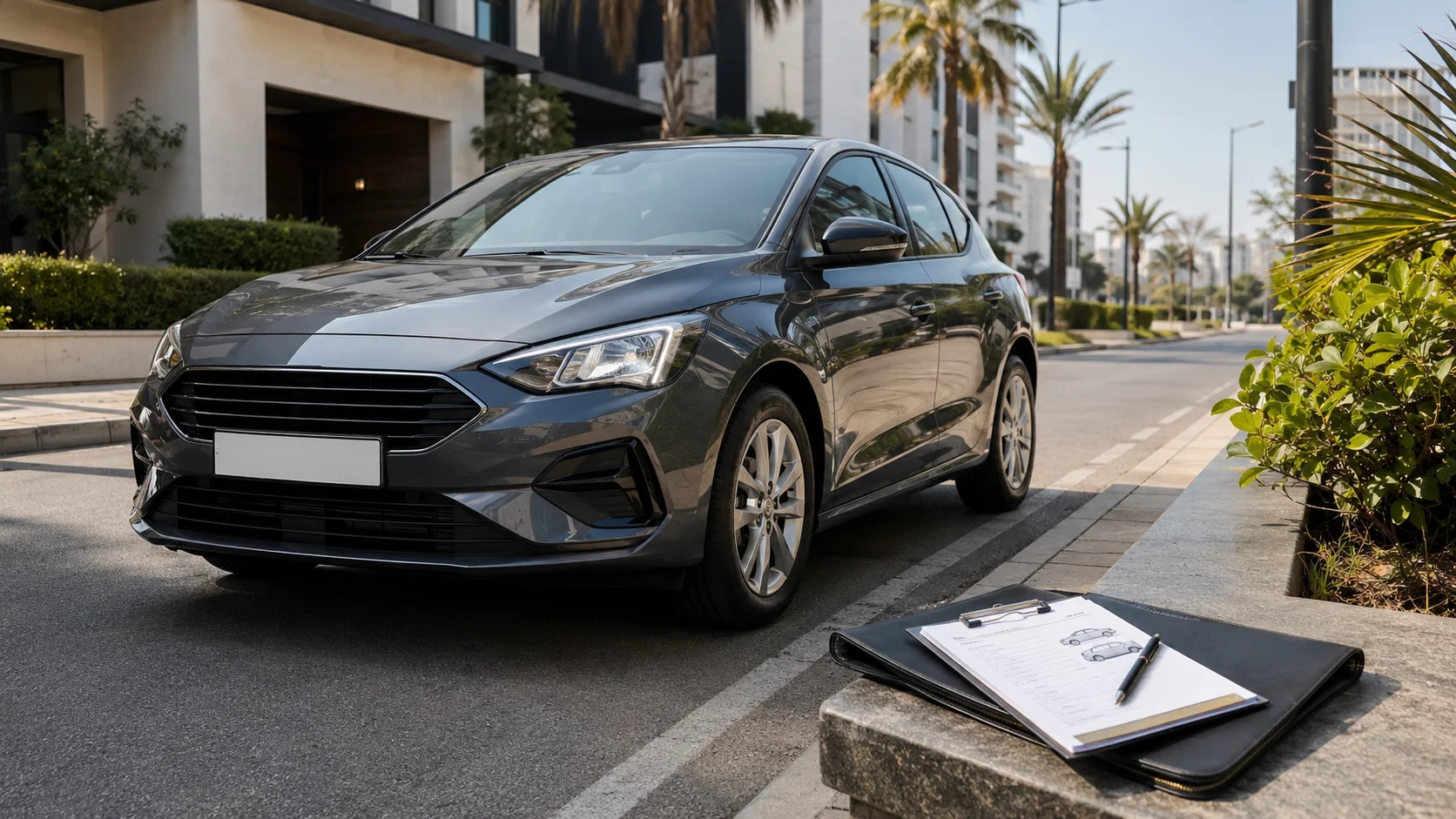
Insurance does not make the pickup inspection unnecessary.
Before leaving with your rental car in Casablanca, make sure the vehicle's existing condition is recorded.
The purpose is simple: both you and the rental provider should have a common record of what was already present before the rental started.
Look around the vehicle for:
-
scratches and dents;
-
bumper marks;
-
wheel or rim damage;
-
windshield or glass damage;
-
mirror condition;
-
tyre condition;
-
interior stains or damage;
-
dashboard warning lights;
-
fuel level;
-
and any visible missing equipment.
If existing damage is already listed on the handover document, compare the document with the actual vehicle.
If something is missing, ask for it to be added before departure.
This is useful whether you book a premium SUV or a cheap car rental in Casablanca. The inspection protects both sides by creating a clear starting point for the rental.
Questions to Ask Before Pickup
Instead of asking only, “Does the car have insurance?”, ask questions that produce specific answers.
A useful set of questions is:
What is my exact excess?
Ask for an amount, preferably in the currency shown on your rental documents.
Is there a security deposit?
If yes, confirm its amount and how it will be held.
Does no deposit also mean zero excess?
Never assume that it does.
Is the excess different by vehicle?
It can be. Larger, higher-value or specialist vehicles may have different protection conditions.
What happens if the damage costs less than the excess?
Confirm whether you pay the actual documented damage cost rather than automatically paying the full excess.
What happens if another driver is responsible?
Ask what documentation is needed to establish responsibility.
Which types of damage are excluded?
Pay particular attention to tyres, wheels, underbody damage, lost keys, incorrect fuel, off-road use and unauthorized drivers.
What must I do immediately after an accident?
Ask whom to contact and which police, insurer or accident documents must be obtained.
These questions are much more useful than simply asking whether the vehicle has “full coverage.”
What Does Full Insurance Mean on a Rental Car?
“Full insurance” is one of the phrases most likely to cause misunderstanding because travelers sometimes interpret it as meaning they can never have any financial responsibility.
That is not necessarily the case.
Full insurance can coexist with an excess.
For example, MarHire Car Casablanca currently publishes four protection arrangements: Basic Protection, Smart No-Deposit, Premium Protection and Zero-Risk Protection. The first three can involve different excess levels, while its Zero-Risk plan removes the excess. Deposit requirements also vary independently between the plans.
This demonstrates an important principle:
Coverage, excess and deposit should always be checked separately.
You should also read the exclusions.
MarHire's current Casablanca rental conditions identify exclusions such as certain underbody, wheel and tyre damage, lost keys, unauthorized drivers, off-road use, dangerous or intoxicated driving, incorrect fuel and some forms of negligence. Incident documentation is also required under the published conditions.
Different rental companies can apply different exclusions, procedures and limits, so the agreement for your specific booking remains the document that matters.
How to Document the Vehicle Condition
A good handover record takes only a few minutes.
Start with wide photographs showing the entire vehicle from multiple angles. Then photograph individual areas that already have marks.
Useful photographs include:
-
front of the vehicle;
-
rear of the vehicle;
-
both sides;
-
front and rear bumpers;
-
all four wheels;
-
windshield;
-
mirrors;
-
roof where clearly visible;
-
dashboard;
-
fuel gauge;
-
mileage;
-
interior;
-
and any existing scratches or dents.
A short continuous video walking around the vehicle can provide additional context.
Make sure the images are clear enough to identify the condition. Keeping the original timestamped files until the rental is fully completed can also make later clarification easier.
At return, repeating the same basic process gives you a record of the vehicle's condition when you handed it back.
Insurance-Excess Booking Checklist
Before confirming a Casablanca rental, verify the following:
-
Exact insurance or protection plan
-
Exact damage excess
-
Whether theft has different conditions
-
Security deposit amount
-
Whether the deposit is a charge or hold
-
Whether no-deposit status still carries an excess
-
Vehicle-specific exclusions
-
Rules for tyres, wheels, glass and underbody
-
Authorized-driver requirements
-
Accident-report procedure
-
Documents required after an incident
-
Existing vehicle damage recorded at pickup
-
Photos and video taken before departure
-
Fuel level recorded
-
Return-condition procedure understood
-
Insurance and excess terms shown on your booking documents
The objective is not to find the rental with the most impressive insurance label. It is to understand exactly what you would be responsible for if something happened.
Frequently Asked Questions
What is car rental insurance excess in Casablanca?
Car rental insurance excess is the amount of financial responsibility that may remain with the renter for covered damage under the rental agreement. It is also commonly called the deductible or franchise.
Is excess the same as a deposit?
No. The excess concerns financial responsibility following an eligible incident. A deposit is a security amount held or collected during the rental. Some rentals have both, some have neither, and some have no deposit while retaining an excess.
What does full insurance mean on a rental car?
It means the vehicle has a defined level of insurance or damage protection, but it does not automatically mean zero excess or zero financial responsibility. Check the excess, exclusions and incident requirements separately.
Can I rent a car without a deposit and still have an excess?
Yes. This is an important distinction. A no-deposit rental can still have a standard or reduced excess. MarHire Car Casablanca currently offers qualifying no-deposit plans where an excess may still apply.
Should I inspect the car if it has insurance?
Yes. Record the vehicle condition before departure even when insurance is included. This establishes which marks or damage existed before your rental began.
What should I photograph before driving away?
Photograph every side of the vehicle, bumpers, wheels, mirrors, windshield, interior, dashboard, mileage, fuel level and any existing damage.
Where should insurance details appear?
The applicable protection plan, excess and important rental conditions should be available in your booking information, voucher, vehicle documents or rental agreement. Ask for clarification before accepting the vehicle if anything is unclear.
Can the excess amount vary by vehicle?
Yes. The exact amount can depend on the vehicle category, value and protection plan. Never assume that an excess quoted for one vehicle also applies to another.
What questions should I ask about rental insurance?
Ask about the exact excess, deposit, exclusions, theft conditions, responsibility following an accident, required documentation and what happens when damage costs less than the excess.
How can I avoid misunderstandings about coverage?
Get the relevant terms in writing before pickup, verify the protection plan and excess for the actual vehicle, document its condition, and follow the prescribed reporting procedure immediately if an incident occurs.
Understand the Terms Before Taking the Keys
The easiest way to avoid confusion over car rental insurance excess in Casablanca is to separate three questions: What is covered? What is my excess? Is there a deposit?
Do not assume that “full insurance” means zero excess, and do not assume that “no deposit” means zero financial responsibility.
MarHire Car Casablanca provides clearly defined protection conditions, with eligible standard cars available under no-deposit arrangements and full insurance with an applicable excess. Other protection levels can reduce or remove the excess depending on the vehicle and booking.
Review the conditions before pickup, confirm the exact plan for your vehicle and document its condition before driving. Once those points are clear, rental insurance becomes much easier to understand.