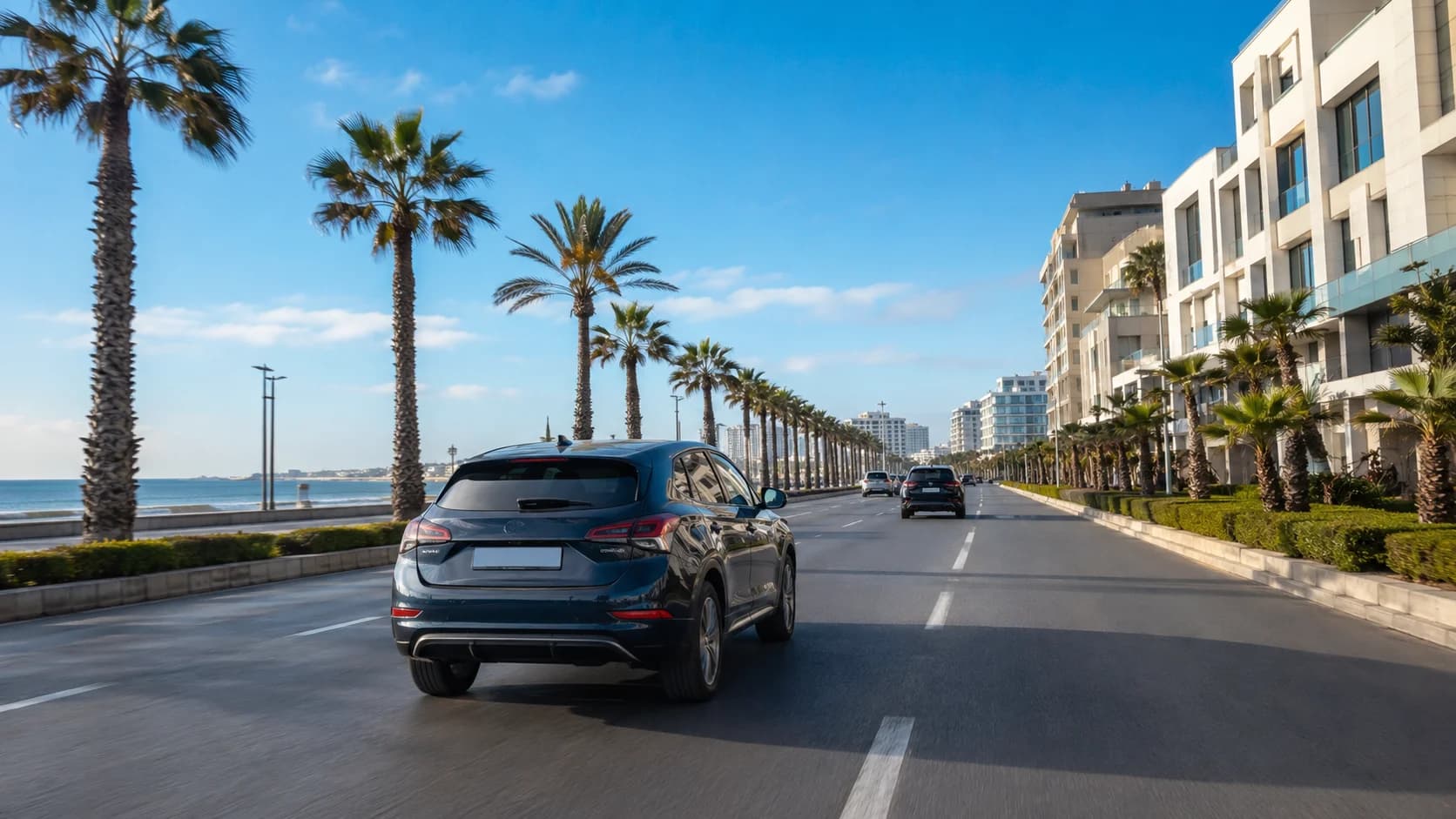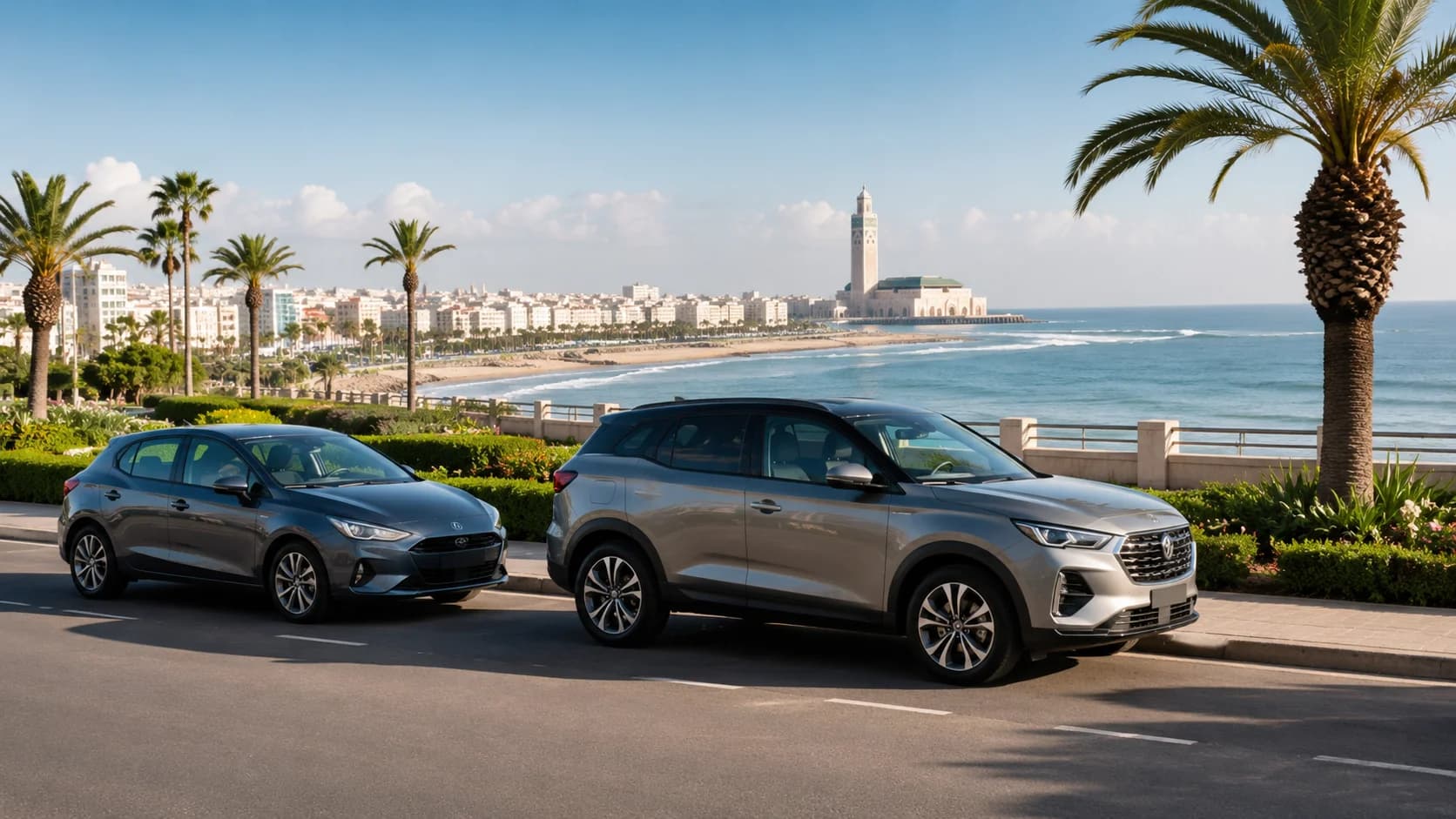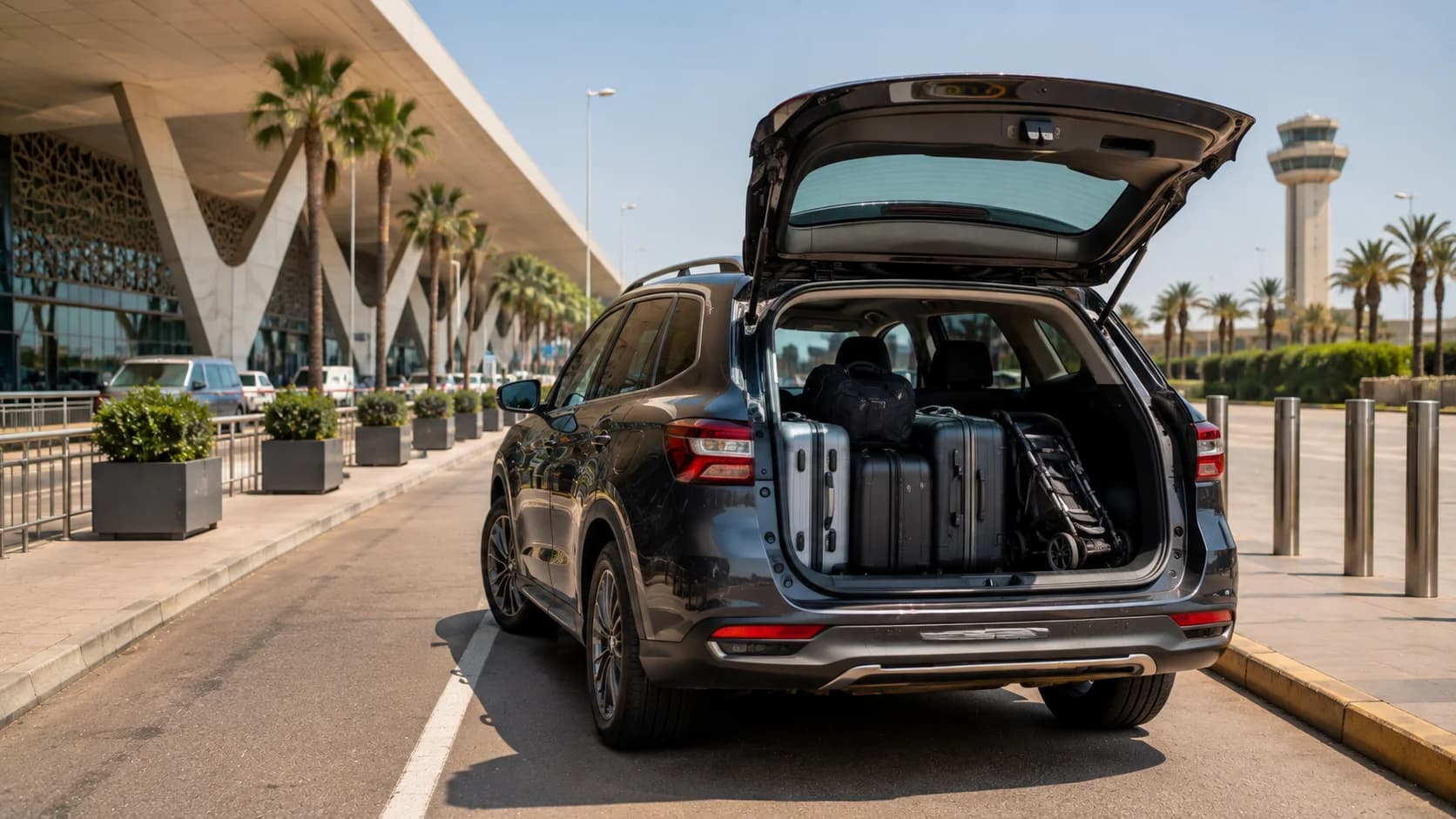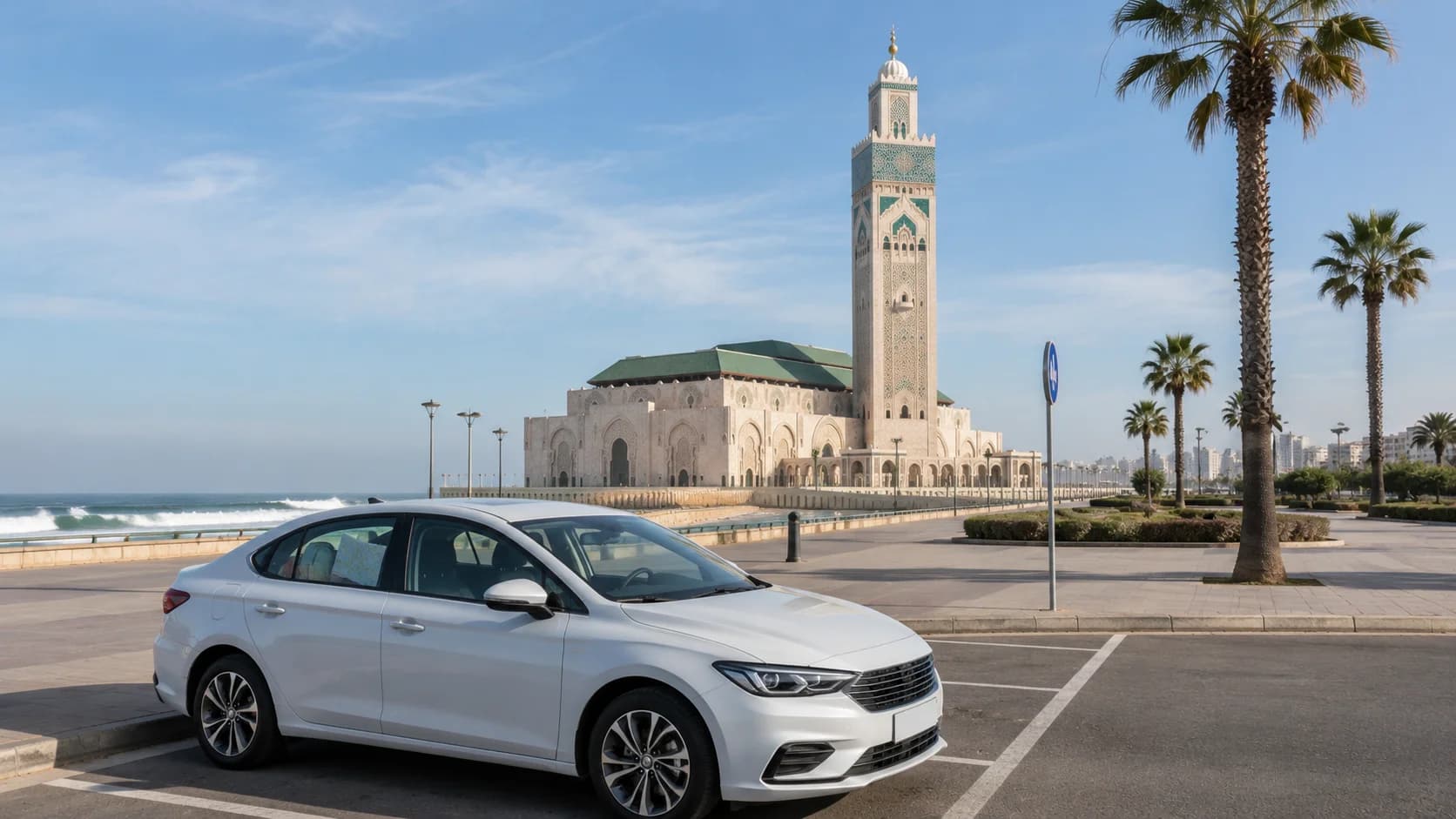







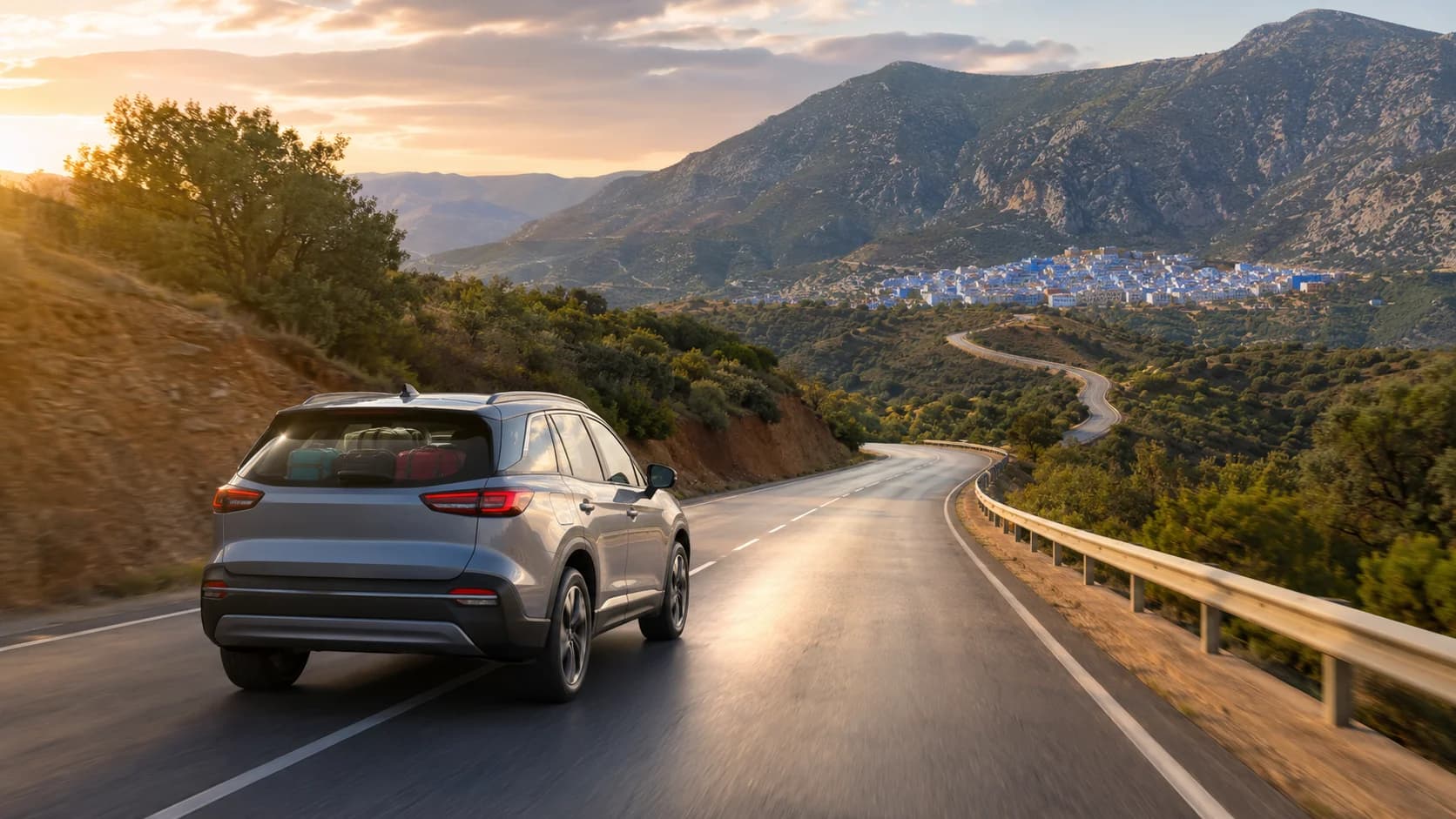
Driving from Casablanca to Chefchaouen by car is one of Morocco’s most rewarding long road trips. The journey is around 340 km and usually takes about 5 to 6 hours, depending on traffic, stops and the final mountain approach into the Rif. The route starts with easy motorway driving past Rabat and Kenitra, then becomes more scenic as you leave the Atlantic corridor and climb toward Morocco’s famous Blue City.
Table of Contents
- Why visit the Blue City by car
- Distance, time and route options
- Casablanca to Rabat and Kenitra
- Into the Rif Mountains
- Driving and parking in Chefchaouen
- Best car for mountain roads
- Day trip vs overnight
- Tolls, fuel and timing
- Chefchaouen route planner
- FAQs
Why Visit the Blue City by Car
Chefchaouen is one of Morocco’s most photogenic towns, built on a mountainside and known for its blue-rinsed houses, peaceful medina and mountain setting. The Moroccan National Tourist Office describes Chefchaouen as a “blue diamond” with a dreamlike atmosphere, and highlights places such as the old medina, Ras Elma, Akchour Waterfalls and Talassemtane National Park.
Going by car gives you something public transport cannot offer easily: flexibility. You can leave Casablanca early, stop near Rabat or Kenitra, pause before the mountain roads, avoid rushing between bus schedules and choose your own return plan. For travelers who want to turn the journey into a relaxed northern Morocco road trip, driving is usually the most practical option.
This route also works well for visitors landing in Casablanca who want to explore beyond the big cities. Casablanca feels urban and fast. Chefchaouen feels slower, smaller and more scenic. The contrast is exactly what makes the road trip memorable.
Distance, Time and Route Options
The Casablanca to Chefchaouen distance is roughly 340 km by road. Most travelers should plan around 5 to 6 hours of driving, not including long stops. The fastest practical route usually follows the A1 motorway north from Casablanca toward Rabat and Kenitra, then continues inland toward Ouazzane and Chefchaouen. Rabat to Chefchaouen alone is listed at around 244 km and about 3 hours 45 minutes by car, which explains why the full journey from Casablanca is best treated as a full travel day.
The most common route is:
Casablanca, Mohammedia, Rabat, Kenitra, Souk El Arbaa or Ouazzane area, then Chefchaouen.
This route is popular because the first section is direct and simple. The motorway section helps you cover distance quickly before the road becomes slower near the Rif. The last part of the drive is where you need more patience, especially if you are not used to mountain bends.
There are other route variations, but for most visitors, the Rabat and Kenitra direction is the easiest to understand and the most comfortable to drive.
Casablanca to Rabat and Kenitra
The first leg from Casablanca to Rabat is the easiest part of the road trip. You leave the city, join the motorway and head north along Morocco’s Atlantic corridor. This section is straightforward, but traffic around Casablanca can slow you down if you leave during peak hours.
After Rabat, the drive continues toward Kenitra. This part still feels open and manageable. It is a good section to gain time before the slower inland roads. According to the ADM toll grid, Casablanca to Rabat and Rabat to Kenitra are tolled motorway sections, so keep cash or a payment method ready for toll booths.
A smart plan is to leave Casablanca early in the morning. This helps you avoid the worst city traffic and gives you daylight for the mountain approach. If you want a stop, Rabat is the most obvious option, but for a direct road trip, a simple fuel or coffee stop after Rabat is usually better.
Into the Rif Mountains
The road changes after the motorway and plains. As you move inland toward Chefchaouen, the drive becomes slower, greener and more scenic. This is where the road trip starts to feel like northern Morocco rather than a highway transfer.
The Rif mountains driving section is not impossible, but it needs attention. Expect bends, changing speed limits, local traffic, occasional trucks and village crossings. Do not drive this part like a motorway. Keep distance, avoid risky overtaking and take your time on curves.
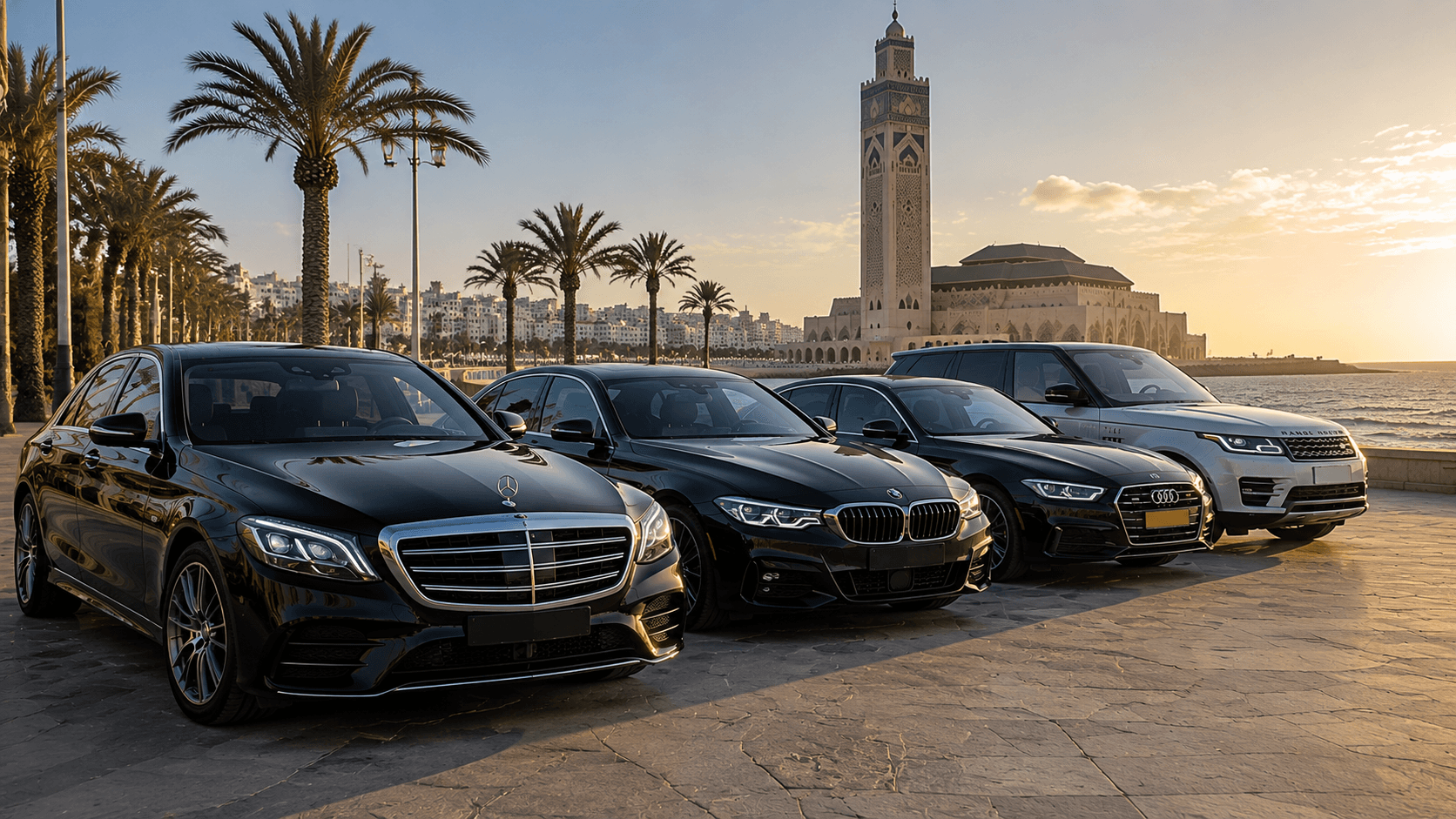
This is also the part of the journey where a comfortable vehicle makes a real difference. A stable SUV gives better visibility and a more confident feel on mountain roads. A sedan can still do the route, especially in good weather, but travelers with luggage, family or a longer Morocco itinerary often prefer the extra comfort of an SUV.
For this route, you can compare SUV rental Casablanca if you want more height and stability, or sedan rental Casablanca if you prefer a smoother city-to-road option with lower fuel use.
Driving and Parking in Chefchaouen
Chefchaouen is not a city where you drive deep into the old medina. The medina is best explored on foot, and the streets become narrow near the historic center. The best approach is to park outside or near the accessible edges of town, then walk into the blue streets.
When you arrive, follow local parking signs and choose a guarded parking area when available. Many visitors leave the car near the lower or outer parts of the town and continue on foot. This avoids stress, especially if your accommodation is inside or near the medina.
If you are staying overnight, ask your riad or hotel where they recommend parking before arrival. Some accommodations are not reachable directly by car, and a short walk with luggage may be needed. This is normal in Chefchaouen.
Try to arrive before dark if it is your first time. The town is easier to understand in daylight, parking is simpler, and you can enjoy the mountain views as you enter.
Best Car for Mountain Roads
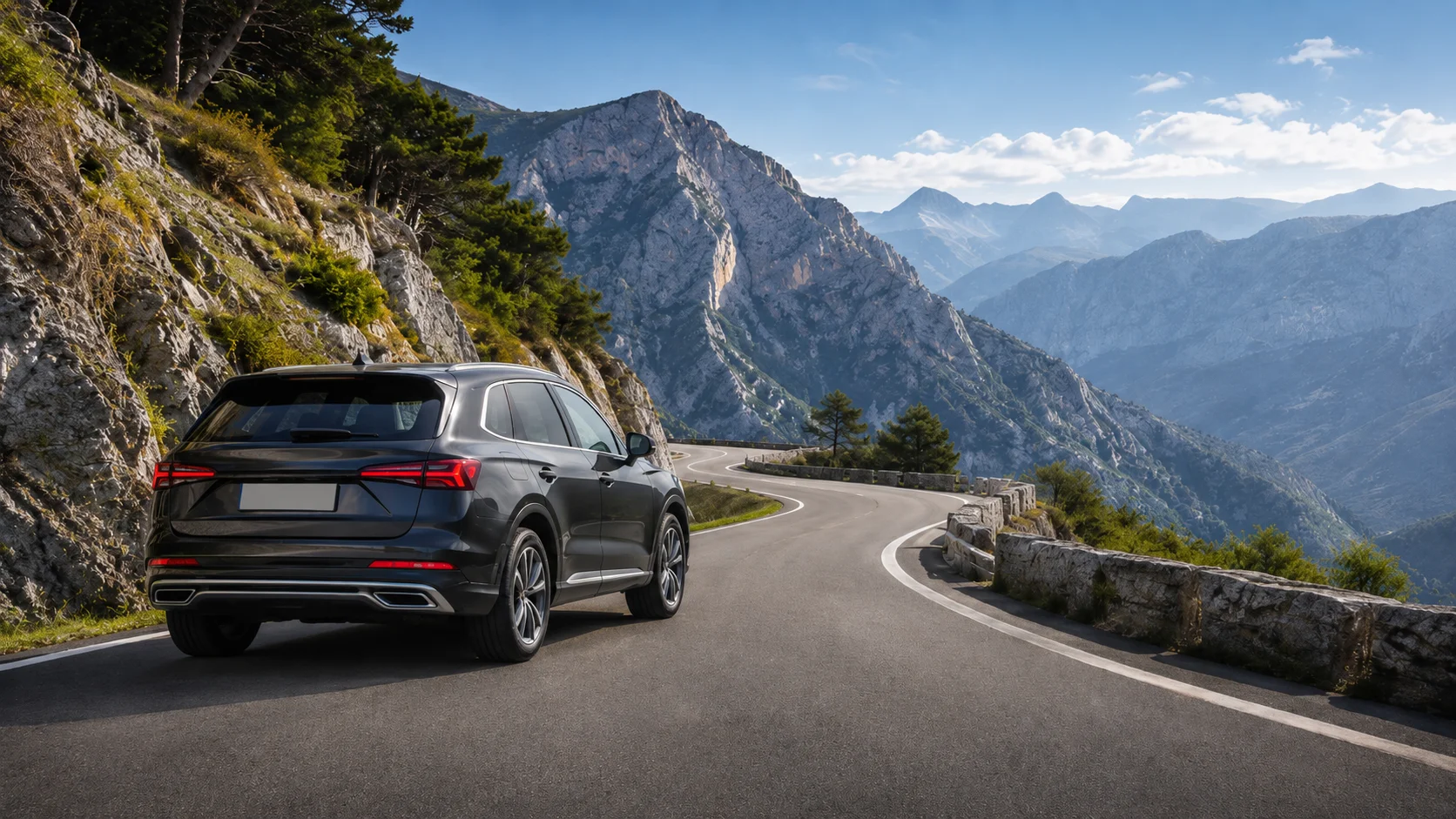
You do not strictly need a 4x4 for Casablanca to Chefchaouen by car in normal conditions. The route is paved and commonly driven by regular cars. However, the best car depends on your comfort level, passengers and luggage.
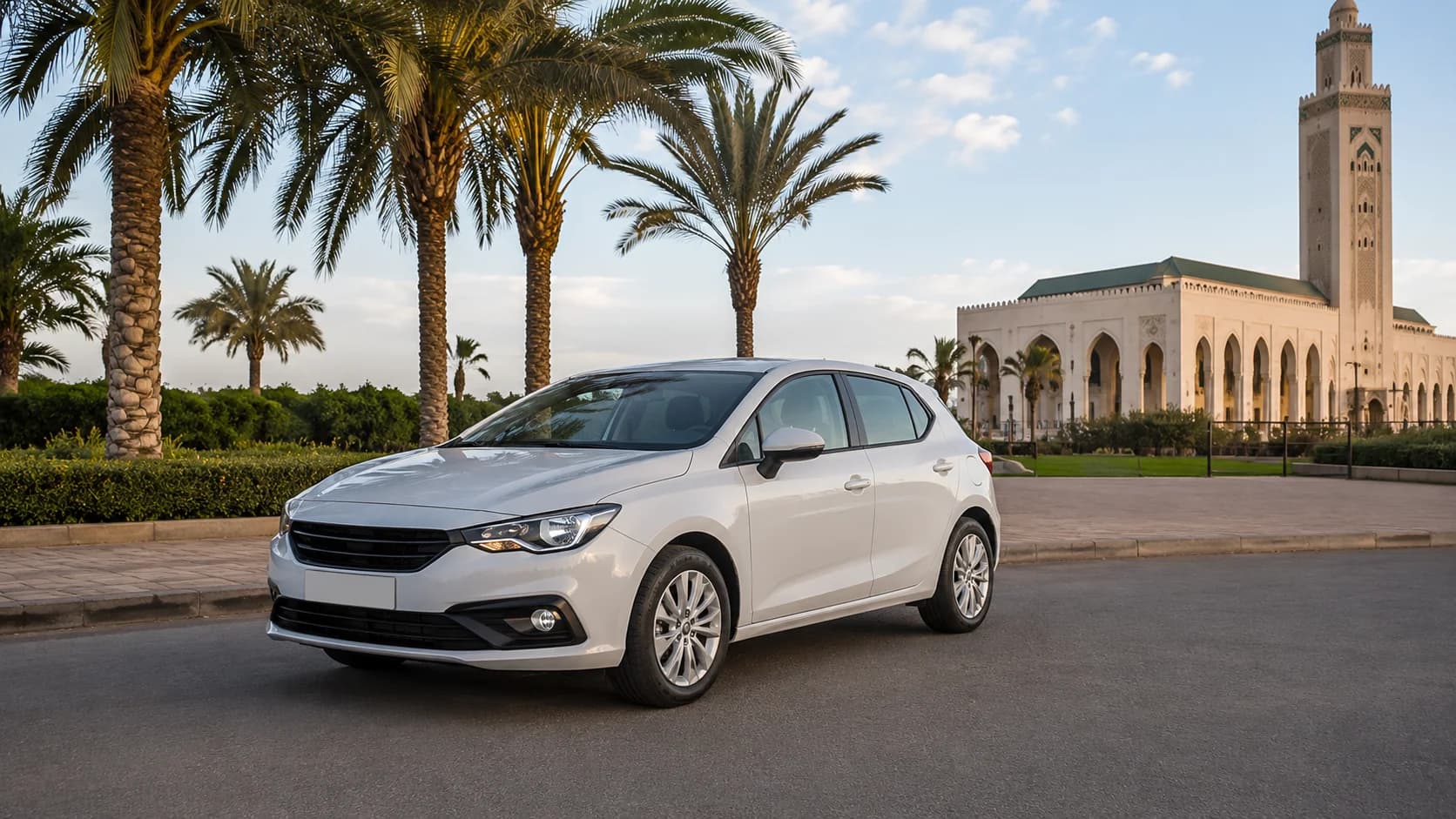
A sedan is a good choice for couples or two travelers who want a comfortable road car for motorway sections. It is usually efficient, easy to park and stable enough for the main route.
An SUV is better if you want a higher driving position, more luggage space and a more relaxed feel on the Rif mountain bends. It is also useful if you plan extra stops around Akchour, nearby viewpoints or other northern Morocco routes.
A 4x4 is not necessary for the standard Casablanca to Chefchaouen route, but it can be useful for travelers adding rural mountain roads, longer northern loops or mixed-road itineraries. For this, check 4x4 rental Casablanca.
For most visitors, the best balance is simple: choose a sedan for budget and fuel economy, choose an SUV for comfort and confidence, choose a 4x4 only if your wider route needs it.
Day Trip vs Overnight
Chefchaouen from Casablanca is technically possible as a very long day, but it is not the best experience. With about 5 to 6 hours each way, a same-day return means most of your day is spent driving. You would arrive tired, rush the medina and then face the mountain road again before or after sunset.
The better plan is one night in Chefchaouen. This lets you arrive in the afternoon, enjoy sunset views, walk the medina in the evening and wake up early before the busiest hours. The town is calmer in the morning, and the blue streets look better when you are not rushing.
Two nights are even better if you want Akchour Waterfalls, Talassemtane National Park or a slower photography-focused visit. Visit Morocco lists Akchour and Talassemtane among the popular places around Chefchaouen, which makes the town more than a quick photo stop.
Tolls, Fuel and Timing
Budget for motorway tolls, fuel, parking and possibly one overnight stay. The Casablanca to Rabat toll and Rabat to Kenitra toll are listed by ADM, with class-based prices shown in Moroccan dirhams. Standard rental cars usually fall into the light vehicle category, but toll pricing can change, so check the current posted toll at the booth or official grid before travel.
Fuel planning is simple: start with a full tank in Casablanca. There are plenty of fuel stations on the first part of the route, but it is better not to wait until the mountain approach. Refill before leaving the faster corridor if needed.
Timing matters more than people think. A good schedule looks like this:
Leave Casablanca around 7:00 or 8:00, pass Rabat before late morning, take a short break around Kenitra or before Ouazzane, then reach Chefchaouen in the afternoon. This gives you daylight for the final bends and time to park calmly.
Avoid starting late unless you are comfortable arriving after dark. The last approach is prettier and easier during the day.
Chefchaouen Route Planner
For a relaxed blue city road trip Morocco itinerary, use this simple plan.
Start in Casablanca with a full tank, confirmed documents and a clean navigation route. Leave early and avoid Casablanca peak traffic where possible.
Use the motorway north toward Rabat. Keep the first leg simple and do not over-plan too many stops. Rabat can be a coffee stop, but if Chefchaouen is the goal, continue toward Kenitra.
After Kenitra, prepare for slower roads. This is where the drive becomes more local and scenic. Keep your speed controlled, stay patient behind slower vehicles and avoid overtaking unless visibility is excellent.
As you approach Chefchaouen, switch your mindset from road trip to arrival. Look for parking before trying to reach the medina. Contact your accommodation if you need help with the exact drop-off point.
Once parked, leave the car and explore on foot. Chefchaouen is made for walking, photos, cafés, small shops and viewpoints, not for driving through narrow lanes.
For a comfortable trip, MarHire Car Casablanca can help you choose the right SUV, sedan or 4x4 with unlimited kilometres on most rentals, full insurance options and local support before you start the long drive north.
FAQs
How far is Chefchaouen from Casablanca by car?
Chefchaouen is roughly 340 km from Casablanca by car, depending on the exact route and where you start in Casablanca. Most route guides estimate around 5 to 6 hours of driving.
How long does it take to drive to Chefchaouen?
Plan about 5 to 6 hours from Casablanca to Chefchaouen. Add extra time for traffic leaving Casablanca, toll stops, fuel, coffee breaks and slower mountain roads.
What is the best route from Casablanca to Chefchaouen?
The easiest route is usually Casablanca to Rabat, then Kenitra, then inland toward Ouazzane and Chefchaouen. It keeps the first part on faster roads before the mountain approach.
Can you do Chefchaouen as a day trip from Casablanca?
You can, but it is not recommended. The round trip can take 10 to 12 hours of driving, leaving very little relaxed time in Chefchaouen. Overnight is much better.
Is the drive to Chefchaouen difficult?
The motorway section is easy. The final approach through the Rif needs more attention because of bends, local traffic and slower roads. It is manageable if you drive calmly.
Do I need an SUV for Chefchaouen?
No, a sedan can handle the main paved route. An SUV is more comfortable for mountain bends, luggage, families and travelers who want extra stability.
Where do you park in Chefchaouen?
Park outside or near the accessible edges of the medina, then walk. The old town is not designed for normal car access, so guarded parking near the center is usually the best choice.
What are the best stops on the way to Chefchaouen?
Rabat is the best cultural stop, while Kenitra or the road before the inland section works well for fuel and coffee. For a direct drive, keep stops short so you arrive before dark.
Is it better to stay overnight in Chefchaouen?
Yes. One night gives you time to enjoy sunset, evening walks and an early morning in the blue medina without rushing the long drive back.
Are the mountain roads to Chefchaouen safe?
Yes, the main roads are commonly used, but drive carefully. Keep speed low on bends, avoid risky overtaking and try to arrive in daylight, especially on your first visit.