







Driving roundabouts in Casablanca can feel stressful during the first hour, especially if you are arriving from Mohammed V Airport, heading into the city centre, or crossing busy areas like Sidi Maârouf, Maarif, Casa Port or the Corniche. The good news is that Casablanca traffic has a rhythm. Once you understand right-of-way, lane positioning, local communication cues and the benefit of choosing a small or automatic rental car, the city becomes much easier to handle.
Table of Contents
-
Why Casablanca intersections feel intimidating
-
Roundabout right-of-way in Morocco
-
Lane choice on multi-lane roundabouts
-
Casablanca's busiest junctions to know
-
Reading local driving behaviour
-
Indicators, horns and eye contact
-
The easiest car for nervous drivers
-
Building confidence in your first hour
Why Casablanca Intersections Feel Intimidating
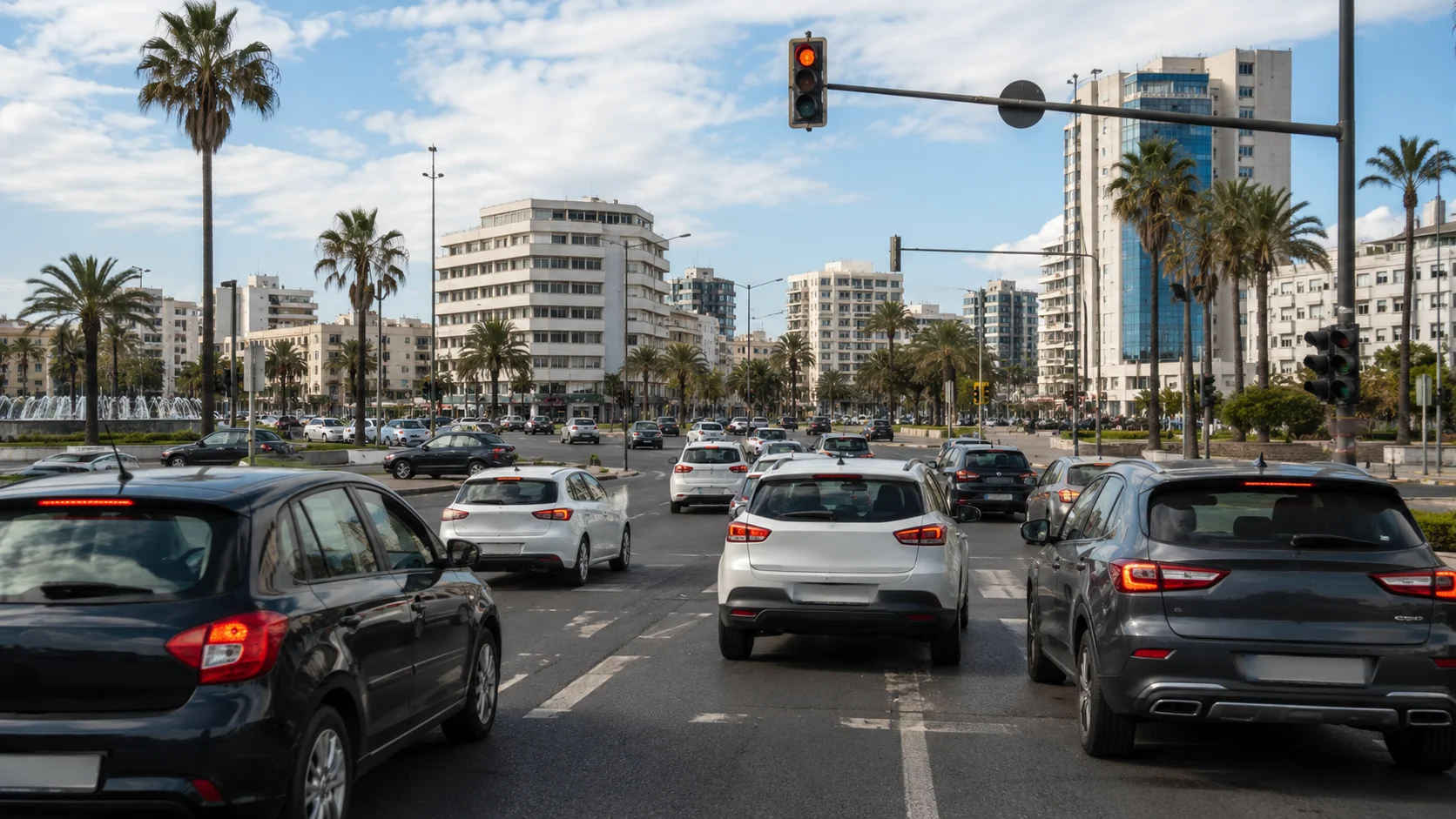
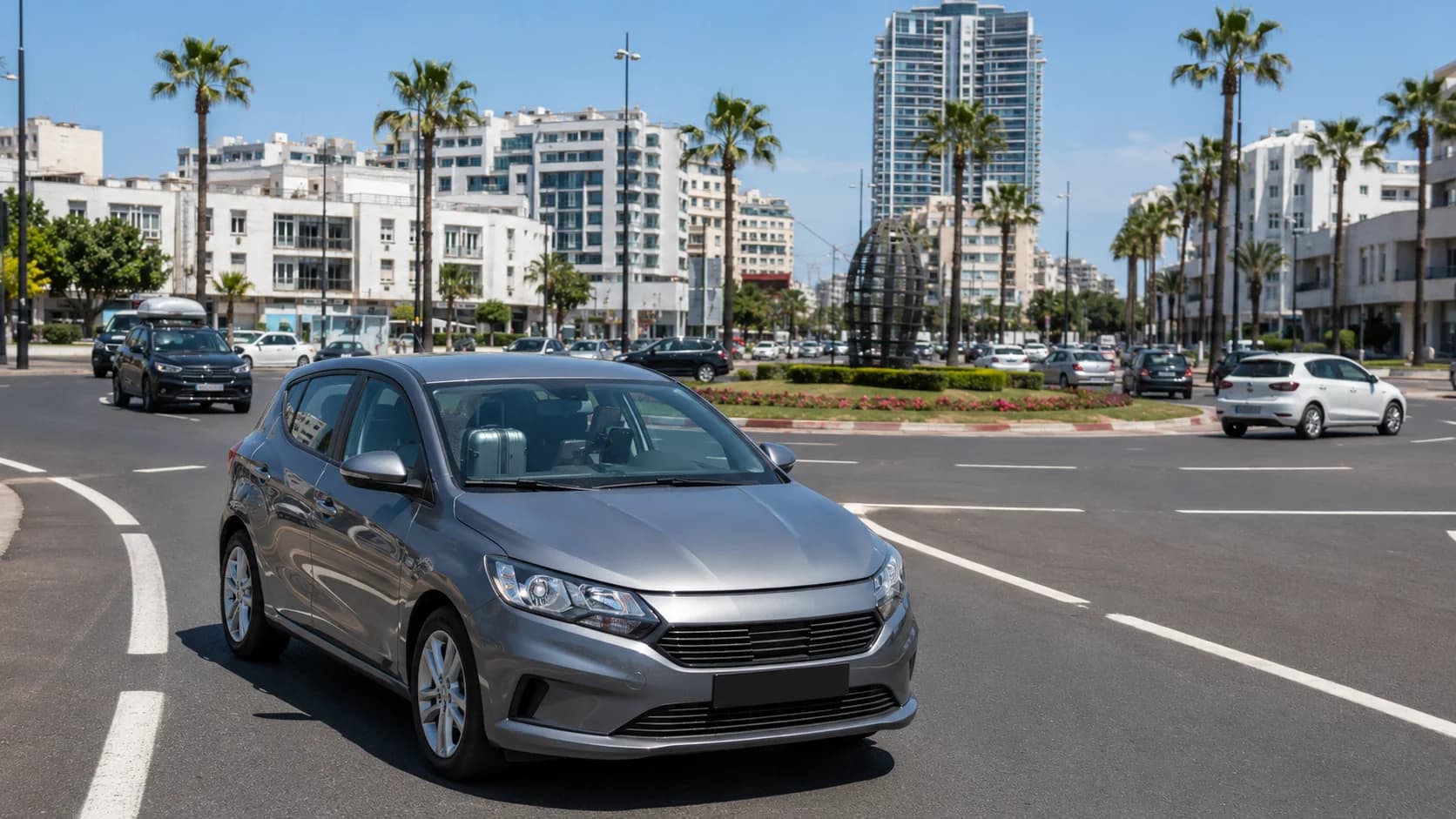
Casablanca is Morocco's biggest business city, so the traffic is busier, faster and more layered than in smaller destinations. You may share the road with taxis, scooters, delivery vans, buses, private cars, pedestrians and drivers trying to change lanes at the last second. For a tourist, the challenge is not just the number of vehicles. It is the way traffic moves around junctions.
In many European or North American cities, drivers often stay clearly inside marked lanes. In Casablanca, drivers may use lane markings more flexibly, especially near roundabouts, tramway crossings, older boulevards and congested intersections. This can make Casablanca junctions look chaotic, but the flow is usually slower than it appears. Most problems happen when visiting drivers panic, stop suddenly in the wrong place or try to rush an exit.
The mindset shift is simple: do not drive aggressively, but do not drive nervously either. Move steadily, leave space, watch mirrors, choose your lane early and make your intentions clear. Casablanca rewards calm, predictable driving.
Roundabout Right-of-Way in Morocco
The most common question tourists ask is: who has right of way on a roundabout in Morocco?
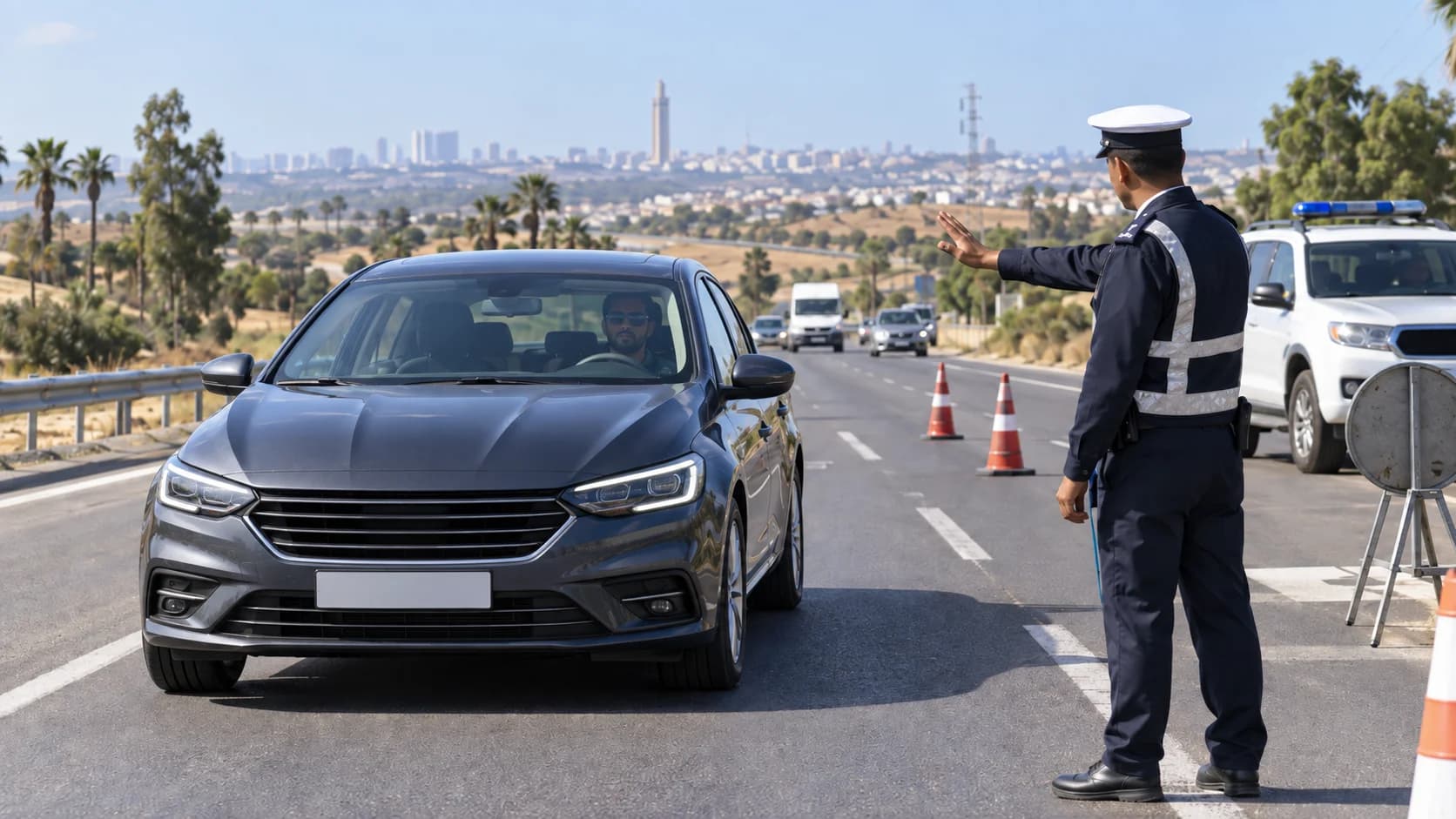
In general, vehicles already inside a standard roundabout have priority, and vehicles entering should yield. However, traffic lights, stop signs, give-way signs and police instructions always override the general rule. Some large Moroccan roundabouts are controlled by lights, and in those cases, you must follow the signal even if that means stopping while already inside the circular traffic system.
That is why the safest rule for visitors is this: before entering any roundabout, look for signs, traffic lights, road markings and the actual movement of traffic. If there are no lights and no special instruction, wait for a safe gap and give priority to vehicles already circulating. If there are traffic lights, follow the lights first.
At uncontrolled junctions that are not roundabouts, Morocco often follows the right-of-way principle where traffic from the right may have priority unless signs or signals say otherwise. This matters in smaller streets, side-road entries and older urban areas. In Casablanca, many major junctions are controlled by lights, priority roads or police, but you should still stay alert for vehicles entering from the right.
Lane Choice on Multi-Lane Roundabouts
Multi-lane roundabouts are where many tourists lose confidence. The problem is not the circle itself. The problem is choosing too late.
For a simple right exit, use the right lane when possible. For going straight, choose a middle or right lane depending on signs and traffic flow. For turning left or making a U-turn, position more toward the inside lane, then move gradually toward the outside lane before your exit.
Do not cut across several lanes at the last moment. If you miss your exit, continue around safely and try again. That is much better than forcing a sharp movement while taxis and scooters are beside you.
Your exit plan should start before you enter. Look at navigation early, reduce speed, decide which exit you need and avoid entering the roundabout while still unsure. If you are using GPS, listen to the instruction before you reach the junction, not while you are already inside it.
Positioning to Exit Safely
The safest exit technique in Casablanca is slow, clear and early. Once your exit is coming, check your right mirror, signal right and move outward only when there is space. Watch for scooters because they may appear between lanes or along the side of your car.
If a taxi or motorbike blocks your intended movement, do not fight for the exit. Stay in your lane, continue around and exit on the next loop. A calm second circle is normal. A rushed diagonal exit is what creates stress.
Keep both hands ready, avoid phone handling and do not rely only on the navigation screen. Casablanca traffic changes quickly, especially near tramway lines, bus stops, pedestrian crossings and hotel zones.
Casablanca's Busiest Junctions to Know
You do not need to memorize every road in Casablanca, but it helps to know the types of junctions that feel busy to visitors.
Sidi Maârouf
Sidi Maârouf is one of the most important road nodes in Casablanca because it connects business areas, airport routes, the ring road and major exits toward other cities. It can be intense during peak hours, especially when commuters are moving between offices, suburbs and motorway links. If you are nervous, avoid planning your first Casablanca drive through Sidi Maârouf at rush hour.
Place des Nations Unies
This central area near the old medina and tramway routes can feel busy because pedestrians, taxis, tram crossings and city traffic all meet in a compact space. Drive slowly, respect signals and avoid sudden lane changes.
Maarif and Twin Center Area
Maarif is full of shops, offices, cafés and parked vehicles. Junctions here are not always fast, but they require patience because cars may stop, turn, park or pull out unexpectedly.
Casa Port and Boulevard Mohammed V
Near Casa Port, traffic can include taxis, delivery vehicles, pedestrians, buses and drivers looking for parking. Stay in the correct lane early and do not rush around station traffic.
Ain Diab and Corniche Roads
The Corniche feels easier because it is more open, but traffic can become busy in the evening and on weekends. Watch for pedestrians crossing, cars slowing near restaurants and drivers searching for parking.
Reading Local Driving Behaviour
Casablanca drivers are not impossible to understand. They simply communicate differently from what many tourists expect.
A small horn tap may mean “I am here,” not necessarily anger. A taxi edging forward may be asking for space. A scooter beside your mirror may be preparing to pass. A driver looking at you may be checking whether you will go first or let them pass.
The key is to read behaviour before reacting. Do not assume that every horn is aggressive. Do not copy risky local habits. Let impatient drivers pass, keep your own line and avoid emotional driving.
Defensive driving in Casablanca means expecting movement from every side. Leave more space than local drivers leave. Brake gently. Keep speed low near crossings. Check mirrors often. Look ahead, not only at the car in front of you.
Indicators, Horns and Eye Contact
Use indicators in Morocco, especially before exiting roundabouts, changing lanes or turning at junctions. Even if some local drivers use them late or not at all, visitors should use signals clearly because it makes your car more predictable.
The horn is common in Casablanca, but use it lightly and only when needed. A short warning can help in tight spaces, but constant honking increases stress and does not make traffic move faster.
Eye contact can help at slow junctions, parking exits and narrow side streets. If another driver gestures or pauses, move only when you are sure it is safe. Never rely on gestures alone. Always check for scooters, pedestrians and vehicles behind the other car.
The Easiest Car for Nervous Drivers
The right vehicle makes a big difference in Casablanca. A large SUV may feel comfortable on highways, but inside busy city junctions, a smaller car is often easier to place, park and control.
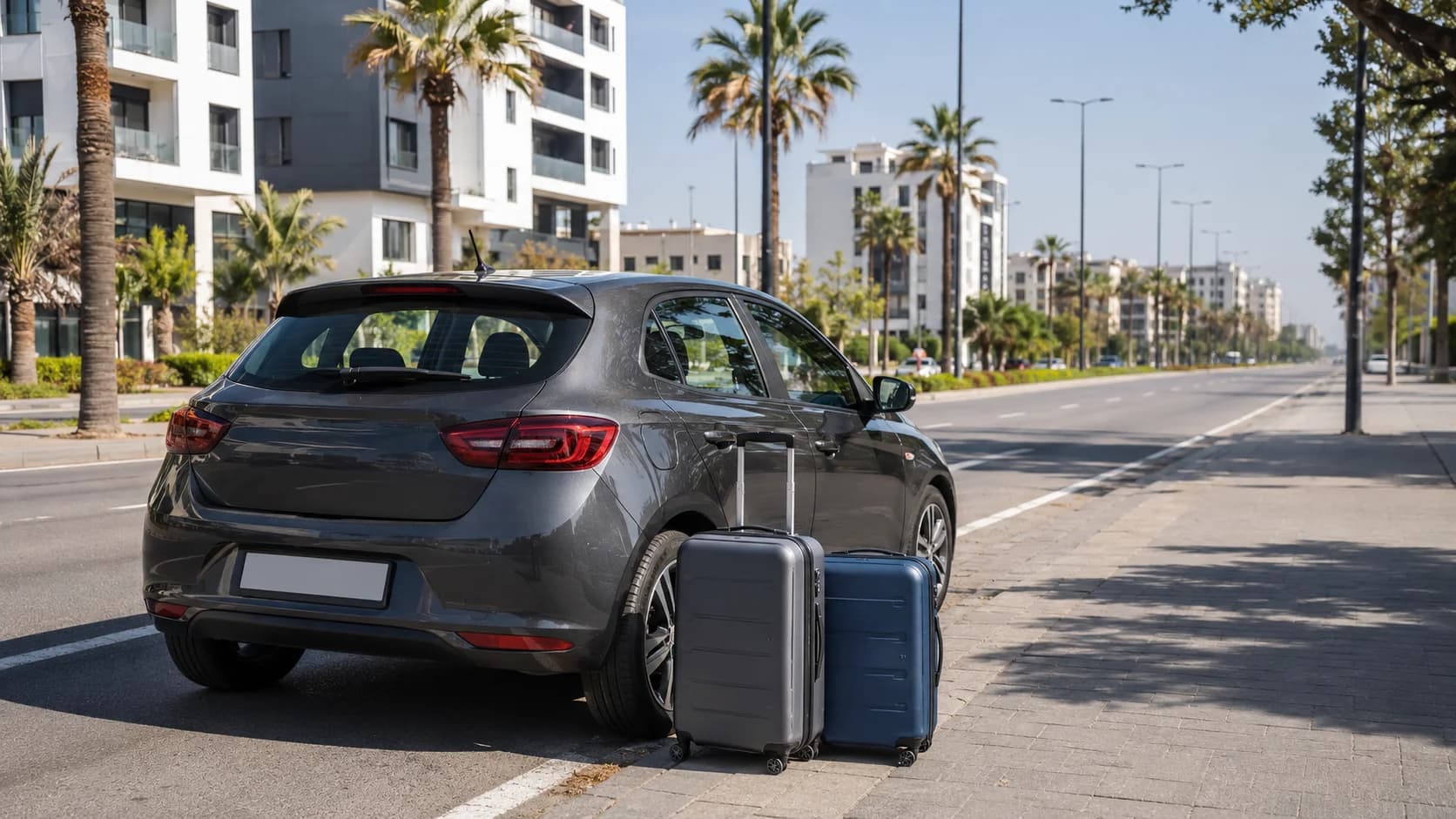
A light hatchback is a smart choice if your main plan is city driving, hotel pickup, restaurant visits, shopping, short routes and airport transfers. It gives you better visibility around corners, easier lane positioning and less stress when parking. You can compare hatchback rental Casablanca options if you want something simple for city traffic.
If budget matters, a small manual or compact model can also work well. For visitors who want value without overcomplicating the drive, cheap car rental Casablanca is usually enough for normal city routes and day trips.
For nervous drivers, an automatic is often the easiest option. Casablanca traffic involves frequent stopping, slow rolling, hill starts in some areas and sudden lane changes. With an automatic, you can focus on mirrors, signs, pedestrians and junction positioning instead of clutch control. If you prefer less stress in traffic, consider automatic car rental Casablanca before choosing a manual.
Building Confidence in Your First Hour
Your first hour behind the wheel in Casablanca should not be your hardest route. Do not start with Sidi Maârouf at peak time, central medina traffic or a complicated hotel zone at night. Start with a simple route, preferably outside the busiest rush-hour window.
Before moving, adjust mirrors, pair your phone for navigation, understand the gear selector and check where the hazard lights are. Keep your rental documents easy to reach. If you are collecting the car at the airport or hotel, ask the local team for the easiest first route based on your destination.
Drive slowly for the first few kilometres. Let faster drivers go around you. Avoid last-second turns. If navigation gives a confusing instruction, continue straight and reroute safely. Missing one turn in Casablanca is normal. Stopping suddenly in a live lane is not.
Confidence comes from rhythm. After a few junctions, you will start to notice how taxis move, how scooters filter, how drivers use small gaps and how traffic lights structure the flow. Stay patient and the city becomes much less intimidating.
Practical Casablanca Junction Tips for Tourists
Plan your lane before the junction, not inside it.
Keep extra space from taxis and scooters.
Follow traffic lights and signs before general priority rules.
Do not block tramway crossings or pedestrian crossings.
Signal before exiting roundabouts.
If you miss an exit, continue safely and try again.
Avoid rush hour for your first drive.
Choose a small or automatic car if you are nervous.
FAQ
Who has right of way on a roundabout in Morocco?
On most standard roundabouts, vehicles already inside the roundabout have priority, and entering vehicles should yield. However, traffic lights, signs and police instructions override this rule.
Is driving in Casablanca hard for tourists?
Driving in Casablanca can feel hard at first because of taxis, scooters, busy junctions and flexible lane behaviour. With calm defensive driving, a good route and the right car, most visitors adapt quickly.
How do Casablanca roundabouts work?
Casablanca roundabouts work like normal circular junctions, but some are controlled by traffic lights. Check signs, lights and road markings before entering, then position early for your exit.
Which side of the road does Morocco drive on?
Morocco drives on the right-hand side of the road. Overtaking is normally done on the left.
Are Casablanca drivers aggressive?
Some drivers may seem assertive, especially taxis and scooters, but much of the behaviour is local traffic rhythm rather than personal aggression. Stay calm, predictable and defensive.
Do I need to use indicators on roundabouts in Morocco?
Yes. Use indicators when changing lanes and before exiting a roundabout. Clear signals help other drivers understand your movement.
What's the best car for nervous drivers in Casablanca?
A small hatchback or compact automatic is usually best for nervous drivers. It is easier to park, easier to place in narrow lanes and less stressful in stop-start traffic.
Is an automatic easier in Casablanca traffic?
Yes. An automatic makes Casablanca traffic easier because you can focus on mirrors, gaps, pedestrians, scooters and junction positioning instead of constant clutch work.
How do I handle a busy multi-lane junction?
Slow down early, choose your lane before the junction, follow signals, avoid sudden diagonal moves and continue around or reroute if you miss your exit.
Are there traffic lights or mostly roundabouts in Casablanca?
Casablanca has both. You will find traffic lights, large roundabouts, tramway crossings, priority roads and smaller uncontrolled junctions depending on the area.
Ready to Drive Casablanca with More Confidence?
A light, easy-to-park hatchback or automatic can take much of the stress out of Casablanca junctions. With MarHire Car Casablanca, you can choose a practical city car, request full insurance, arrange free hotel or airport delivery and get local support before your first drive. Start with the right car, take your first route calmly and Casablanca's roundabouts become much easier to handle.