








Driving around Morocco gives travelers the freedom to move between cities, coastal towns, mountain areas and rural destinations at their own pace. During these journeys, however, you may occasionally encounter a police checkpoint or roadside control.
For tourists using a rental car, these stops can feel unfamiliar the first time. In most cases, the best approach is simple: reduce your speed, follow the officer's instructions and keep your driving and rental documents organized.
Morocco continues to place significant emphasis on road safety and traffic enforcement. The country's 2026–2030 national road-safety strategy includes continued attention to road controls and enforcement of traffic regulations.
If you are renting from Casablanca before a road trip, preparing your paperwork before departure can make any routine police stop much easier.
What Should You Expect at a Morocco Police Checkpoint?
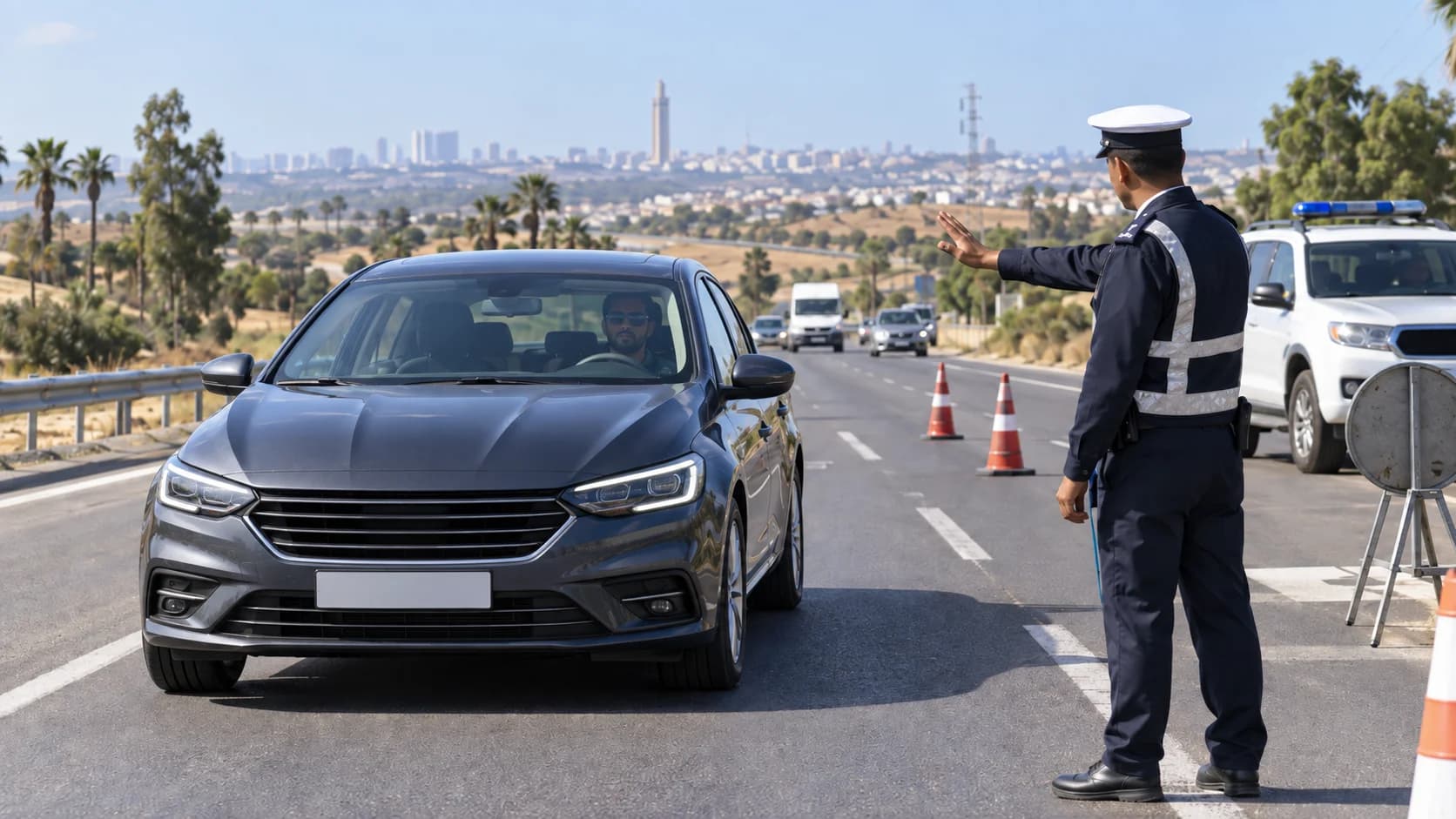
At a Morocco police checkpoint, slow down well before reaching the officers, follow any hand signals or signs, stop if instructed and remain calm.
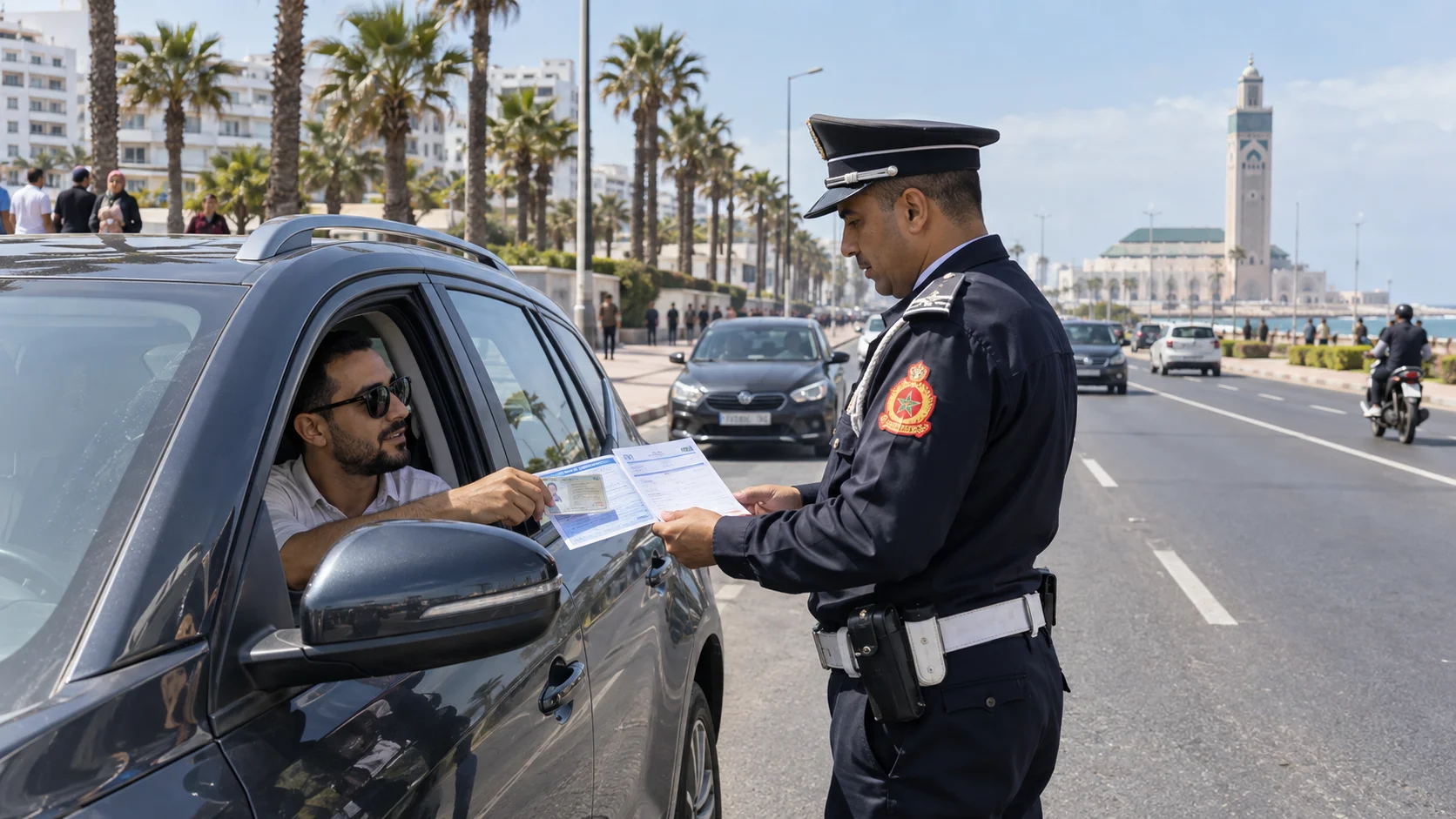
An officer may simply wave you through. If you are stopped, you may be asked for documents such as your driving licence and vehicle or rental paperwork.
Keep these documents somewhere you can reach without searching through luggage. Answer questions clearly, follow instructions and wait until the officer indicates that you can continue.
A checkpoint does not automatically mean something is wrong. Road controls are part of normal traffic enforcement and road-safety operations in Morocco.
Table of Contents
- Why drivers encounter checkpoints in Morocco
- How to approach a checkpoint
- What documents to keep accessible
- Following officer instructions
- What not to do during a routine stop
- Checkpoints on city vs intercity routes
- How rental documents help
- Checkpoint-preparation checklist
- Frequently asked questions
Why Drivers Encounter Checkpoints in Morocco
Road controls may be used for several reasons, including traffic management, road-safety enforcement, checking documents and managing specific road situations.
Morocco has continued strengthening road-safety enforcement as part of its broader national strategy. Official government information published in 2026 highlights road controls, regulation and enforcement as components of Morocco's road-safety approach.
For a tourist, this means seeing an officer beside the road should not immediately be interpreted as a problem.
You could encounter controls:
-
near the entrances or exits of cities
-
along major intercity roads
-
on regional routes
-
near junctions
-
during periods of heavier traffic
-
where authorities are managing a particular road situation
Your experience can vary considerably by route and time of day.
The safest assumption is simply that you should be prepared to slow down whenever you see officers, barriers, temporary signs or vehicles positioned for a road control.
How to Approach a Police Checkpoint
Your actions before reaching the checkpoint are important.
Reduce your speed early
Do not wait until you are directly beside an officer before braking.
Take your foot off the accelerator, reduce your speed smoothly and observe what other traffic is doing.
Watch the officer's signals
The officer may:
-
signal you to continue
-
direct you toward one side of the road
-
hold up a hand indicating that you should stop
-
give another clear traffic instruction
Follow the signal rather than trying to guess what the officer wants.
Stop safely when requested
If instructed to stop, pull over where directed.
Keep the vehicle under control and avoid sudden movements or last-second lane changes.
If you are using a rental car for a longer Moroccan road trip, getting comfortable with the vehicle before leaving Casablanca also helps. Travelers can compare options through car rental Casablanca before choosing a suitable vehicle.
What Documents Should Rental Car Drivers Keep Accessible?
Organization is one of the easiest ways to make a routine stop straightforward.
Keep your important driving documents together rather than spread between suitcases, backpacks and the glove compartment.
Depending on your nationality and rental circumstances, relevant documents can include:
Original driving licence
Carry the valid driving licence you used when renting the vehicle.
An officer may ask to see it during a roadside control.
International Driving Permit when required
International Driving Permit requirements are not identical for every nationality, so travelers should check the rules applying to the country that issued their licence.
For example, current UK Foreign, Commonwealth & Development Office guidance states that UK visitors driving in Morocco should carry their UK driving licence together with a 1968 International Driving Permit.
UK travelers can check the latest requirements through the official UK Morocco travel advice.
Drivers from other countries should check their own government's travel guidance and confirm the requirements with their rental company before arriving.
Rental agreement
Keep your rental contract or other handover documentation available in the vehicle.
It helps demonstrate that you are legitimately using the car and identifies the rental provider.
Vehicle and insurance documents
The rental company normally provides the appropriate documentation connected with the vehicle.
Current UK government Morocco guidance also advises drivers to carry insurance, licence and vehicle registration documentation when driving.
Passport or identification
Keep appropriate identification securely accessible while traveling.
Do not leave your passport unattended in a parked rental car simply because you want it available for a possible checkpoint.
Following Officer Instructions
A routine police stop does not require a complicated strategy.
The most effective approach is clear compliance.
When stopped:
-
Park where directed.
-
Remain calm.
-
Lower the window if the officer approaches.
-
Provide documents when requested.
-
Answer straightforward questions clearly.
-
Wait for instructions before driving away.
If you do not understand something, politely ask the officer to repeat or clarify the instruction instead of guessing.
There is also no reason to immediately get out of the vehicle unless you are asked to do so.
Keeping your documents organized can turn what might initially seem stressful into a short administrative interaction.
What Not to Do During a Routine Stop
Most problems can be avoided by treating the checkpoint like any other official traffic control.
Do not accelerate through the checkpoint
Even if you believe the officer is waving another vehicle forward, make sure the instruction applies to you before proceeding.
Do not argue unnecessarily
If an officer requests your licence or rental paperwork, provide it calmly.
A roadside checkpoint is not the right place for an emotional argument over a simple document request.
Do not start searching through luggage while driving
Pull over properly first.
Your important documents should ideally already be stored together in a travel wallet, folder or other accessible location.
Do not assume being stopped means you committed an offence
Officers may be checking multiple vehicles.
Being asked to stop does not itself mean that you have done something wrong.
Do not attempt to create your own informal solution
If an officer advises that there is a traffic issue or penalty, ask for the proper official instructions and follow the authorized process.
Checkpoints on City vs Intercity Routes
The context of a road control can vary according to where you are driving.
Driving in Casablanca
Within a large city such as Casablanca, you are dealing with heavier traffic, intersections, taxis, motorcycles, pedestrians and busy arterial roads.
Traffic controls may therefore appear in a much more urban environment.
If an officer signals you, focus on the instruction while remaining aware of the surrounding traffic.
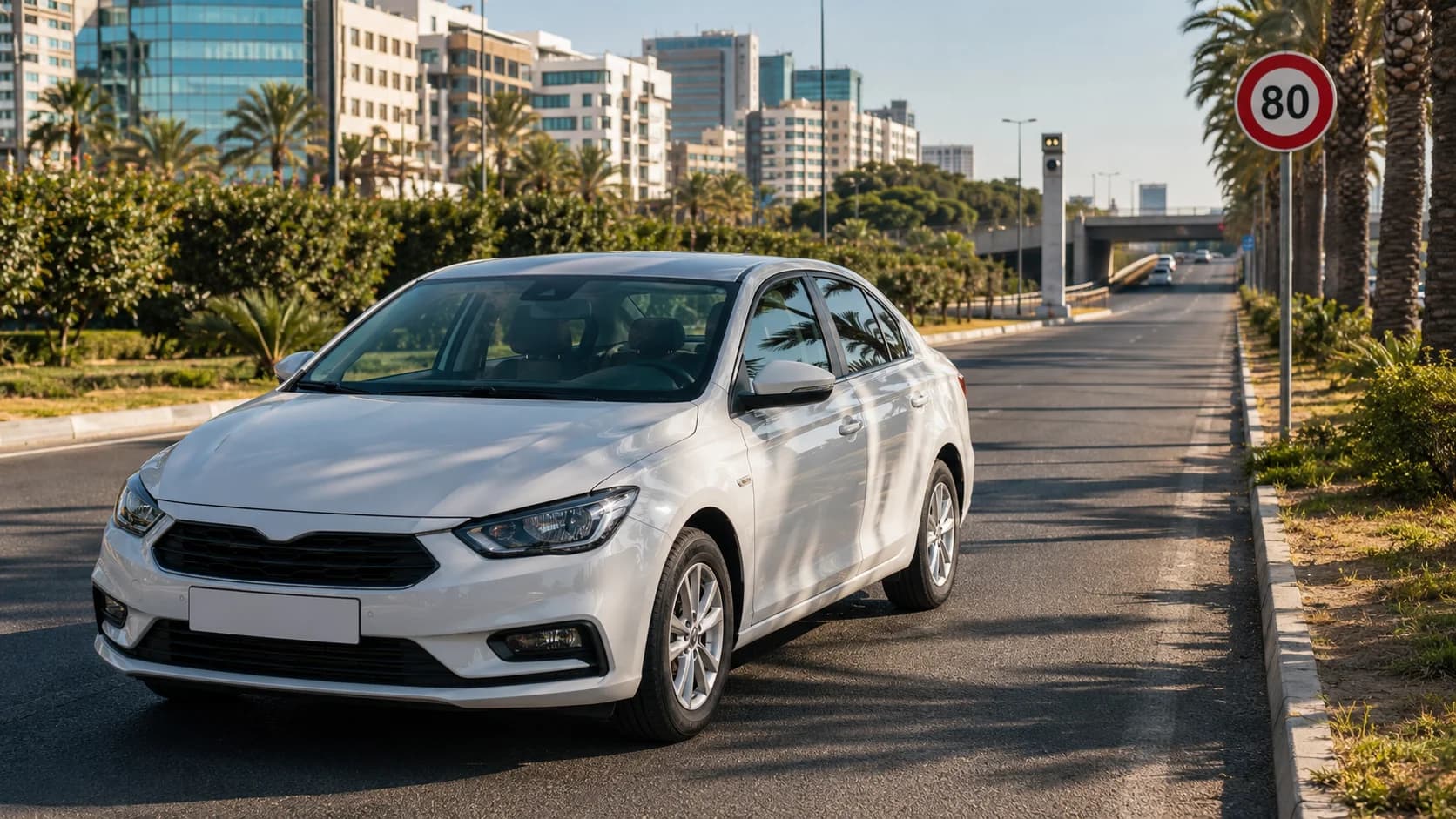
For city and motorway journeys, a comfortable sedan rental in Casablanca can be a practical choice for couples, business travelers and smaller families.
Intercity driving
On longer routes, controls may appear near towns, road junctions or other strategic points.
When approaching any built-up area, reduce your speed and watch carefully for:
-
speed-limit changes
-
police or gendarmerie presence
-
temporary traffic instructions
-
roundabouts
-
pedestrian crossings
-
changes in road conditions
Drivers planning mountain journeys or trips with additional luggage may prefer the extra space and driving position offered by an SUV rental in Casablanca.
The vehicle type does not change how you should respond to a checkpoint: slow down, observe and follow instructions.
How Rental Documents Help at a Police Stop
One major advantage of renting from a professional provider is having clear documentation connected with the vehicle.
Before leaving the pickup location, identify which documents relate to:
-
your rental agreement
-
the vehicle
-
insurance
-
emergency or roadside support
Do not wait until you see your first police checkpoint to work out which document is which.
Spend a minute during the handover asking the rental representative where the paperwork is stored and which documents should stay inside the vehicle.
It is also useful to save the rental company's contact details on your phone.
If an officer asks a question about the vehicle that you genuinely cannot answer, you can then contact the rental provider for clarification when appropriate.
For travelers starting in Casablanca, MarHire Car Casablanca provides vehicle handover documentation and local support to help self-drive customers understand the car and rental paperwork before departure.
Morocco Checkpoint-Preparation Checklist
Before beginning a road trip, run through this simple checklist.
Driving documents
-
Original valid driving licence
-
International Driving Permit if required for your nationality
-
Passport or appropriate identification kept securely accessible
Rental documents
-
Rental agreement
-
Relevant vehicle papers supplied by the rental company
-
Insurance information
-
Rental-company contact details
While driving
-
Wear your seat belt
-
Observe posted speed limits
-
Reduce speed when approaching towns and controls
-
Watch carefully for officer signals
-
Stop where directed
-
Keep documents easy to reach
-
Continue only when instructed
Preparation matters far more than worrying about whether you will encounter a checkpoint.
Frequently Asked Questions
Are police checkpoints common in Morocco?
Road controls are a normal part of traffic enforcement in Morocco and may be encountered on both urban and intercity journeys. Whether you actually encounter one depends on your route, location and timing.
What should I do when approaching a checkpoint?
Reduce your speed early, observe signs and officer signals, keep a safe distance from the vehicle ahead and stop if instructed.
Do not make sudden lane changes or assume you can continue until the signal is clear.
What documents should rental car drivers carry?
Keep your valid driving licence, rental agreement and the relevant vehicle and insurance documents supplied by the rental company accessible.
Additional requirements such as an International Driving Permit depend on the driver's nationality and licence.
Will tourists be stopped at checkpoints?
They can be.
Tourists driving rental vehicles may be waved through or asked to stop just like other road users. Being stopped does not automatically indicate a problem.
Do I need my rental agreement in the car?
Keeping your rental agreement with the vehicle is strongly recommended.
It provides clear information showing your authorized use of the rental car and identifies the rental provider.
Should I keep my passport with me while driving?
Travelers should keep appropriate identification securely accessible while traveling. However, avoid leaving an original passport unattended inside a parked car.
Check any nationality-specific requirements before departure.
What happens at a routine police check?
An officer may simply direct traffic or wave you through.
If stopped, you may be asked for documents or given a traffic instruction. Provide requested documents calmly and wait until you are told you can proceed.
Are checkpoints common outside Casablanca?
Road controls are not limited to Casablanca.
Drivers may encounter them around other cities, regional roads and intercity routes throughout Morocco.
Can officers ask to see my driving licence?
Yes. Drivers should keep their valid original driving licence readily accessible whenever they are driving.
How should I prepare before a Morocco road trip?
Check the vehicle before leaving, understand your rental agreement, confirm the driving-document requirements for your nationality, save your rental provider's contact details and keep the necessary paperwork together.
Final Advice: Treat Checkpoints as Part of the Journey
Police checkpoints in Morocco do not need to be a source of anxiety for rental car drivers.
The basic routine is easy to remember:
Slow down. Watch the officer. Stop when instructed. Keep your documents ready. Follow directions calmly.
Most importantly, prepare before leaving the rental location rather than trying to organize paperwork on the roadside.
If your Morocco road trip begins in Casablanca, MarHire Car Casablanca can provide clear vehicle handover paperwork and local support before you set off.
With your documents organized and a calm approach behind the wheel, a routine roadside control should simply be another manageable part of driving through Morocco.